I regard marriage in the way that the French have of regarding it, as a partnership effected for certain definite purposes, essentially practical.
Author: Redactor
Why call it “political correctness,” when it’s simply “political” and so terribly incorrect?
Whatever we call it — “a totalitarian impulse” comes to my mind — placing Angela McCaskill on administrative leave from her job at Gallaudet University is just flat-out wrong.
“It recently came to my attention that Dr. McCaskill has participated in a legislative initiative that some feel is inappropriate for an individual serving as Chief Diversity Officer,” Gallaudet President T. Alan Hurwitz wrote, last week, on the University’s Facebook page. McCaskill’s alleged transgression was to sign a petition to refer the Legislature’s same-sex marriage law to the ballot for Maryland voters to decide, and potentially overturn.
Hurwitz didn’t mention any specific policy violated by McCaskill. Worse, while acknowledging her “right to sign a petition,” Hurwitz added, as if in clarification, that “many individuals at our university were understandably concerned and confused by her action.”
There appears to be much confusion at Gallaudet . . . about the meaning of freedom.
President Hurwitz, who faces criticism from both proponents and opponents of the same-sex marriage referendum that started this fracas, claimed to be confident that a “resolution of this matter can be reached,” hazarding that it “will require that she and the university community work together to respond to the concerns that have been raised.”
A “resolution”? McCaskill has an attorney, and the greater likelihood is a large lump sum settlement for violating her civil rights.
This is Common Sense. I’m Paul Jacob.
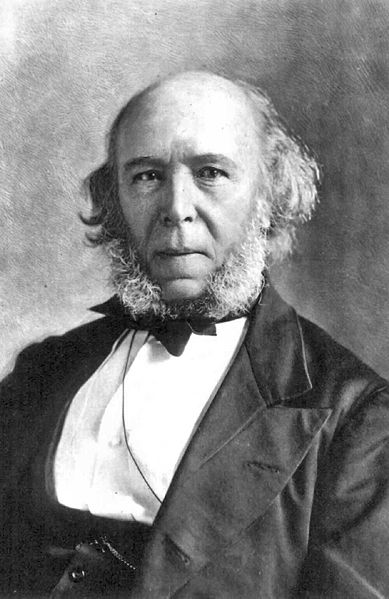
Albert Jay Nock
For several years now I have been trying to get various publishers to start some ambitious youth writing a book about work. The idea first struck me when I was doing some rather close reading in our Colonial history, and was impressed by the amount of actual labor, both of brawn and brain, that the Founding Fathers seemed to be able to put into a day, and keep putting in, day after day. I doubt that there is anything like it in the country now. Take, for instance, Mr. Jefferson’s journal of a three-months tour in France; consider the facilities he had, the kind of accommodations he found, the amount of time and energy that had to be put in on the mere business of living and getting about from place to place, and then reckon up in terms of actual work, the achieve- ments recorded in that journal. Also, figure up the net of work in one of John Adams’s days, from the time he got up until he went to bed, or one of John Quincy Adams’s, when he was Secretary of State. I remember, too, when I was reading the history of the early English buccaneers, that what struck me most forcibly was the amount of actual labor that they were capable of doing, and did do, without making any fuss about it. No publisher ever bit at my suggestion, however, which I think shows a lack of enterprise.
Economist George Reisman, author of Capitalism: A Treatise on Economics, supports strict gun control. So do I.
Not gun control directed against the weapons of peaceful gun owners. Gun control directed against armory-facilitated violations of our rights by government and criminals.
In his essay “Gun Control: Controlling the Government’s Guns,” Reisman assures readers that he too believes in gun control. “However, I do so in the light of the knowledge that by far the largest number and the most powerful guns and other weapons are in the possession of the government.”
By its nature, everything the government does, good or bad, relies for its effectiveness on the threat of deadly force — otherwise people would be free to ignore its laws and rulings. Therefore, a meaningful program of gun control “must above all focus on strictly controlling and regulating the activities of the government.”
When government uses its powers against actual criminals — those who kill, rape, steal — this serves as a “control on the use of force, including the use of guns,” insofar as it deters such criminal acts of coercion.
The Constitution is a form of gun control directed against the government. To control the government’s use of force, such protections must be enforced and illegitimate uses of government power must be curtailed. Guns owned by a peaceful citizen are also a form of gun control — they can deter or counter wrongful acts of force by both private criminals and public officials.
This is Common Sense. I’m Paul Jacob.
Albert Jay Nock
As far back as one can follow the run of civilization, it presents two fundamentally different types of political organization. This difference is not one of degree, but of kind. It does not do to take the one type as merely marking a lower order of civilization and the other a higher; they are commonly so taken, but erroneously. Still less does it do to classify both as species of the same genus — to classify both under the generic name of “government,” though this also, until very lately, has been done, and has always led to confusion and misunderstanding.
A good understanding of this error and its effects is supplied by Thomas Paine. At the outset of his pamphlet called Common Sense, Paine draws a distinction between society and government. While society in any state is a blessing, he says, “government, even in its best state, is but a necessary evil; in its worst state, an intolerable one.” In another place, he speaks of government as “a mode rendered necessary by the inability of moral virtue to govern the world.”
Alfred Nobel Rolls Over
The Nobel Committee, having whetted its appetite for absurdity with a long string of goofy Peace Prize Awards, especially but not limited to the 2009 award for Barack Obama (who had done nothing but get elected to earn it), went all the way by giving the 2012 award to the European Union.
Barack Obama went on to become a “war president,” even regularly picking targets for assassination by drone. So, could Europe continue the trend and head straight towards war?
Maybe. Last year, former French Prime Minister Alain Juppe warned that the unions debt crisis could lead to “the explosion of the European Union itself,” and warned of growing nationalism. And violent unrest.
Dire warnings from former heads of state are one thing. Actual military movements are another. And Switzerland seems to be preparing for the worst:
The Swiss defense ministry told CNBC that it doesn’t rule out having to deploy troops in the coming years.
“It’s not excluded that the consequences of the financial crisis in Switzerland can lead to protests and violence,” a spokesperson told CNBC.com. “The army must be ready when the police in such cases requests for subsidiary help.”
Talk about financial contagion!
Cooler heads may prevail, of course. Matthew Feeney, writing at reason.com, notes that the “most obvious argument against the possibility of war is that there are no likely candidates for the part of aggressor.” And Europe hasn’t exactly been engaging in a massive military build-up, unlike before the two world wars.
Alas, that doesn’t preclude massive rioting and uprisings.
Sovereign financial bankruptcy usually follows war, rather than preceding it. I guess that provides something like hope.
This is Common Sense. Im Paul Jacob.
Albert Jay Nock
The practical reason for freedom is that freedom seems to be the only condition under which any kind of substantial moral fiber can be developed — we have tried law, compulsion and authoritarianism of various kinds, and the result is nothing to be proud of.
When I think of Oregon, I often think of Don McIntire. Last Friday, 74-year-old Don died from a heart attack suffered at home.
I knew him as a great storyteller, with a Mark Twain sort of wit. But McIntire was best known in the Beaver State as a longtime taxpayer activist, specifically the main proponent of Measure 5, a 1990 citizen initiative that limited the state’s oppressive property taxes.
Then-Governor Barbara Roberts hyperbolically predicted that if voters passed Measure 5, “people would die.” Nonetheless, voters enacted the citizen initiative . . . and lived to tell about it.
Learning of McIntire’s passing, Jason Williams with Oregon Taxpayers United recalled the many phone calls he’d received from senior citizens, expressing their “heartfelt gratitude for Measure 5” and saying, “If it wasn’t for Don McIntire, I wouldn’t be able to live in my home today.”
Radio talk show host Lars Larson recognized McIntire as “a tax hero to millions of Oregonians whose taxes were reduced by literally billions of dollars because of the tireless efforts of this man.”
“Don McIntire was a giant in Oregon’s limited government movement,” said Cascade Policy Institute founder Steve Buckstein. “He gave tirelessly of himself for literally decades to reign in the government he thought was too large and too intrusive. . . . Every Oregonian who wants to keep government in check owes Don McIntire a huge debt of gratitude.”
Thanks, Don, for siding with taxpayers. Rest in peace.
This is Common Sense. I’m Paul Jacob.
Albert Jay Nock
Diligent as one must be in learning, one must be as diligent in forgetting; otherwise the process is one of pedantry, not culture.
Townhall: Racist Anti-Racism
This weekend’s Townhall column is about race. It is long, in part because talking about race is still so tricky that brief discussions can be easily taken out of context.
And there’s so much to say.
I expand on some comments I made on Friday. But I try to spell out the logic at greater length. So it doesn’t get missed. Racism is an affront to justice. Justice tries to mete out what people deserve, individually. It is especially concerned about establishing basic rules of how to behave. It doesn’t answer every problem of society. It answers crime with punishment and restitution, answers torts with redress. But it does so based on individual responsibility.
Racism is wrong because it judges individuals not on their merits, but by their race. It’s stupid as well as ugly and unjust.
Progressives, however, have been trying to overthrow the old idea of justice as personal freedom and individual responsibility since Progressivism first became an Era.
So it’s no wonder they spread a response to racism that is itself racist. They don’t understand what justice is. So they make an unjust response to an injustice.
Anyway, go over to the column and give it a read. Come back here and tell me what you think.
You will probably be brimming with ideas, complaints, responses. Fine. Me too. One idea I couldn’t include in the column was the sources for some of today’s inner-city African-American problems. It sure seems like they’ve been selected, by racists, for some horrible burdens. But I wouldn’t be hasty on this.
It’s certainly true that official policy has played a huge role in destroying a lot of lives in the inner cities (especially but not limited to African-Americans) — the progressive trifecta of minimum wage raises, welfare aid to families without in-home fathers, and the war on drugs, has devastated the culture of many inner city blacks. Some folks call one of more of these policies “racist,” but the intent, usually, has seemed to be color-blind. That these policies have hit African-American communities especially hard may be more of an accident of history than a policy of repression. But I could be wrong.
Writers from my perspective were once called liberal. Self-defined “Progressives” took over that word in the FDR era. But that hasn’t stopped us from continuing to uphold a commonsense view of justice. Important contributions to the study and advocacy of this concept of justice as they relate to racial issues include
- The Economics of the Colour Bar, by W.H. Hutt
- The Other Side of Racism, by Anne Wortham
- Race and Culture, by Thomas Sowell
- Black Rednecks and White Liberals, by Thomas Sowell
- The State Against Blacks, by Walter Williams
These are all books worth looking up. For further reading about the links between laissez-faire individualism and true anti-racism, you couldn’t do better than start your reading here:
- “Selling Laissez Faire Antiracism to the Black Masses: Rose Wilder Lane and the Pittsburgh Courier,” by David T. Beito and Linda Royster Beito
- “The Origin of the Term ‘Dismal Science’ to Describe Economics,” by Robert Dixon
- “Racism,” by Ayn Rand