 Freedom is the alone unoriginated birthright of man, and belongs to him by force of his humanity. . . .
Categories
Freedom is the alone unoriginated birthright of man, and belongs to him by force of his humanity. . . .
Inadvertent? Un-partisan? No direction from above?
Such were many of the early claims in response to the scandal over IRS’s targeting of Tea Party and conservative groups applying for tax-exempt status.
The characterization was not vindicated when Lois Lerner — who ran the agency’s division dealing with exempt organizations until she resigned in semi-disgrace —a sserted her Fifth Amendment rights rather than tell us what she knows. Sundry revelations since the scandal broke have further exploded the claim that lowly functionaries acted independently of high officials.
Now Cleta Mitchell, a lawyer for True the Vote, which combats voter fraud, is being vindicated in charges of collusion between Lerner and congressional Democrats.
“[T]he only difference between what happened in Watergate when Richard Nixon asked the IRS to go after his political enemies was when Richard Nixon asked, they refused,” according to Mitchell. “When these Democratic politicians said, ‘Go do something about these conservative groups because they’re challenging us. . . .’ the IRS [did] their bidding to try and silence these groups.”
Mitchell appeared on The Kelly File to discuss recently released IRS email implying coordination between Democrat Elijah Cummings of the House Oversight Committee (of “nothing to see here” fame) and the IRS. After applying for tax-exempt status, True the Vote received sets of nearly identical questions — on widely separate occasions — from both the IRS and Cummings. That’s not only collusion, it’s guileful sharing of taxpayer information that is supposed to remain confidential.
Disturbing, but not surprising.
This is Common Sense. This is Paul Jacob.
 On April 21, 1787, the Continental Congress of the United States authorized a design for an official penny, later referred to as the Fugio cent because of its image of the sun shining down on a sundial with the caption, “Fugio” (Latin: I flee/fly). This coin was reportedly designed by Benjamin Franklin; as a reminder to its holders, he put at its bottom the message, “Mind Your Business.”
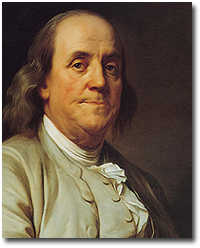 Remember that time is money.
It’s an old trick: make the exception clauses completely transform the principles involved.
In Colorado, a politician is trying mightily to transform the nature of citizen involvement in state government. She thinks she’s an angel, of course. But if you think of her as a devil, I’d completely understand.
Click on over to Townhall for this week’s Common Sense column. Come back here, of course, for a little more context.
For other recent Common Sense columns on Townhall, you can view them on this site, as well as on Townhall.com itself: click here for the index.
With Michael Bloomberg announcing his coming ascension into heaven, we offer a multimedia retrospective on the former mayor, now self-appointed saint.
CNBC: Michael Bloomberg Says He Has Earned His Place In Heaven
http://youtu.be/Y9hBIFXzrzI
Reason: The Mike Bloomberg Legacy: 12 Years of Little Tyrannies
Bloomberg’s record on term limits:
http://youtu.be/lsJmu8hk7DY
The Mayor won’t answer a question about term limits:
The Mayor is heckled: “Why are you here?”
NY Times: Bloomberg Wins 3rd Term as Mayor in Unexpectedly Close Race
The billionaire mayor had poured $90 million of his own fortune into the race, a sum without equal in the history of municipal politics that gave him a 14-to-1 advantage in campaign spending.
George Will on ABC’s “This Week”: Bloomberg thinks “we own you”
NT Times: Bloomberg’s Soda Ban Explained, Sort Of
Awkwafina: “Mayor Bloomberg (Giant Margaritas)”
http://youtu.be/YcphTuFGI40
Common Sense with Paul Jacob: Michael Bloomberg
Nevada isn’t really that big of a state. Oh, sure, it appears large on the map.
But 81 percent of that land mass isn’t Nevada. It’s federal government property, run by various branches of the nation’s central government in Washington, D.C.
Much of the controversy surrounding the Cliven Bundy ranch, and the rustled cattle, and the standoff with the federales, has to do with federal government land.
From my reading of the Bundy family ranch affair, it appears that the legal question is not one of taxes, but of usage fees; not of endangered tortoises, but cattle. But mostly about land. My sympathies are with the Bundies. They seem to have a very old adverse possession case against the government.
I wasn’t surprised to learn that federal judges didn’t look very kindly to the Bundies’ customary rights. Federal judges prefer legislated law to common law. We’re a long way from our roots, folks.
But the issue lurking behind all other issues is the over-dominance of the federal government in twelve western states. Five of them have over half of their land titled to and run by the federal government: Oregon, Idaho, Alaska, Utah and Nevada. This imbalance gives just too much power and purview to federal agencies, who are then tempted to run roughshod over locals. That is, state citizens.
Cliven Bundy may be dead wrong legally, but politically, he has a point.
The federal government should privatize all or most of its grazing lands and desert lands. Its forest lands should at least be “state-ized” — given back to the states.
This is a federal republic, right? Not an empire?
The states are not supposed to be mere conquered provinces.
This is Common Sense. I’m Paul Jacob.
On April 18, 1689, Bostonians rebelled against the government of Sir Edmund Andros.
On this day in April, in 2007, the Supreme Court of the United States, split 5-4, upheld the Partial-Birth Abortion Ban Act.
April 18 marks the 1772 birthday of David Ricardo, English political economist and one of the most influential thinkers in economic theory.

Are you tired of members of the political class foisting burdensome laws on us from which they liberally exempt themselves? Sign the petition.
I mean the “No Special Deals” petition expressing support for “Senator Rand Paul’s Constitutional Amendment to stop Congress from passing legislation that doesn’t apply equally to U.S. citizens, the Executive Branch, Congress and the Supreme Court.”
This is one of those amendments with the job of shouting “Read and adhere to the document I’m attached to!!!!!!!” We need almost as many such amendments as there are constitutional provisions, considering how chronically the Constitution is violated.
The spur is Obamacare, the latest package of law and politics to combine crippling mandates for most of us with special deals for those with political pull. Some people are deemed more equal than others when it comes to “equal protection of the laws” and so forth.
The rationale for equally applying laws that are tyrannical? To discourage tyrants loathe to be battered by their own bludgeons. And to disallow their divide and conquer gambits.
That’s the hope, anyway.
But if officeholders find a way to tyrannize to begin with, and don’t hesitate to tyrannize, will any formally enshrined demand for equality of tyranny serve to deter them?
No, sadly, Sen. Paul’s amendment won’t prevent assaults on our rights that aren’t already supposed to be prohibited by the rest of the Constitution. Not by itself. But the amendment could help and certainly can’t hurt.
(Hurt us, that is — if it hurts our lawmakers, that’s the idea.)
This is Common Sense. I’m Paul Jacob.