 I like friends who have independent minds because they tend to make you see problems from all angles.
Categories
I like friends who have independent minds because they tend to make you see problems from all angles.
For to be free is not merely to cast off one’s chains, but to live in away that respects and enhances the freedom of others.
On Feb. 11, 1990, after 27 years in prison, Nelson Mandela was released by South African authorities.
Mandela had joined the African National Congress (ANC) in 1944, becoming deputy national president of the group in 1952. Arrested for treason in 1961, he was acquitted — but then arrested again in 1962 for illegally leaving the country. Convicted and sentenced to five years at Robben Island Prison, he was put on trial again in 1964 on charges of sabotage. He was convicted and sentenced to life in prison along with several other ANC leaders.
In 1989, F.W. de Klerk became South African president and began dismantling apartheid. De Klerk lifted the ban on the ANC, suspended executions, and in February 1990 ordered the release of Nelson Mandela.
Mandela subsequently led the ANC in negotiating an end to apartheid and the establishment of a multiracial government. In 1993, Mandela and de Klerk were jointly awarded the Nobel Peace Prize. One year later, the ANC won the country’s first free elections, and Mandela was elected South Africa’s president.
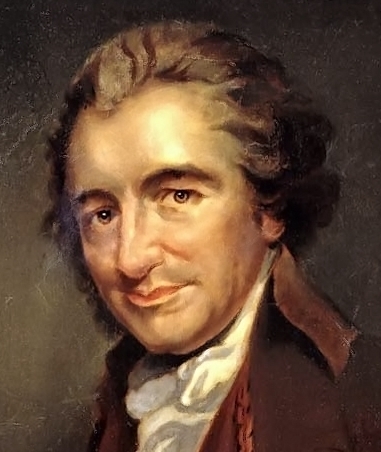 An army of principles can penetrate where an army of soldiers cannot.
The Dodd–Frank Wall Street Reform and Consumer Protection Act was signed into law in 2010 by President Barack Obama. Its supporters said that would increase financial stability and transparency, prevent bailouts, and protect consumers from “abusive practices.”
I’m dubious the new regulatory regime will accomplish any of these goals. What has really happened since passage? An extreme consolidation of financial institutions.
Marshall Lux and Robert Greene, in a new study, show that the long-term trend in which community banks have diminished in number and importance has doubled in severity since Dodd-Frank.
 You don’t have to be a “small-is-beautiful” fetishist to worry about this. The bigger banks remaining are just all that much bigger in the “too big to fail” department.
Greene and Lux explain the mechanisms at play under Dodd-Frank. The regulations are not geared to the size of the regulated institutions, so economies of scale in regulatory compliance arise, bigger than ever.
Todd Zywicki, writing in the Washington Post, makes it clear how these “regulatory costs tend to fall proportionally heavier on smaller banks.” Leading to consolidation.
Just as Zywicki had predicted.
Zywicki, Lux, and Greene are demonstrating an old principle. Economist Ludwig von Mises explained it decades and decades ago. Mises dubbed regulations into market operations “interventionism,” and identified the pattern of such activity as almost an archetype. Interventionists
That is why laws keep piling up. Leading ultimately to calls for more laws.
This is Common Sense. I’m Paul Jacob.
Early in January, store manager Don Watson chased a thief who had fled an Alabama Walmart with over $1,000 worth of goods. With the help of security personnel at a nearby apartment complex, he stopped the culprit, getting a punch in the nose for his trouble.
A month later, Watson got a second, figurative punch in the nose: he was fired. For violating protocol.
 Walmart thinks he should have stayed put, sticking to the rules rather than sticking his neck out.
“I thought I was protecting the company,” he says.
I can understand a policy requiring employees to avoid unnecessary risks; it’s motivated by the desire to prevent lawsuits and prevent harm to employees. But to fire the man for violating this policy in the heat of the moment and acting heroically — especially when they’ve asked him to keep theft down? Come on.
That’s just wrong.
Higher-ups could instead have taken Watson aside, reiterated the what and why of the fine print, and advised him that although they appreciate his actions, he must stay put if something similar happens. They didn’t.
So, what statement is Walmart making by firing Mr. Watson? What is the company saying to other employees, customers, and, for that matter, potential thieves?
It’s not just “we care about the lives of our employees,” but also “we have no sense of proportion” and “we discount courage and initiative in the defense of our property.”
The store can still make this right, though.
Re-hire the guy. At least.
This is Common Sense. I’m Paul Jacob.
He that would make his own liberty secure, must guard even his enemy from oppression; for if he violates this duty, he establishes a precedent that will reach to himself.
On Feb. 10, 1967, the 25th Amendment to the U.S. Constitution, setting the process for presidential succession, was ratified by Nevada, the necessary 38th state to do so.
Dear Reader: This “BEST of Common Sense” comment originally aired on July 4, 2007. A longer version published at Townhall.com was picked up by Rush Limbaugh and read on his radio show. —PJ
Could Democratic presidential candidate John Edwards actually be right about something? Not where to go to get a haircut, mind you, I mean about there being two Americas.
There is the vibrant America . . . and the stagnant one.
There is the America of ever-increasing wealth, innovation, creativity, new products and services. Choices galore.
And there is the politician’s America: The regulated America, the subsidized America, the earmarked America. The failing America.
In one America, it is what you produce that gets you ahead. In the other, it’s who you know.
In one America, to earmark some money means setting aside funds (into savings) for a purchase — a car, house, college.
In the other America, to earmark is to grab from taxpayers to give to cronies. It is the highest rite of career politicians: Buying their votes with other people’s money. Oh, there have been reforms, sure. But a recent bill in the House had 32,000 earmark requests.
In one America, we decide what we pay for. We choose constantly about little things and big. We call the shots. Or we walk down the street and associate with someone else. So we have some faith in those we work with.
In the other America, we vote. But we rarely get what we vote for.
Maybe that’s why the new Democratic Congress just registered the lowest approval rating in poll history.
It surely isn’t because folks love the Republicans.
This is Common Sense. I’m Paul Jacob.
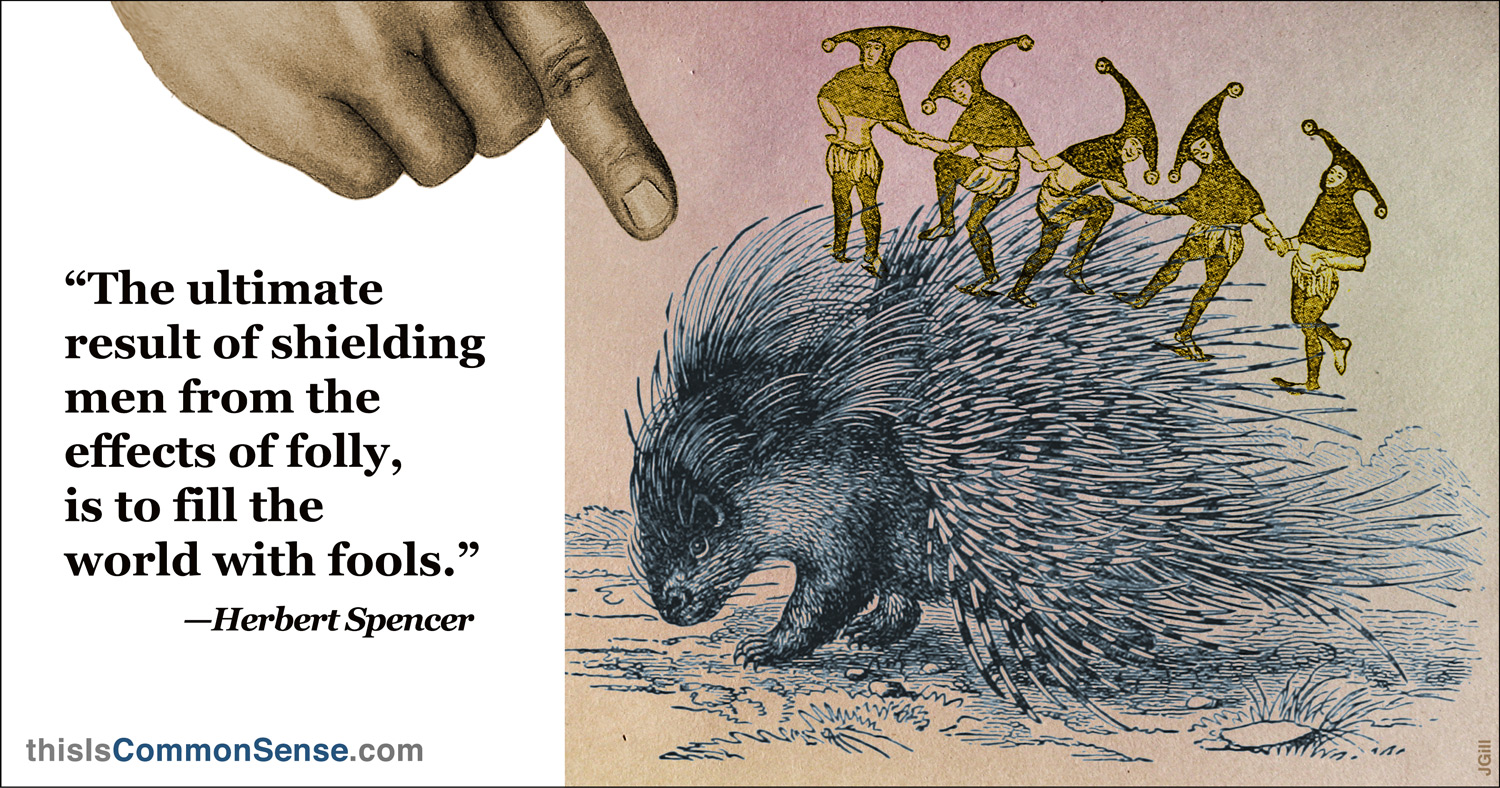
“The ultimate result of shielding men from the effects of folly, is to fill the world with fools.” —Herbert Spencer

To download the full-size version of this image, click it!