America is often said to be a land of second chances.
Just not for 7-year-olds. At least, not when they’re in the public school system.
Back in 2013, a boy then in second grade in Anne Arundel, Maryland, was suspended for two days for what was deemed a “gun-related” offense.
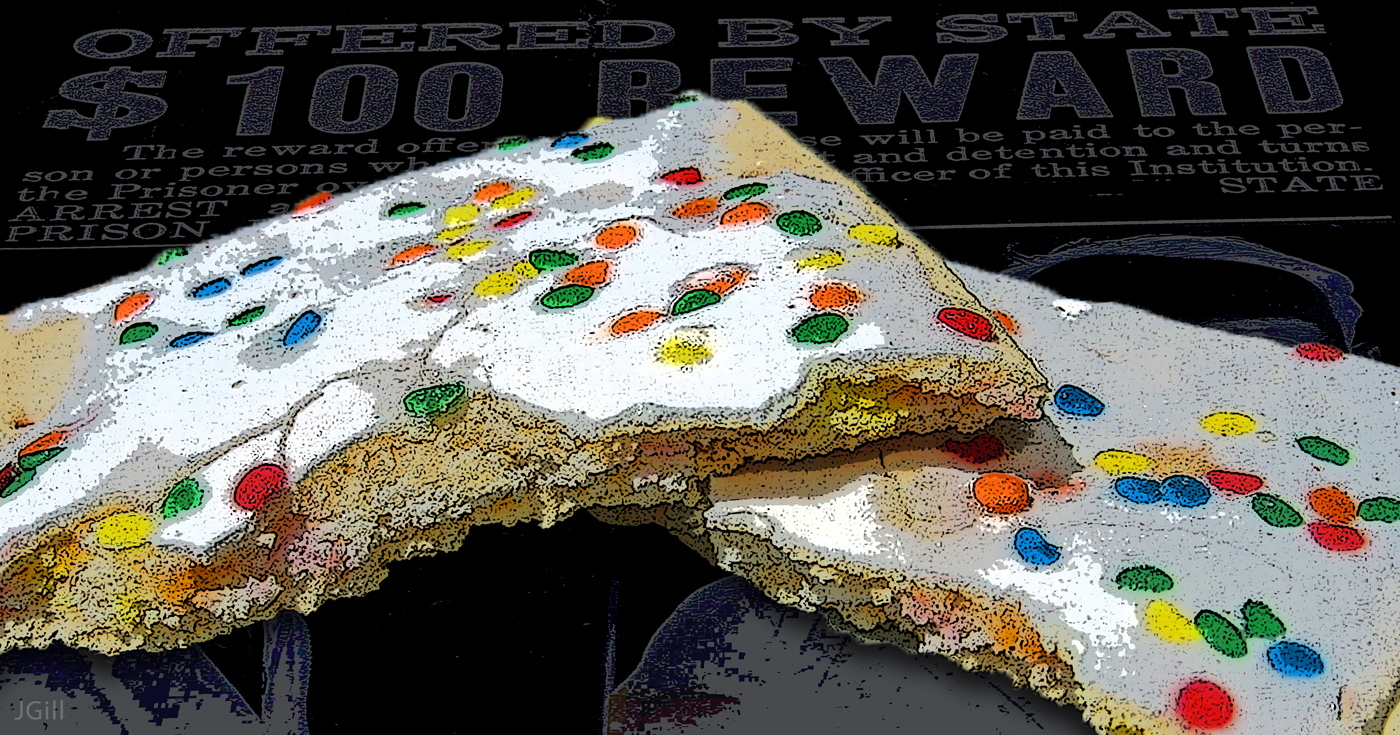
It was also a Pop Tart-related offense.
No, he didn’t shoot a Pop Tart; he bit his Pop Tart into the shape of a gun. There’s a dispute as to whether he then pointed the high-calorie weapon at the ceiling or at other students. Either way, unless the strawberry filing was piping hot (it wasn’t), there wasn’t really anything to fear.
Still, school officials pretty much freaked out.
Of course, the incident did occur just months after the Newtown, Connecticut, school shooting, when six- and seven-year-olds were feeling the full weight of adult hysteria about guns, pastries, pointed fingers, etc.
Fast-forward to the present: the Maryland lad’s parents are still fighting to clear this gun-related black mark from his permanent record, fearful it could damage him even decades from now.
I don’t blame them.
Unfortunately, last week the Maryland State Board of Education upheld the suspension. A spokesperson for the local schools claimed it was warranted because of the lad’s “long history of disciplinary issues,” adding that the school “has gone to every conceivable length to assist that student.”
The attorney for the family says they will appeal.
My kids have been homeschooled, but next year my youngest will attend a public high school. I just hope we can find a good, inexpensive attorney to go with her.
This is Common Sense. I’m Paul Jacob.
Printable PDF