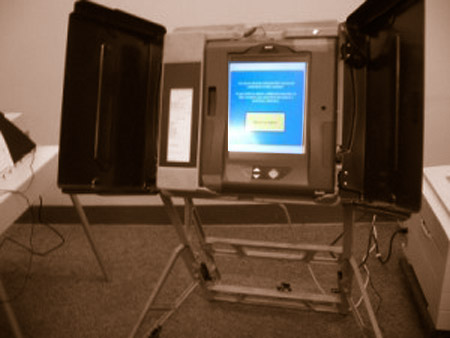
It has been observed by eminent economists, I think first by the late Frank A. Fetter, that the market is a democracy in which every penny gives a right to vote. It would be more correct to say that representative government by the people is an attempt to arrange constitutional affairs according to the model of the market, but this design can never be fully achieved.
Author: Redactor
Video: Hong Kong Student Protest Organizer
A 17-year-old activist explains the protests in Hong Kong, making the case for basic democratic rights.
October 4, SpaceShipOne
On October 4, 2004, SpaceShipOne became the first private craft to fly into space, thereby winning the Ansari X Prize for private spaceflight.
Ludwig von Mises
There is under capitalism one way to wealth: to serve the consumers better and cheaper than other people do.
The fight for freedom doesn’t stop at the border.
Hong Kongers, we are with you.
Your protest against continued tyranny by mainland China is a just cause. The Communist Party of China may no longer be in Marx’s pocket, but its members remain greedy and dictatorial and oppressive.
Leung, the governor of Hong Kong, refuses to step down. Tyrants do cling to power. (No term limits for them!) But the people have every right to demand his ouster under a principle established in our own revolution: Government must rest upon the consent of the governed.
I have no idea how this will all turn out. Ever since the Tiananmen protests, a generation ago, I’ve harbored hope: a freer future for the Chinese. But I know they are up against a juggernaut, an extremely entrenched exploiter class. The Tiananmen protests were violently put down, suppressed. Will Hong Kong’s be?
I think the people of Hong Kong know what they’re up against. All Chinese people know how corrupt and dangerous their government is. But the details, the exact history of the crimes? Not so much. Kept under wraps. Still, the people of Hong Kong developed a taste for freedom under the Brits. If not a taste for democratic elections. Now they are demanding both electoral democracy and democratic freedoms.
The protesters “occupying” Hong Kong have American analogues. But are they “Occupier” or “Tea Party”?
They aren’t demanding socialistic levels of more government. And they aren’t trespassing, or committing crimes. And they pick up after themselves.
That’s the way to “occupy” a city: For freedom, responsibly.
This is Common Sense. I’m Paul Jacob.
October 3, Buchanan & Vidal
On October 3, 1919, James M. Buchanan was born. Buchanan would go on to an illustrious career in economics, developing the theory of “Public Choice,” and receiving the 1986 Nobel Memorial Prize in Economic Sciences for his work. His books include “Cost and Choice,” “The Calculus of Consent” (with Gordon Tullock), and “The Limits of Liberty: Between Anarchy and Leviathan.”
In 1925, on this date, Gore Vidal was born. Vidal would go on to become one of the leading post-WWII liberal essayists as well as a major novelist and screenwriter. His most famous novels include “Burr,” “1876,” and “Lincoln,” part of his American history series; his collection of essays, “The United States,” was one of his many bestsellers.
October 2, Bill of Rights
On October 2, 1789, George Washington sent the proposed Constitutional amendments (the United States Bill of Rights) to the States for ratification.
On the same date in 1919, U.S. President Woodrow Wilson suffered a massive stroke, leaving him partially paralyzed, preventing him from reacting to the economic downturn following the Great War in a Progressive fashion, making his response de facto laissez faire. One insider, and skeptic of Progressive hubris, cattily referred to Wilson’s incapacitation as “a stroke of luck.”
His successor in office, President Warren G. Harding, would go on to massively cut spending as well as taxes, and take on regulation as well. He also released Woodrow Wilson’s domestic war prisoners — ranging from journalists, ordinary folk to Eugene V. Debs — who had dissented from Wilson’s involvement in the war.
The Depression of the early 1920s, though as deep as the early 1930s’, proved remarkably brief, thanks to Harding . . . and Wilson’s “stroke of luck.”
Ludwig von Mises
[B]usiness, the target of fanatical hatred on the part of all contemporary governments and self-styled intellectuals, acquires and preserves bigness only because it works for the masses. The plants that cater to the luxuries of the few never attain big size.
But for a Video
I’ve argued that police be required to wear cameras on the job — for the sake of both the wrongly used and the wrongly accused.
But ensuring that video is recorded and then, if necessary, used in tandem with other relevant evidence to secure justice doesn’t happen automatically. It requires a culture dedicated to upholding ethical standards of professional conduct.
This culture seems in short supply in Prince George’s County, Maryland.
There, explains the Washington Post, “it is now clear that the police, without provocation, can beat an unarmed young student senseless — with impunity. They can blatantly lie about it — with impunity. They can stonewall and cover it up for months — with impunity. They can express no remorse and offer no apology — with impunity.”
Beverly Woodward, the circuit court judge in the case the Post outlines, should have recused herself because of a conflict of interest. She did not. Then, without explanation, she tossed the case’s one modest conviction — which had been obtained only with great difficulty. The matter would not have stretched even that far had a video of the incident not eventually surfaced, exposing the lies of the officers who pummeled the innocent student.
Suspicious circumstances in the case abound. Radley Balko gives the laundry list.
When corruption is this pervasive in a locale, state or federal government must intervene to reform and prosecute. It should be a lot easier at all levels to prosecute and punish those public officials who commit clear wrongdoing.
This is Common Sense. I’m Paul Jacob.
On October 1, 1908, Ford produced the first Model T at a plant in Detroit. The auto could travel 40 miles per hour and ran on gasoline or hemp-based fuel. (As oil prices fell, Ford phased out the hemp option.) The Model T was the first car designed for a mass market, rather than as a luxury item. By 1927, Ford would build some 15 million Model T cars – the longest production run of any car model until the Volkswagen Beetle surpassed it in 1972.
On October 1, 1918, Lawrence of Arabia (T.E. Lawrence) helped lead a combined Arab and British force that captured Damascus from the Turks during World War I.