Categories
free trade & free markets general freedom too much government

Supermarket Slavery

How to sue supermarkets for shutting down:

One. Move to San Francisco.

Two. Support a proposed ordinance “amending the Police Code to require large supermarkets to provide six months notice to their customers and the City before permanently closing, and to explore ways to allow for the continued sale of groceries at the location.”

Three. If the ordinance passes, wait for a large supermarket to go out of business without having known six months in advance that it would need to do so.

Four. Sue.

That the proposed law would amend the police code is perversely apt. The idea is use the state’s police power to penalize ending an activity that as a free man, not a slave, you have no obligation to continue.

Ending any project may inconvenience people who benefit from what you’re doing. But unless you are bound by contract, these other people have no right to your further efforts. 

Not for six months, not for six seconds.

The San Francisco ordinance would exempt supermarkets that must close because of a natural disaster or other circumstance not “reasonable foreseeable.” These exemptions don’t solve the problems that the ordinance could cause for innocent businessmen. As Reason magazine notes, any stores that closes “without providing the proper notice” could still be sued for damages, supposedly exempted or not.

In the 1980s, when this notion was originally proposed (unsuccessfully), supermarket executives argued that making it harder for them to shut down would also discourage them from opening a store to begin with.

True. But that’s just common sense.

I’m Paul Jacob.


PDF for printing

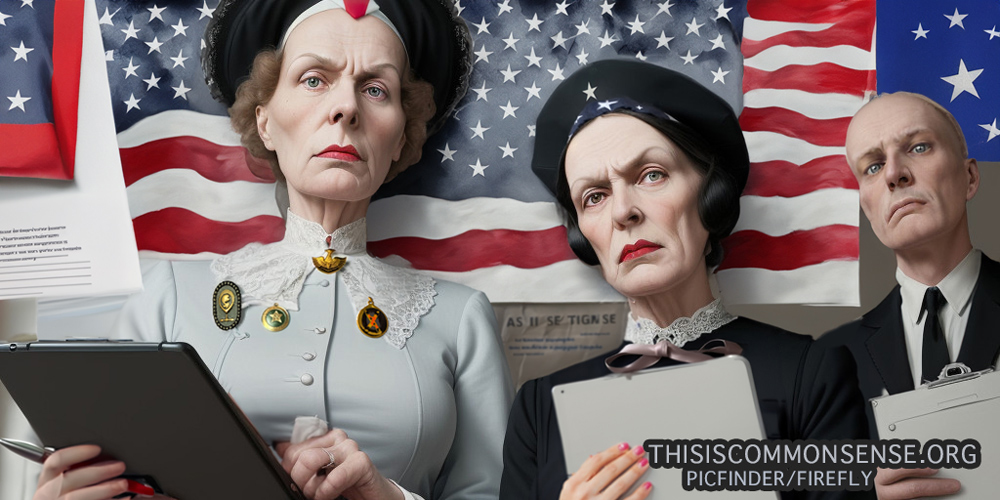
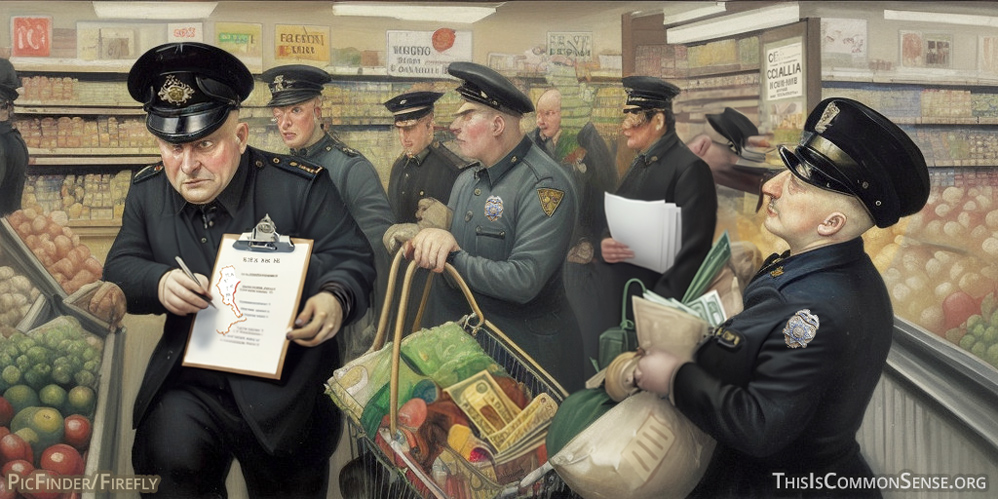
Illustration created with PicFinder and Firefly

See all recent commentary
(simplified and organized)
See recent popular posts
Categories
general freedom media and media people meme

Eclipse

Categories
Today

17th Amendment

On April 8, 1913, the 17th amendment to the Constitution, providing for the popular election of U.S. senators, was ratified.

Categories
Today

Two Criminals

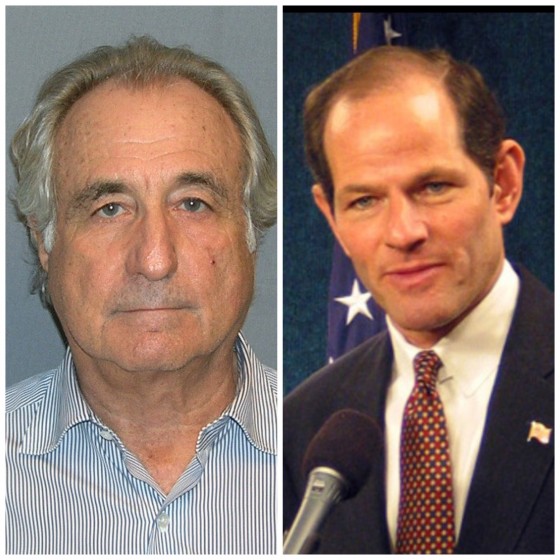
On March 12, 2009, financier Bernard Madoff pled guilty to pulling off perhaps the biggest swindle in U. S. history. One year earlier to the day, in the same city, New York, the state’s governor, Eliot Spitzer, resigned a mere two days after reports had surfaced that he was listed as a client in a high-end escort/call-girl prostitution ring.

The cause of freedom is advanced with every criminal nabbed and every hypocritical illiberal politician disgraced.

Categories
Today

Daily Courant

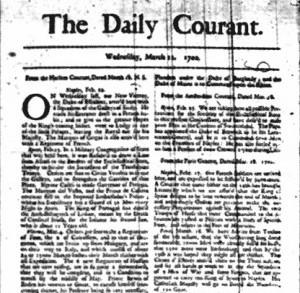
On March 11, 1702, The Daily Courant, England’s first national daily newspaper, was published for the first time. It was a one-sheet, concentrated on foreign news, sans commentary. The reverse side sported advertising. It was produced by Elizabeth Mallet (1672–1706), a printer and bookseller who lived, and published the paper, next to the Kings Arms tavern at Fleet Bridge in London.

Categories
Today

William Cobbett & Adam Smith

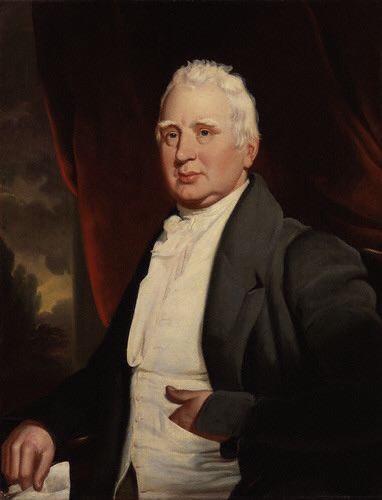
March 9 marks the 1763 birthday of British pamphleteer and activist William Cobbett. Cobbett was known for his lifelong opposition to authority, and his later-in-life “radicalism,” which included his opposition to Britain’s protectionist Corn Laws as well as his support for Catholic Emancipation. Cobbett died in 1835.

In 1776 on this date, Scottish philosopher Adam Smith published An Inquiry into the Nature and Causes of the Wealth of Nations, which became the first widely accepted landmark work in the field of economics. It was not the first general treatise on the subject, however; that designation almost certainly belongs to banker Richard Cantillon’s Essai sur la Nature du Commerce en Général, cited by Smith in his more famous book. It is also worth noting that Étienne Bonnot de Condillac’s systematic treatise, Le Commerce et le Gouvernement, also saw publication in 1776.

On March 9, 1862, the USS Monitor and CSS Virginia fought to a draw in the Battle of Hampton Roads, the first battle between two ironclad warships. The Virginia was built on the remains of the USS Merrimack, and the battle is often referred to as between “the Monitor and the Merrimack.”

Categories
Today

Slavery and Anti-Slavery in America

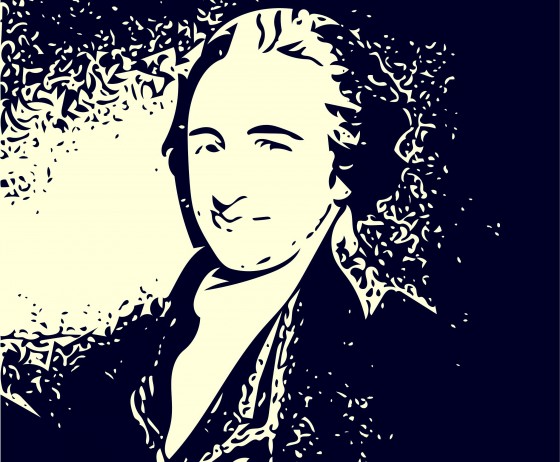
On March 8, 1775, “African Slavery In America,” often described as the first known essay advocating the abolition of slavery in America, was published anonymously in the Pennsylvania Journal and the Weekly Advertiser. Thomas Paine (pictured) is believed to be the essay’s author.

The first anti-slavery society was formed in Philadelphia weeks after publication, and Paine was a founding member.

Exactly 120 years earlier, a court in Northampton County of the Virginia Colony ruled that John Casor, then working as an indentured servant to Robert Palmer, must be returned to Anthony Johnson as Johnson’s “lawful” slave for life. Johnson himself was one of the original indentured servants brought to Jamestown, had completed his indenture to become a “free Negro,” and became the first African landowner in the colony. The case marked the first person of African descent to be legally recognized as a lifelong slave in England’s North American colonies. In summary: the first official chattel slave in English-speaking North America was of African descent was owned by a man also of African descent.

Categories
crime and punishment Eighth Amendment rights general freedom

The Case of the Narrow Driveway

Sandy Martinez: mother of three, working hard to get by, whole life ahead of her — why would she sabotage it by failing to perfectly park her car in her narrow driveway such that two of the wheels edged onto the grass?

Think I’m making it up? 

No. It’s true. Some people get distracted and treat their grass as if it were gravel and let their car edge onto it.

Why’dja do it Sandy, huh? Why?

On the hand, it’s her property, so who cares? 

What difference does it make? 

Well, mucho . . . if you’re Lantana, Florida, which fined Sandy $101,750 for imperfect parking, $47,000 because of storm-inflicted fence damage, $16,000 for cracks in her driveway.

The good news is that Institute for Justice is litigating on behalf of Sandy Martinez and other homeowners being hit with plainly unjust fines for trivial code violations.

IJ argues that the state and local governments at fault are violating the Eighth Amendment’s prohibition against excessive fines. And the Institute and its clients are winning. The U.S. Supreme Court has just ruled, in Timbs v. Indiana, that this Eight Amendment ban applies to cities and states as well as to the federal government. 

Many locales, perhaps including Lantana, Florida, may still try to get away with the grift despite this definitive ruling. But sooner or later, some judge will throw out the blatantly excessive fines and point to the recent Supreme Court decision.

Help is on the way, Sandy.

This is Common Sense. I’m Paul Jacob.


PDF for printing

Illustration created with PicFinder and Firefly

See all recent commentary
(simplified and organized)
See recent popular posts

Categories
Today

Enver Hoxha

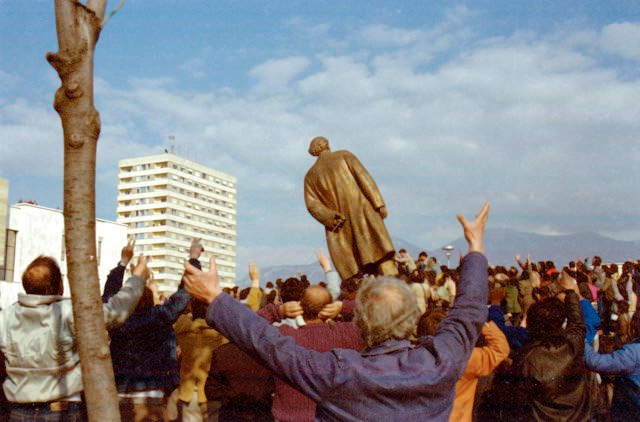
On February 20, 1991, in the Albanian capital Tirana, a gigantic statue of Albania’s long-time leader, Enver Hoxha, was brought down by mobs of angry protesters.

Categories
Today

Corn Law

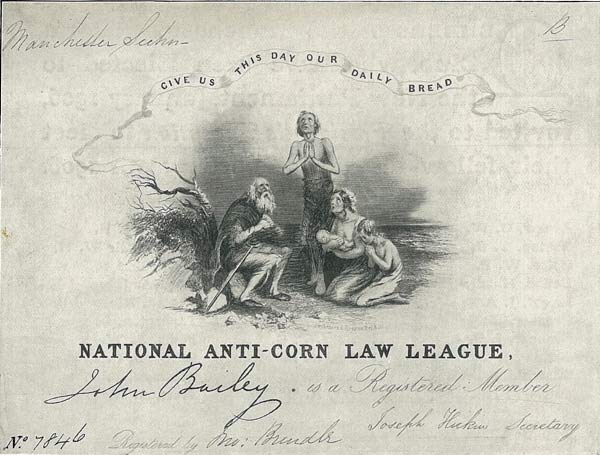
On January 31, 1849, the Corn Laws were abolished in the United Kingdom, one of the most impressive and far-reaching anti-protectionist moves of all time. “Corn” stood for all grains, including wheat, oats, barley, etc.; the free-trade agitation by John Bright and Richard Cobden was one of the main impetuses for the reform.

On Jan. 31, 1865, the United States Congress proposed the Thirteenth Amendment to the U.S. Constitution, submitting it to the states for ratification. The Amendment’s main section reads: “Neither slavery nor involuntary servitude, except as a punishment for crime whereof the party shall have been duly convicted, shall exist within the United States, or any place subject to their jurisdiction.”

On Jan. 31, 1990, the first McDonald’s fast food restaurant opened in the Soviet Union. In 2022 they were all closed in protest of the Ukraine war.