Categories
national politics & policies property rights

Zoning by “Outsiders”

“In recent years, there’s been a push to move zoning decisions further from the local level,” writes Matt Ray for Mises Wire — engaging in no small understatement. 

“In 2019, Oregon passed House Bill 2001, making it the first statewide law to abolish single-family zoning in many areas. By expanding the state government’s jurisdiction to include zoning decisions previously handled by local agencies, the law entails an alarming centralization of state power.”

This trend is old, going back at least to the Progressive Era. 

But the trend continues — “progresses” — and Oregon’s centralizing law has been “quickly followed by the introduction of similar bills in Virginia, Washington, Minnesota, and North Carolina,” Matt Ray explains. “Now President Biden is attempting to increase federal influence over local zoning.”

The problem should be obvious. Government land-use regulation by “zoning” is an awesome expression of rights-abridging power, usually becoming nothing more than what most regulations are: special-interest protection schemes, helping the in-crowd at the expense of “outsiders” (you and me, actually).

Most savvy people understand this in specific instances, but not generally, so when they see zoning they don’t like, they might leap to the notion that bad local regulations should be replaced by good state or federal regulators.

Trouble is, we have less ability to ensure that regulators in distant political centers aren’t captured by special interests or malign ideologues. 

The only way out is a general rule-of-law approach, limiting all zoning powers. Barring that? Well, no matter how bad your city’s zoning, I wouldn’t trade it for zoning decisions from Washington.

This is Common Sense. I’m Paul Jacob.


PDF for printing

See all recent commentary
(simplified and organized)
See recent popular posts
Categories
Thought

Log Lady

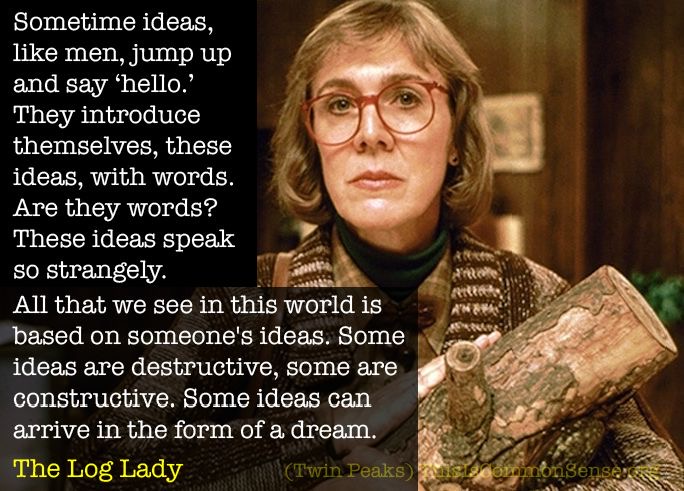
Sometime ideas, like men, jump up and say ‘hello.’ They introduce themselves, these ideas, with words. Are they words? These ideas speak so strangely. All that we see in this world is based on someone’s ideas. Some ideas are destructive, some are constructive. Some ideas can arrive in the form of a dream. I can say it again: some ideas arrive in the form of a dream.

Log Lady (played by Margaret Lanterman, née Coulson), in “Zen, or the Skill to Catch a Killer” (Twin Peaks, Episode Two), written by Mark Frost and David Lynch, premiering April 19, 1990 (ABC).
Categories
Today

Giants

On June 22, 1633, astronomer Galileo Galilei recanted his belief in heliocentrism, the idea that the Earth revolves around the sun. He didn’t do this based on scientific research, but under pressure from the Holy Office in Rome.

Three hundred forty-five years later, to the date, American astronomer James W. Christy discovered Charon, a moon for what was then called “the ninth planet,” Pluto. This put Christy in an august company of satellite discovers, including Galileo, who had discovered four of Jupiter’s moons in 1610.

When Pluto was later “demoted” to “dwarf planet” status, in 2006, no one was put under house arrest for objecting, or for not changing his or her mind, as had Galileo been centuries before.

Categories
ideological culture

Missing Fathers

Remembering my dad and father-in-law, who both passed away several years ago; being with my adult children, and two grandchildren, who were all pretty nice to me; and seeing friends and relatives celebrate their dads — Father’s Day was wonderful.

In the real world, folks know how precious and important fathers are. 

But yesterday morning, I was instead torturing myself with The Washington Post. Adorning the top half and more of the front-page of the Sunday “Outlook” section was a drawing of a kids’ party with a man delivering the birthday cake while a woman looks on from outside. 

Beneath the artwork, the headline reads: “Fatherhood reimagined.”

Why “reimagined”? 

Well, the paper offered two opinion columns under that banner. One, entitled, “Genetic testing is changing our understanding of who fathers are,” noted that “40 million at-home DNA tests have been sold, and hundreds of thousands of people . . . have gotten the news that the man they thought of as Dad is not their genetic father.”

I moved on to the second essay. “I wanted to be a better husband. So I planned my kid’s birthday party,” read the headline, the bad news in the sub-title: “As a psychologist, I knew men did less ‘mental labor,’ but I didn’t see my own shortcomings.”

I suppose fathers have ample room for improvement, but cannot we celebrate, or merely discuss, even for a day, the positive side of fatherhood? The relentless carping suggests not a penchant for improvement but something approaching an anti-fatherhood narrative.

Searching The Post for more on “fatherhood reimagined,” the second item is Mychal Denzel Smith’s “The dangerous myth of the ‘missing black father.’” Back in 2017, I addressed Smith’s misguided argument that, essentially, in a super-charged government-welfare state, absent dads would not really be missed.

I miss my dad. I’m Paul Jacob.


Note: Thankfully, late in the day, The Post reported, “D.C. motorcade celebrates role of Black fathers on Father’s Day.” Hope!

PDF for printing

See all recent commentary
(simplified and organized)
See recent popular posts

Categories
Thought

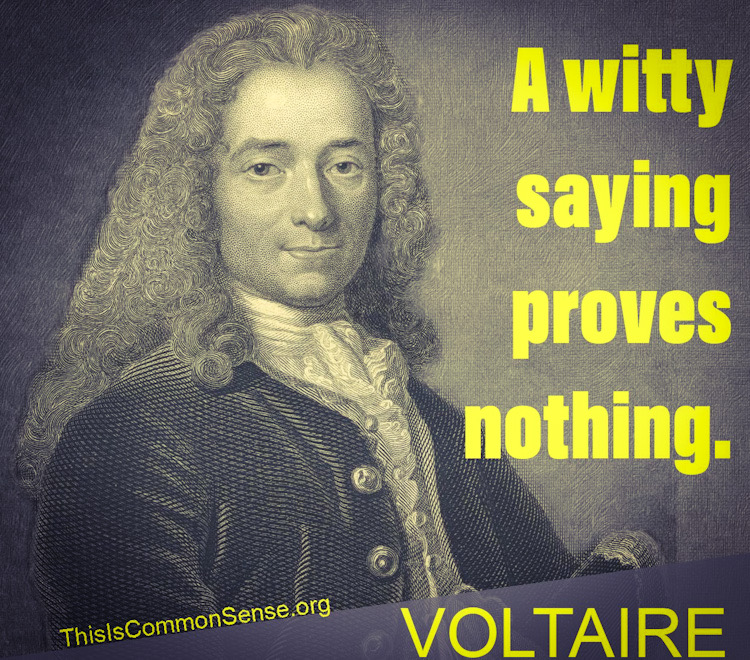
Voltaire

Un bon mot ne prouve rien.

A witty saying proves nothing.

Le dîner du comte de Boulainvilliers (1767): Deuxième Entretien.

Categories
Today

Grandfather clauses

On June 21, 1915, the U.S. Supreme Court struck down an Oklahoma law denying the right to vote to some citizens. In Guinn v. United States, the Supreme Court found “grandfather clauses” in effect in several formerly slave states to be little more than sneaky ways of allowing illiterate white folks to vote while disallowing illiterate black folks.

Categories
Today

A Federation

On the 20th of June in 1787, at the Constitutional Convention in Philadelphia, Oliver Ellsworth moved to confine legislative powers to two distinct branches, and to strike the word “national” from the document. Edmund Randolph of Virginia had previously moved successfully to call the government the National Government of United States. Ellsworth moved that the government should continue to be called the United States of America.

The final wording eventually became “All legislative powers herein granted shall be vested in a Congress of the United States, which shall consist of a Senate and House of Representatives.”

And, yes, the word “national” does not occur anywhere in the Constitution.


John F. Kennedy authored the Encyclopædia Britannica’s article on Ellsworth. This was Kennedy’s only contribution to the Encyclopedia.

Categories
audio podcast

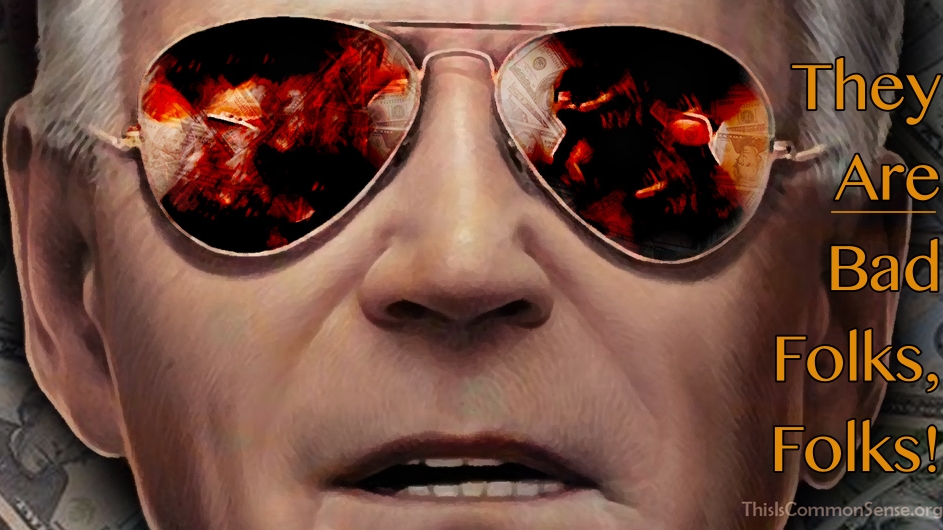
Listen: They ARE Bad Folks, Folks

It’s been quite a week for America in the international realm. Yet Paul Jacob still laughs. Occasionally:

Categories
Thought

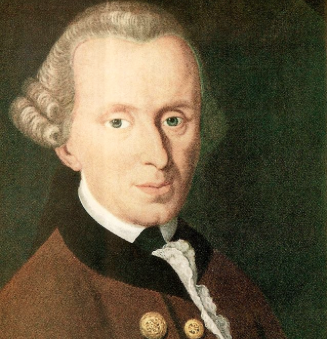
Immanuel Kant

The civil state regarded purely as a lawful state, is based on the following a priori principles:

  • The freedom of every member of society as a human being.
  • The equality of each with all the others as a subject.
  • The independence of each member of a commonwealth as a citizen.

These principles are not so much laws given by an already established state, as laws by which a state can alone be established in accordance with pure rational principles of external human right.

Immanuel Kant, Theory and Practice (1791).

Categories
Today

Juneteenth

“Juneteenth” (a portmanteau of June and nineteenth) also known as Freedom Day, Jubilee Day, Liberation Day and Emancipation Day, is a holiday celebrating the emancipation of those held as chattel slaves in the United States. Originating in Galveston, Texas, it is now celebrated annually on June 19 throughout the United States, with increasing official recognition. It is commemorated on the anniversary date of the June 19, 1865, announcement of General Order No. 3 by Union Army general Gordon Granger, proclaiming freedom from slavery in Texas.


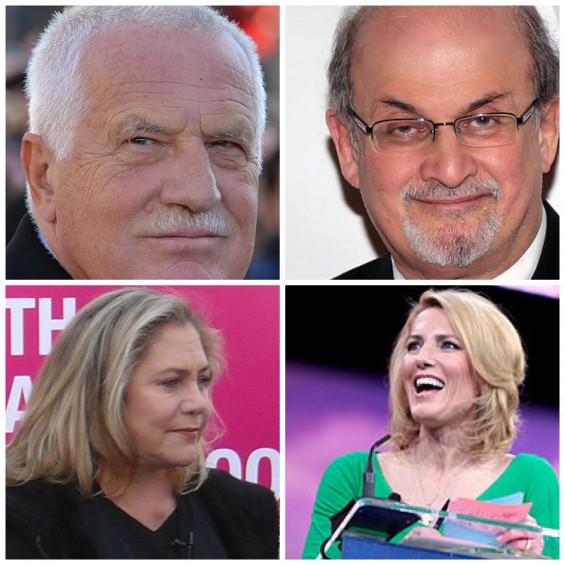
In June, 1941, Czech economist and politician Václav Klaus was born on the 19th; other June 19 births include Salman Rushdie in 1947, Kathleen Turner in 1954, and Laura Ingraham in 1964.