Two big stories: two judges in different cases — one went one way, the other got it right. Paul discusses:

Two big stories: two judges in different cases — one went one way, the other got it right. Paul discusses:

Two young people, a high school girl and a college man, have two very different COVID stories, but both reveal where we are right now in the pandemic.
“Abby Chenoweth was a healthy 16-year-old,” writes Emily Walker for MSN. “The Titusville teen took virtual school classes and wore a face mask when she left the house. Her mom said she didn’t have pre-existing conditions, and she didn’t go out often.”
The report goes on to focus on her horrific COVID case, and readers’ hearts go out to her. But that opening paragraph is bald-faced lie.
Or at least a “white lie.” You decide.
You see, Abby Chenoweth is obese. She is obviously so in the photos provided by her mother. And not merely a “little bit” overweight.
Our hearts break all the same, but her obesity is a “pre-existing condition.” We knew early on that COVID can be devastating for the overweight.
The article does not once mention her corpulence. Were it not for the photos, readers wouldn’t have a clue. They would read Abby’s mother’s mask apologia at the end as an earnest and honest plea.
Next to Ms. Chenoweth’s harrowing story, and the see-through propaganda made out of it, 22-year-old Logan Hollar’s story is comic. The title delivers the punch line: “Rutgers student says he’s being stopped from taking virtual classes because he’s not vaccinated,” Karen Price Mueller’s piece summarizes.
“I believe in science, I believe in vaccines,” cautions Mr. Hollar’s stepfather, “but I am highly confident that COVID-19 and variants do not travel through computer monitors by taking online classes.”
Do the professors and administrators at Rutgers know that?
COVID craziness seems more infectious than COVID itself.
This is Common Sense. I’m Paul Jacob.
Photo Credit: crazy person
See all recent commentary
(simplified and organized)
See recent popular posts
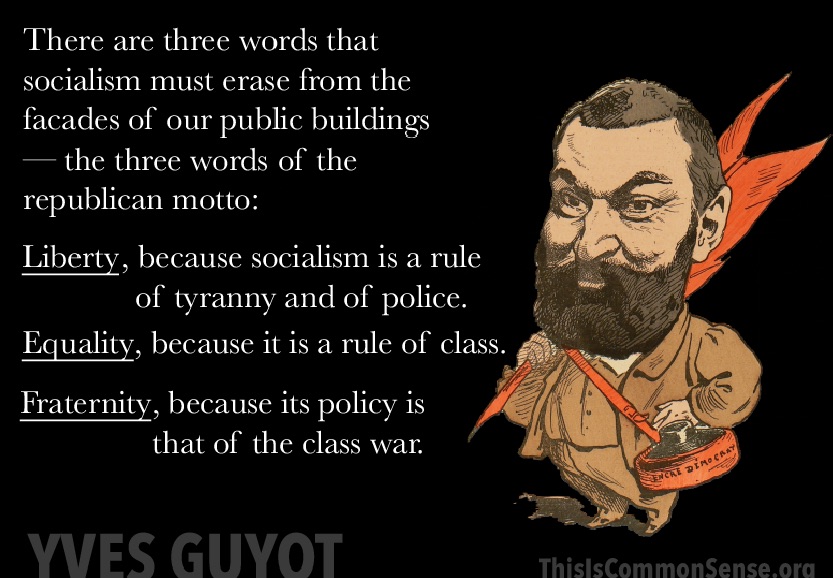
There are three words that socialism must erase from the facades of our public buildings — the three words of the republican motto:
Yves Guyot, Sophismes Socialistes (1908; English translation 1910), Book IX: “Socialism and Democracy,” Chapter X: “The Impotence of Socialism,” conclusion.
Liberty, because socialism is a rule of tyranny and of police.
Equality, because it is a rule of class.
Fraternity, because its policy is that of the class war.
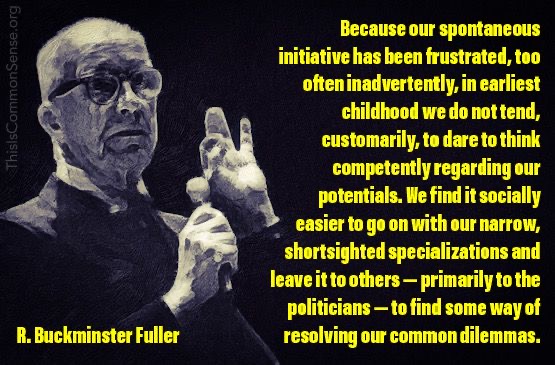
Because our spontaneous initiative has been frustrated, too often inadvertently, in earliest childhood we do not tend, customarily, to dare to think competently regarding our potentials. We find it socially easier to go on with our narrow, shortsighted specializations and leave it to others — primarily to the politicians — to find some way of resolving our common dilemmas.
R. Buckminster Fuller, Operating Manual for Spaceship Earth (1969).
The first rule of war? Don’t fight unwinnable ones.
The second rule of war? Don’t forget the first.
This weekend on This Week in Common Sense, Paul Jacob seeks to clarify the Afghanistan mess . . . but not without some pushback:
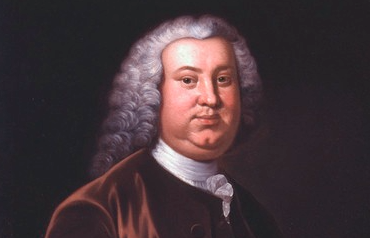
Responding to British Parliament’s enactment of the Coercive Acts in the American colonies, the first session of the Continental Congress convened at Carpenter’s Hall in Philadelphia, on September 5, 1774. Virginian Peyton Randolph (pictured) was appointed as the first president of Congress. John Adams, Patrick Henry, John Jay and George Washington were among the delegates.
Paul Jacob has an important basic point to make: “Wars that you cannot win with victories on the battlefield shouldn’t be fought.”
But that doesn’t mean that ending unwinnable wars in really stupid ways isn’t blameworthy. In this case: on the politicians, specifically Biden.
This Week in Common Sense co-host Timothy Virkkala itches to blame the military, though. In this podcast there’s some debate. Who ya gonna blame?
It pays to contest petty (as well as major) civil and criminal charges that your local and state governments lay against you. Sometimes you get off.
People have used some pretty “out there” arguments in their own defense. Example? Risk homeostasis in a speeding case. That was a stretch.
But this Michigan case, though it may seem odd, is as American as Apple pie.
Alison Taylor sued the city of Saginaw over her parking violation citations. Her argument? The Fourth Amendment.
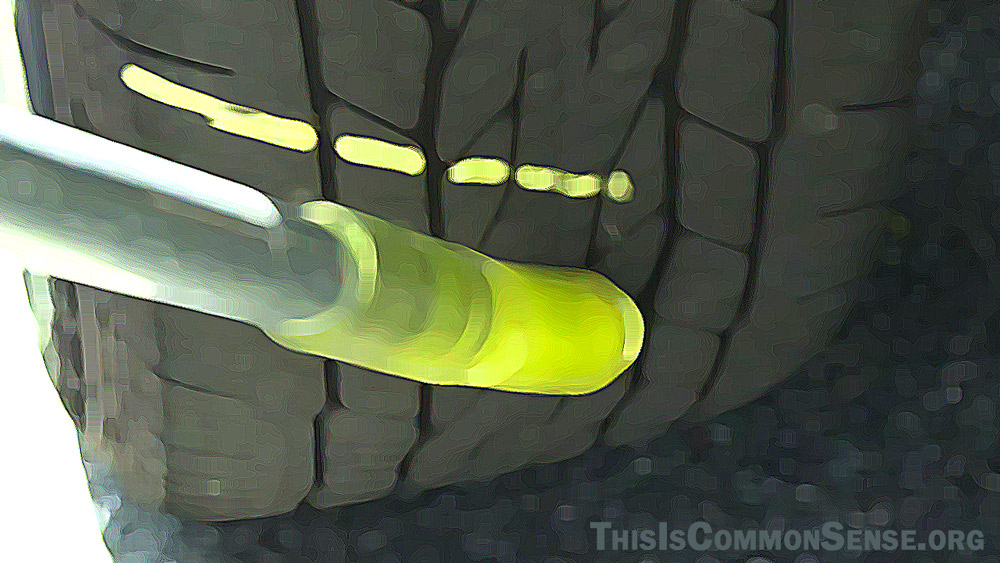
You see, the municipality’s parking officer had used chalk to mark her (and others’) tires. If on a second round the officer sees a car with the mark at the right spot, showing that it had not moved in the allowed period — write up a ticket!
Ms. Taylor had accumulated 14.
So she and her lawyer argued that “using the chalk to mark her tires constituted an unreasonable search without a warrant.”
The U.S. Sixth Circuit Court of Appeals agreed. This traditional method of enforcing parking rules was recognized as an infringement of the right of the people “to be secure in their persons, houses, papers, and effects.”
Trivial? The consequences may not be, as my source for this case, Greg Rasa of Autoblog, points out.
Dubious? Imagine a non-legal way to fight the chalk-mark method — non-officers chalking car tires with multiple marks indistinguishable from the officers’. Cities would object, of course, but their best case against such a practice would be the car owners’ case: defacement of private property.
Yes, if the saboteurs’ marks are defacement, so are the city’s.
Justifying the appellate court’s ruling.
Chalk one up for constitutionally guaranteed rights?
This is Common Sense. It’s Friday! I’m Paul Jacob.
See all recent commentary
(simplified and organized)
See recent popular posts
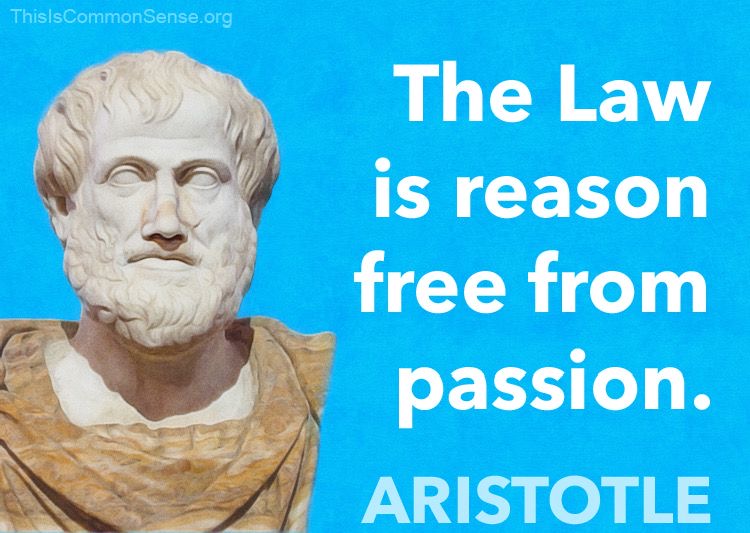
The Law is reason free from passion.
Aristotle, Politics, Book III, 1287a.32.
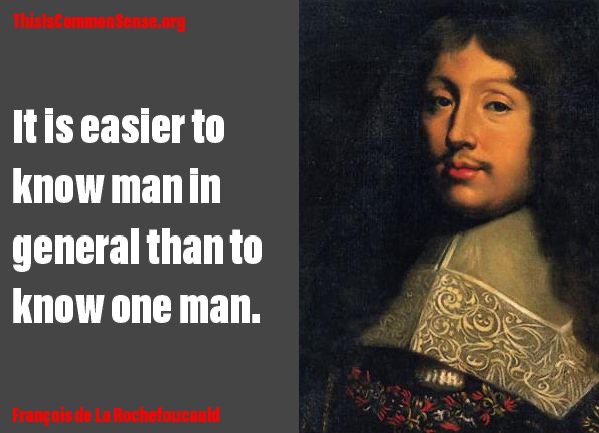
Il est plus aisé de connaître l’homme en général que de connaître un homme en particulier.
It is easier to know man in general than to know one man.
François de La Rochefoucauld, Reflections; or Sentences and Moral Maxims (1665–1678).