Categories
Today

Birthdays

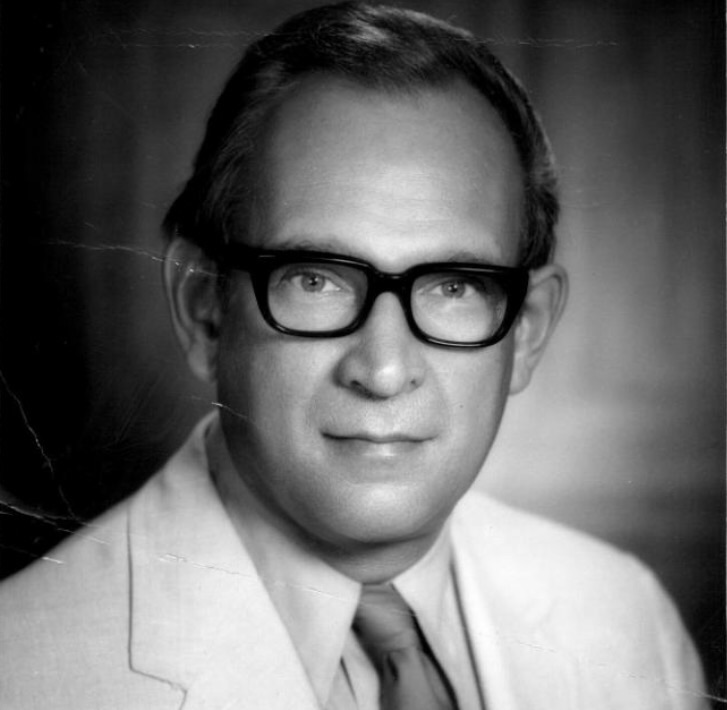
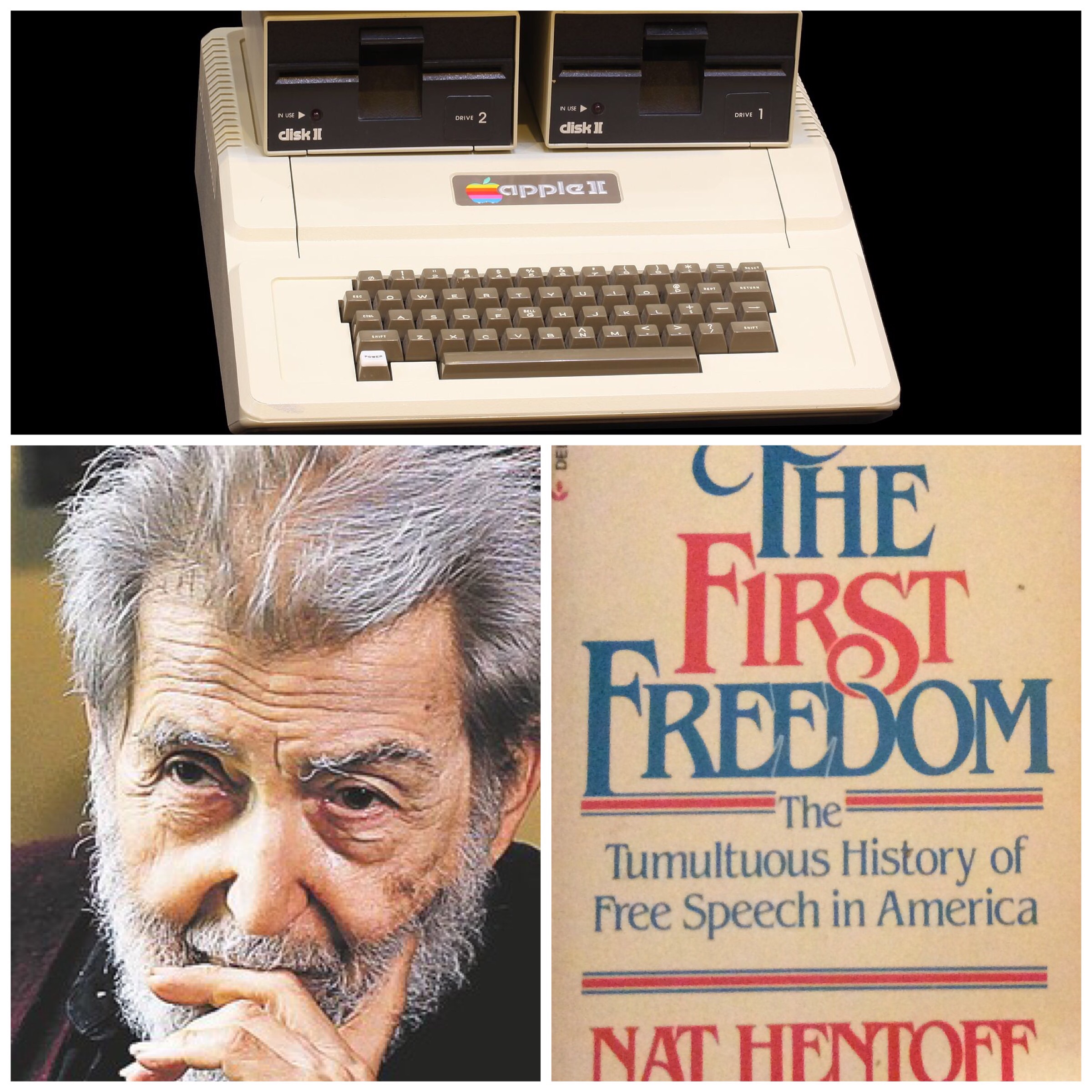
Born on this day: historian, jazz critic and civil libertarian Nathan Irving Hentoff (1925); children’s writer Maurice Sendak (1929); scientist and pioneer of “sociobiology,” E. O. Wilson (1929).

Hentoff wrote a good book on the history of free speech in America, The First Freedom (1980). Sendak is most famous for Where the Wild Things Are (1963). Wilson’s many books include Consilience: The Unity of Knowledge (1998).


Apple shipped the first Apple II computer on June 10, 1977. It was typographically styled as the “Apple ][” and the series continued long after the specific II model was superseded by the Apple II Plus and was discontinued in 1981. The last II-series Apple in production, the IIe card for Macintoshes, was discontinued on October 15, 1993.


Sendak died in 2012, Hentoff in 2017, while Wilson remains alive.

Categories
free trade & free markets national politics & policies

President Goes Postal?

A bullying bull in a China shop?

“President Donald Trump is taking another swipe at China,” Jen Kirby wrote for Vox back in 2018, “by ripping up an international treaty that’s more than a century old.”

We’re talking about the Universal Postal Union — or UPU. “At 144 years old, the UPU is one of the oldest intergovernmental agencies,” she explained. 

“The organization made possible the international mail system,” offered Washington-based attorney and UPU expert Jim Campbell. 

Wellesley College Professor Craig Murphy, “an international organizations expert,” called Trump’s threat “absurd.”

“It makes the international postal system run smoothly,” explained Kirby, “it’s the reason why you can get a package from South Africa or a postcard from your aunt on vacation in Bali.”

So why gum up the efficient delivery of letters and packages?

“Trump does have a legitimate gripe,” Kirby abruptly changed tone, “and administrations going back to Ronald Reagan have voiced similar complaints about the UPU.” 

But did nothing about it.

“Countries like China that were developing nations in 1969 . . . still pay the U.S. Postal Service a pittance to deliver mail,” Foreign Policy’s Keith Johnson clarifies, which “means that Chinese firms had a tiny edge in shipping goods to the U.S. market — making the Postal Service pick up much of the tab for actually delivering the package, even while costing U.S. firms potential sales.”

“Tiny edge”

Bull.

“[I]t’s actually cheaper to ship some products from certain places overseas to the US,” Kirby acknowledged, “than it is to deliver something between New York and Kansas.”

The gripe? 

The “disproportionately dramatic response . . . reveals the White House’s obsession with what it sees as China’s unfair advantage in global trade.”

Yet, this is an unfair advantage. 

Er, well . . . was

This is Common Sense. I’m Paul Jacob.


PDF for printing

See all recent commentary
(simplified and organized)
See recent popular posts
Categories
Thought

Aldous Huxley

To be able to destroy with good conscience, to be able to behave badly and call your bad behavior ‘righteous indignation’ — this is the height of psychological luxury, the most delicious of moral treats.

Aldous Huxley, attributed — on the Web and in many books it is cited as from his first comic novel of ideas, Crome Yellow, but it is not in there.
Categories
Today

John Hospers

Roman Emperor Nero committed suicide on this day in June, 68 AD, ending Rome’s Julio-Claudian Dynasty, later written about with verve by Suetonius and Robert Graves.

Also on June 9, James Oglethorpe received a charter from the British crown to start the Georgia colony (1732); William Jennings Bryan resigned his position as Secretary of State under Woodrow Wilson, disgusted over the handling of the sinking of the Lusitania (1915); philosopher John Hospers (pictured) — who would go on to run as a Libertarian candidate for the U.S. presidency in 1972 — was born in 1918.

Categories
Accountability national politics & policies

Up, Up and Away?

The new U.S. Space Force wants “flexibility.” It has requested from Congress the ability to purchase and use satellites and other developing technology with agility.

That is, it wants permission to follow an “alternative acquisition system” — as explained in a “23-page report to Congress from the U.S. Air Force, the current parent of the Space Force,” according to Ed Adamczyk for United Press International. Adamczyk says that “Congress mandated a retooling of the Space Force acquisition system when it created the new branch of the military in December.”

What the new Space Force yearns for certainly looks like off-budget funding of technological assets. 

The official wording speaks of a reduction in “space portfolio constraints via incremental funding,” which Adamczyk explains as an “expanded ability to pay for space systems without regular oversight or constant requests for congressional approval.” 

That, he writes, “is a constant in the report.”

The point? To “rapidly leverage industry innovation to outpace space threats.” 

While it is popular in ‘paranoid’ circles to warn of ‘one world government’ threats to form a ‘new world order,’ this is transparently a push to effect a breakaway above-world government that sure would change the balance of world power.

Scurrying further down a long and winding rabbit hole, it might also be a way to legitimize currently unconstitutional military-industrial complex programs, perhaps part of the black budget Pentagon/HUD double-digit unaccounted-for spending and income. 

Space Force is ambitious. Good. But it craves scant constraint from Congress.

Not to mention the citizens of these earthbound United States. 

Not good.

This is Common Sense. I’m Paul Jacob.


PDF for printing

See all recent commentary
(simplified and organized)
See recent popular posts

Categories
Today

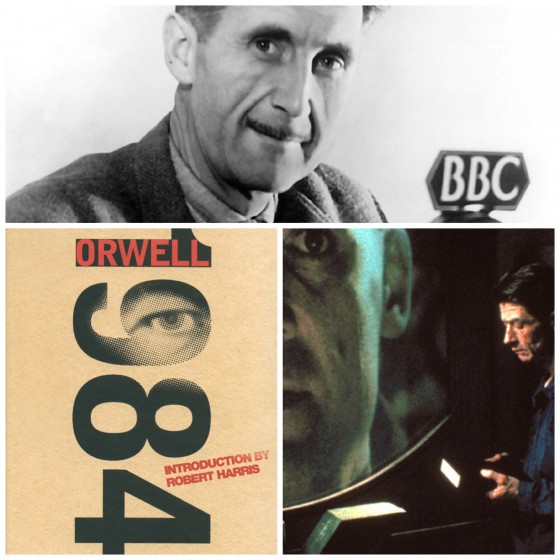
Nineteen Eighty-Four

On June 8, 1949, George Orwell’s dystopian novel Nineteen Eighty-Four was published.

Categories
by Paul Jacob video

Watch: What’s In-Between Two Bad Systems?

Paul explores today’s situation, complete with its chaos and its power trips.

This Week in Common Sense, June 1 – 5, 2020.
Categories
Today

Founders

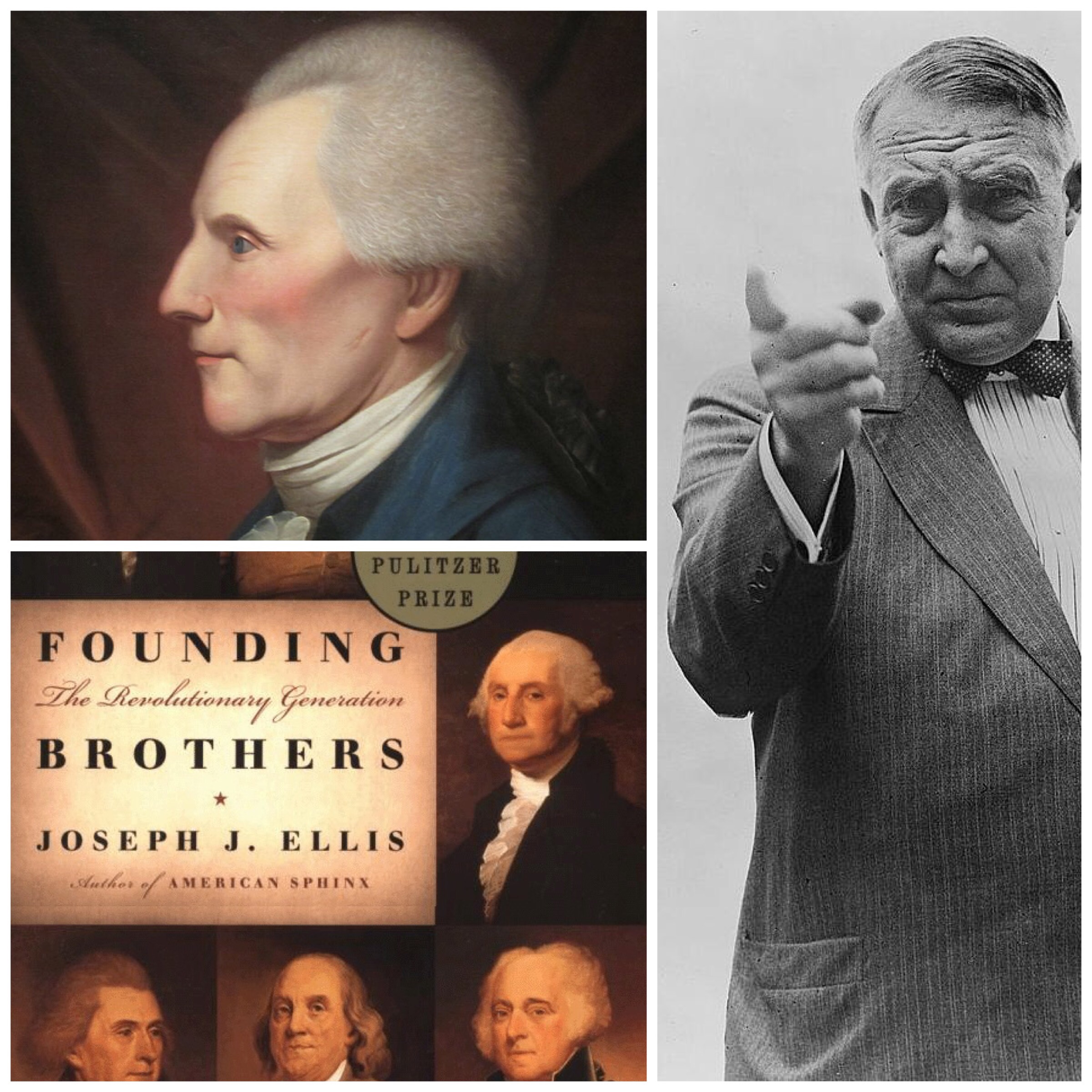
On June 7, 1776, Richard Henry Lee presented the “Lee Resolution” to the Continental Congress. The motion was seconded by John Adams, but was tabled for several weeks. The motion was finally passed on July 2, 1776.

During the 1916 Republican National Convention (June 7 – 10), Senator Warren G. Harding used the phrase “Founding Fathers” in his keynote address . . . and would go on using it in speeches thereafter. It caught on as a eulogistic way to refer to figures such as Thomas Jefferson and, yes, Richard Henry Lee, who orchestrated the American colonies’ break from England’s imperial monarchy.

Categories
Today

Philosophers

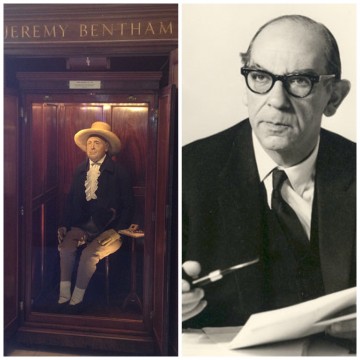
June 6 marks major life events of two eminent British philosophers, Jeremy Bentham’s death* (1832) and Isaiah Berlin’s birth (1909).

Bentham was known as a “philosophical radical” and a major influence on the British utilitarian tradition. He authored numerous books, including Defence of Usury (1787) and An Introduction to the Principles of Morals and Legislation (1789). Bentham started out advocating for laissez faire, became obsessed with his own specially designed prison design, the Panopticon, and argued for feminism and animal rights in public but kept his defense of homosexual rights private, to be published long after his death. His treatise on ethics, Deontology: Or, the Science of Morality, in Which the Harmony and Co-incidence of Duty and Self-Interest, Virtue and Felicity, Prudence and Benevolence, Are Explained and Exemplified, was published from his manuscripts two years after his death.

Berlin was best known for several dozen brilliant essays, including the famous, much-quoted “The Hedgehog and the Fox” (a study of Leo Tolstoy) and “Two Concepts of Liberty.”


* Pictured is his remains as housed in a special “closet” in the London Academy. Bentham specified this in his will, and he called this manner of posthumous presentation an “auto-icon.”

Categories
Thought

Walter Bagehot

It is good to be without vices, but it is not good to be without temptations.