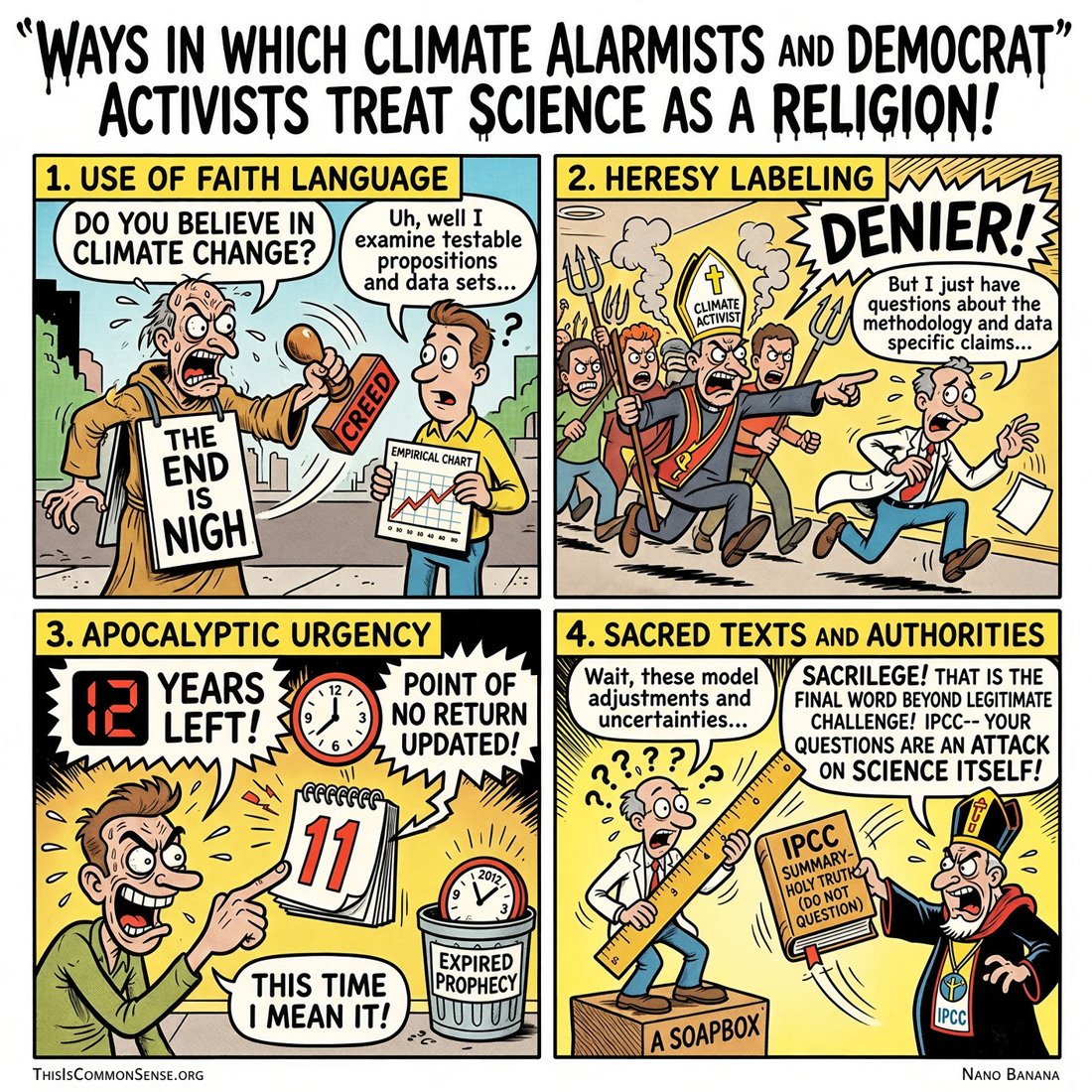
“The U.N. climate summit in Turkey broke down Sunday,” explained The Washington Post, “after stark disagreements over the future of fossil fuels kept countries from reaching consensus on a proposed agreement for tackling global warming.”
Just as prophecies foretold.
But don’t reach for your Nostradamus.
The prophet was economist Thomas Schelling, and he didn’t foresee this exact agreement breakdown at this precise time. What he did, as far back as 1992, was explain why any workable international “climate agreement” would be highly unlikely.
While the U.N. Secretary General blames “powerful fossil fuel interests,” Schelling’s point (no pun intended) was that it’s not in the shared interest of enough nation-states to agree to curb CO2 emissions. The idea is probably familiar enough: poor countries struggling to progress need fossil fuels to advance, and they would much prefer a “free ride,” while only rich countries can afford to hobble themselves by increasing the price of energy by reducing the most efficient forms, which happen to be
Schelling has suggested that the best thing to do is wait for progress to alleviate the problem. There has been a general trend to shift from more polluting to less polluting fuels for the past several centuries. In time, it’ll likely all balance out.
Now, many of you may be in my position, skeptical of the “findings” of contemporary (subsidized) “climate science.” The Secretary General doesn’t agree: “There may be no consensus in the negotiating room, but there is no ambiguity in the science.”
That’s hardly true. The “scientific consensus” for man-made global warming has been puffed up, dishonestly, for too long.
So breathe in the air; rest easy. Atmospheric carbon is good for life on the planet (it being what green plants breathe in) and it was dangerously low during the Little Ice Age not too long ago. Which climate alarmists seem never to mention.
This is Common Sense. I’m Paul Jacob.
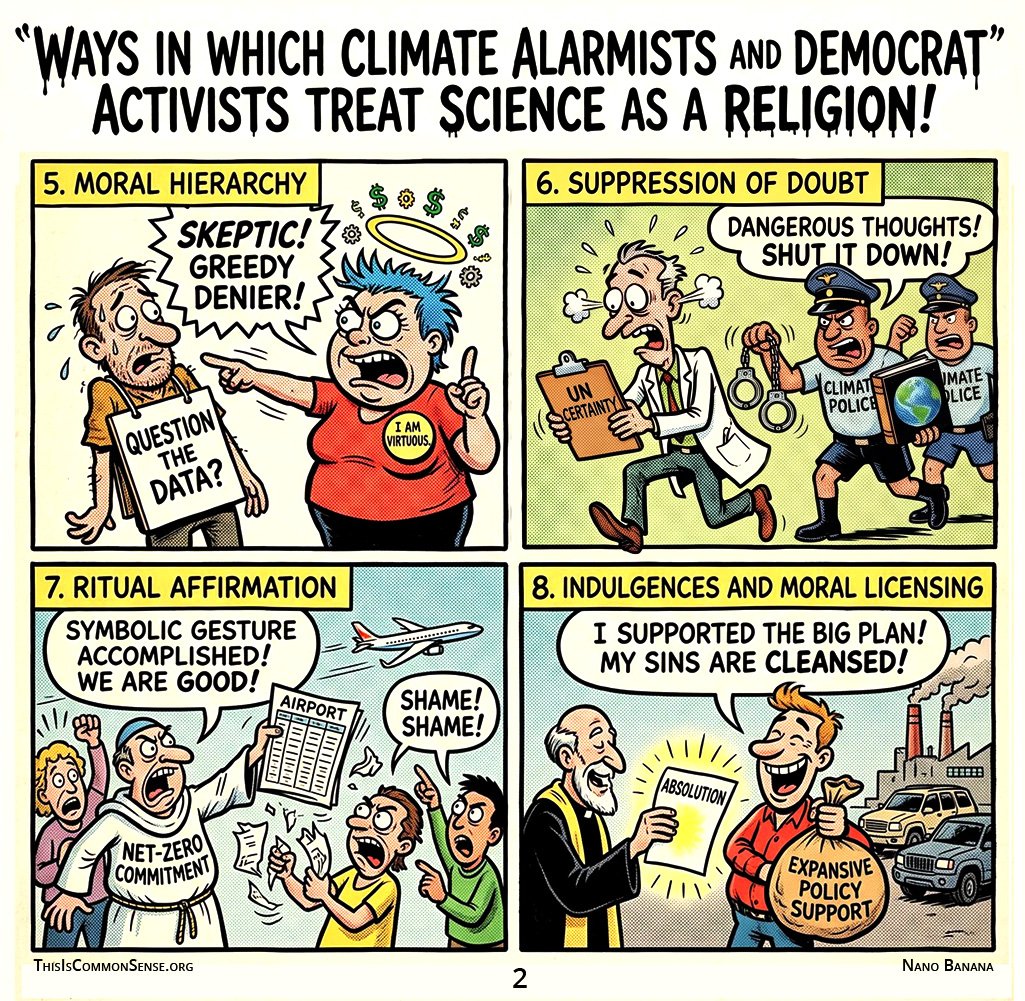
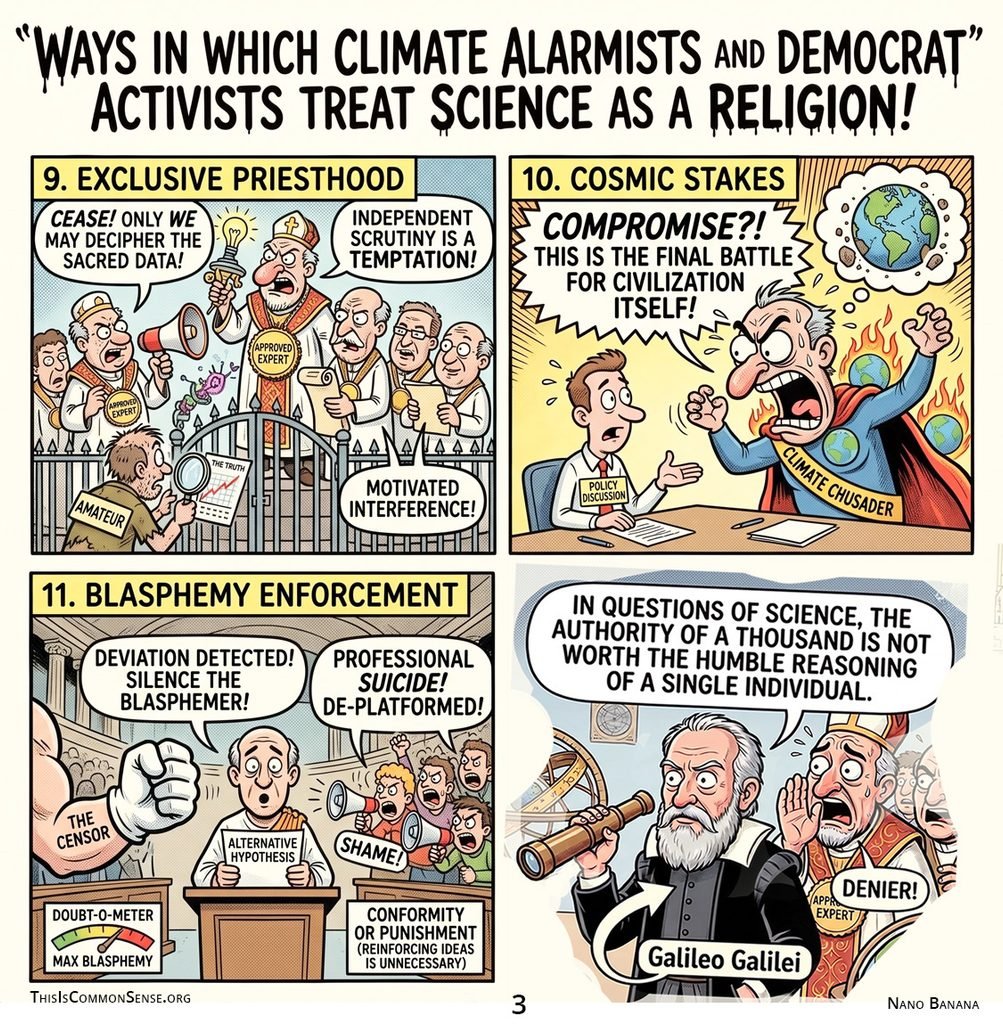
Illustration created with Nano Banana
See all recent commentary
(simplified and organized)
See recent popular posts
One reply on “Diplomacy Failed: Good!”
One of the points that I repeatedly make is that a very great difference obtains between actually following the science and merely accepting the conclusions offered by those whom journalists and politicians declare to be the best scientists.
To follow the science one must be able to understand the relevant mathematics, understand what makes that mathematics relevant, and know with what data we are actually dealing.
The overwhelming majority of people who claim to follow the science simply cannot do the math, and have never so much as even glanced at it. Most people who have been credentialled as scientists (across disciplines) are engaged in cargo-cult use of statistics — they try to follow the forms, but they cannot even present and defend a concept of probability. And the data of climatology is shot-through with problems, including a remarkable amount of out-and-out falsification.
Peiple who say that they “follow the science” or “believe the science” or “believe in science” almost invariable instead embrace the journalism.
Now, not everyone should be able to do the math and all that, but everyone should notice the self-contradictions and lacunæ in a journalist narrative — whether the narrative is delivered by MSNBC or by Fox News. And everyone should suspect that the journalist are as wrong about the stories with which the listener or reader is not personally familiar as the journalists are about the stories that the listener or reader has more direct familiarity. And everyone should notice the last half-century’s failed predictions both about the consequences of carbon emissions and about the costs and performance of ostensibly “green” energy.