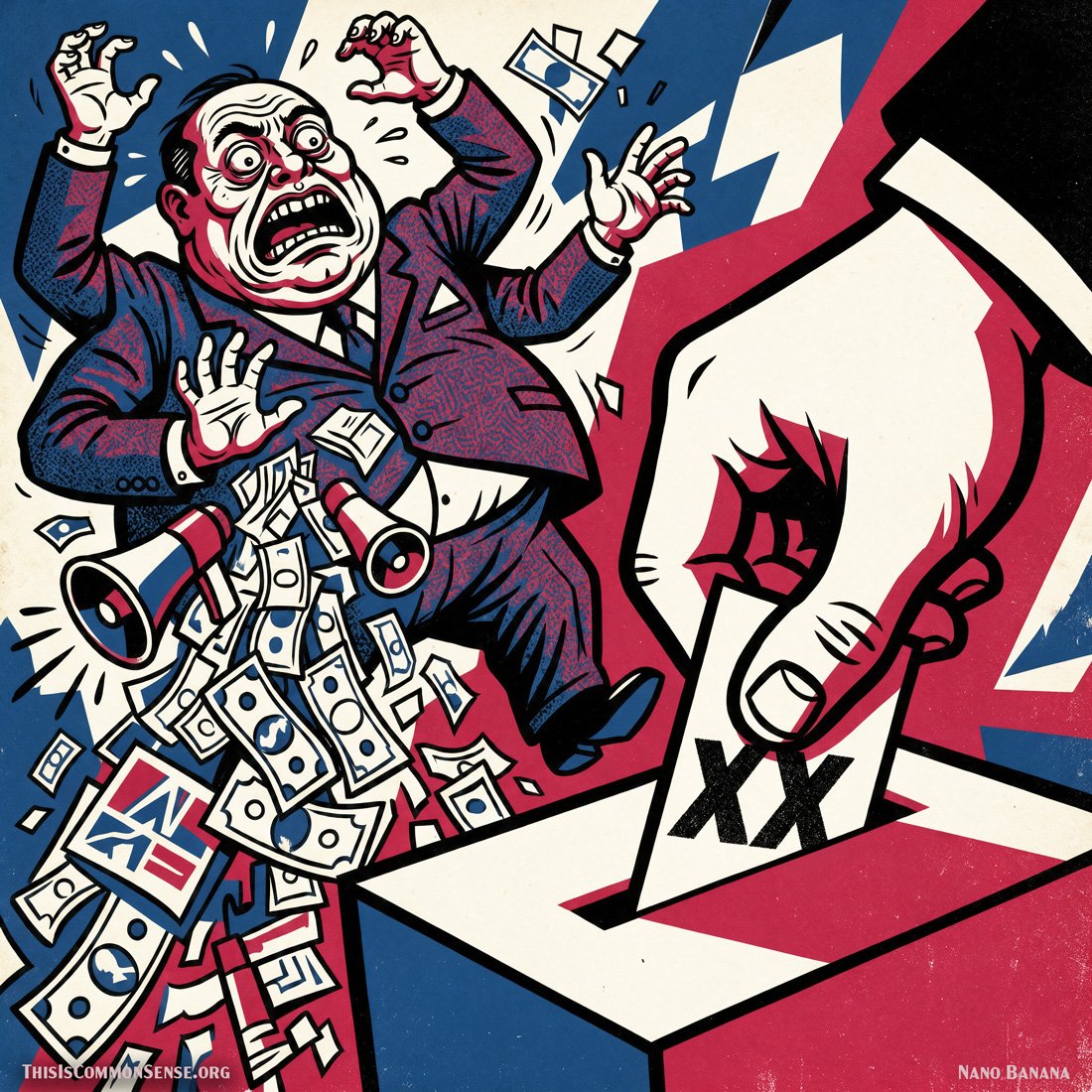
“Blue-state voters buck the wave — and demand sanity on trans athletes.”
That’s how The New York Post headlined an opinion piece by Jennifer Sey, founder and CEO of XX-XY Athletics, applauding victories for ballot initiatives in four states that will keep biological males out of women’s sports.
In Arizona, while the incumbent Democratic governor won reelection by nearly 13 percentage points, a proposition requiring “people to play on the sports team and use private locker room space based on their biological sex” passed by almost 18 points.
Nebraska voters passed Initiative 442 to ban male participation on female sports teams by better than a two-to-one margin.
Deep blue Washington state likewise voted overwhelmingly to protect girls’ sports with Measure 638 garnering
Democrats won the U.S. Senate seat in Colorado by nearly 25 points and the race for governor by more than 27 points. But even with opponents of prohibiting men in women’s sports outspending its proponents by better than 16 to one, Proposition 134 nonetheless prevailed.
“Ballot measures are a function of funding more than anything and are wildly undemocratic,” Chase Strangio, co-director of the ACLU’s LGBT & HIV Project, posted on Instagram.
Strangio is badly mistaken, as spending on the issue in Colorado so clearly demonstrates; not to mention delusional as well, in calling a public vote not only somehow “undemocratic,” but “wildly” so.
An election report by NBC News’ Adam Edelman said that “Republicans and conservative groups also placed a series of measures targeting transgender individuals on the ballot in several states.” Yet these ballot measures were not targeting transgender women.
This issue is about sports, basic fairness, and protecting biological women. Even blue state voters understand.
This is Common Sense. I’m Paul Jacob.
Past Common Sense on the issue:
My Sporting Double-Standard — Paul Jacob on the birds, bees and basics of athletic competition. (August 28, 2026)
Trouble with Definitions — Paul Jacob on knowing a man or woman when he sees one. (January 15, 2026)
Trans-Violent — Paul Jacob on thug activism for trans dominance. (April 12, 2023)
Illustration created with Nano Banana
See all recent commentary
(simplified and organized)
See recent popular posts
10 replies on “Is Democracy Undemocratic?”
As I’ve repeatedly explained, reserving some competitions for females has never been a matter of fairness. The underlying motivation for sports is human interest is reproduction and in things linked to reproductive fitness, even when the correlations are imperfect. In competitions of most sort, if no reservation is made for females, then the most able females will simply be masked by males. (Even when male and female averages are about the same, as seems usually to be the case, standard deviations for males are almost always higher.) Allowing males into what had been reservations for females erases the very purpose of reservation! (Worse, the winners within these invaded reservations are usually signally unfit for reproduction.)
As to the ACLU misunderstanding the very concept of democracy … well, that’s true of the left more generally. The American left originally treated democracy as sacred and as sanctifying to undermine respect for rights, which are attributes of individuals. When majorities become resistant to the left-wing project, the left is needs to get-around the idea that democracy is sacred and sanctifying by misusing the word “democracy”. Operationally, they treat “democracy” as meaning a system that rules as would a left-wing majority.
I remember a time in which the ACLU, though it had many center-left members, was not itself a particularly left-wing organization. But George Herbert Walker Bush smeared it as such, to score points with social conservatives and right-wing populists. Then, a great many people on the left responded by joining, and (as was and is their wont) began dragging the organization leftward. Eventually, it quite abandoned its commitment to the civil liberties of all but leftists.
“Undemocratic” is a politically correct way to say that the actual way that the majority democratically chooses doesn’t go along with the libprog narrative.
To paraphrase Slick Willy, “if we let you keep more of your money, you wouldn’t spend it in the right way.”
The wording of the proposition might not specifically ‘target’ transgender women by name, but the effect is the same. Only ‘XX’ athletes are negatively impacted by ‘XY’ people, who have an advantage over females in most sports. Expect activists to find a judge in the named states to rule the referendum is invalid, since its intent is to exclude a ‘protected group’. Depending on the cause the referendum is ‘voice of the people’ or ‘tyranny of the majority’.
How about the blue tsunami? When are you going to write about the failures of Donald Trump and the MAGGOTS?
Paul has hit on one of the most important issues in the United States!
“Collegiate Level (NCAA)
• Fewer than 10 openly transgender athletes out of more than 510,000 total student-athletes compete across all NCAA divisions.
• Transgender athletes make up less than 0.002% of the entire U.S. college athlete population. A consensus among users on the Reddit lgbt community highlights that this extremely low number makes concerns about transgender individuals dominating collegiate sports statistically unfounded.”
This is certainly super important ton Paul and the Supercilious One! How can they sleep at night?
“It’s rare, so stop caring” is not a defense of fairness; it is an argument that the rights of female athletes only matter if enough of them are affected at once. (if a rule is unjust in principle because it systematically advantages one sex over the other in a category created to protect fair competition, then the injustice does not become acceptable merely because the number of people exploiting it is currently small. )
And the frequency objection still fails for the same reason that it fails on fairness: if the rule systematically exposes women to greater force from male bodies, the fact that only a handful of such athletes currently compete does not make the exposure acceptable.
If the rule is wrong, each instance still displaces or endangers specific women. Of course this doesn’t bother socialist collectivists. Individual damage doesn’t matter because individuals are subordinate to the “good of the collective” (as defined by the current gang of leftist politicians). It’s why socialist regimes are so bloody.
Daniel, would this work: when a woman is actually finally killed as a result of this madness, one of the people who supported the unfair rules would be subject to the death penalty. (select one by drawing from the list of everybody who publicly supported the trans idiocy)
This would affect only one person and Pam’s chances of being selected would be very low. (NOTE that this shouldn’t bother Pam, since violation of individual rights on a small scale is not a problem for her.) Is this the magic fix? 🙂
Didn’t Athens have a system in which politicians were punished when their schemes crashed and burned?
Jim,
Since the system and the meta-system (the instruments of non-revolutionary reform) have been captured, and even the meta-meta-system (the institutions that inform those who might otherwise be revolutionaries) has been captured, I don’t see your proposal as having much chance of adoption.
But it certainly would be nice if Democrats and Republicans could be made to compensate the victims of the policies that their candidates advanced. And I don’t see either tribe as a limited partnership; each member should be told that he or she is responsible for the full amount of the damage until and unless it is met.
The word “ostracized” comes from the Greek “ὀστρακίζω”, meaning banishment. Once in every year, six thousand or more Athenian citizens in the assembly could agree that ten-year banishments could be considered in the agora. In the agora, if a public figure annoyed a citizen, the citizen could write the name of that figure on a sherd of pottery (“ὀστρακ-”). If at least six thousand citizens had voted, then the person whose name most often appeared would be exiled for ten years. Property and citizenship were preserved, but returning during the exile was normally a capital offense.
Ostracism was later replaced with ἧ γραφή παρανόμων which was a process of suing officials for unconstitutional acts. Offenders could be fined or disenfranchised. Failure in bringing such a suit brought its own penalties.
You are a certified dumb arse! Did you go to school? Is your IQ above 50? Your death penalty proposal identifies you as a typical uneducated MAGGOTT!
Jim, apparent Pam believes that the death of just one female boxer wouldn’t count for much, but the death of just one Pam would be meaningful.