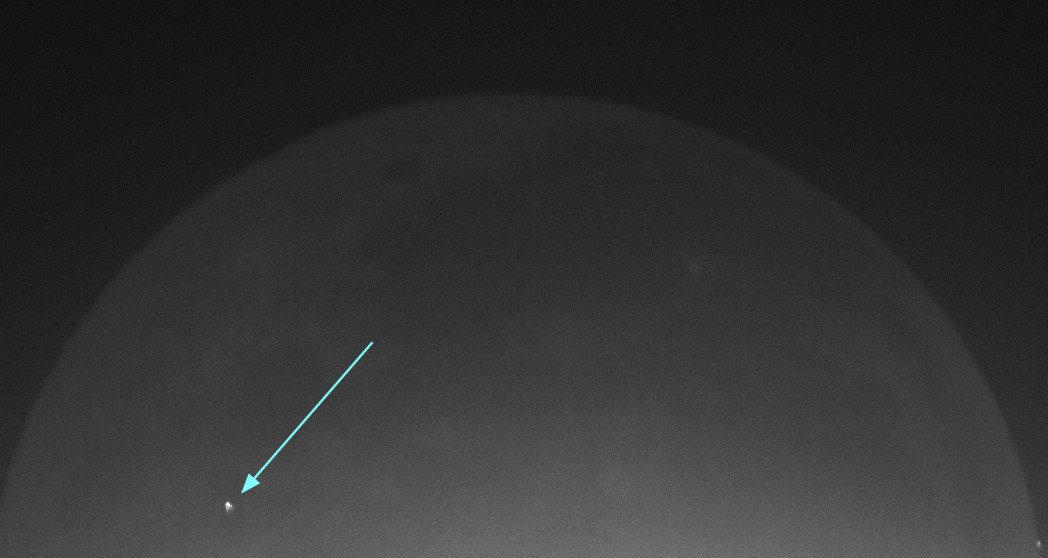
Artemis II astronauts saw meteors — micrometeoroids, specifically — hitting the far side of the moon during their eclipse-event view. This remains one of the more surprising findings of the mission.
On April 6, 2026, during the Artemis II mission, the Orion spacecraft flew over the Moon’s far side, allowing the crew to experience a unique “total solar eclipse” from their perspective (the Sun passing behind the Moon). In the resulting darkness, they observed six distinct flashes of light on the lunar surface, which NASA scientists confirmed were micrometeoroid impacts.
This was the first time humans traveling beyond Low Earth Orbit have directly witnessed micrometeoroid strikes on the Moon in real-time.
- “NASA’s Artemis II Crew Saw Meteorites Striking The Moon in Real Time” – ScienceAlert
- This article explains the unique geometry of the eclipse that allowed the crew to see the dark side of the Moon illuminated only by the impact flashes.
- “‘Audible screams of delight’ from NASA scientists over micrometeorite impacts on the moon witnessed by Artemis 2 astronauts” – Space.com
- This piece breaks down the specific number of impacts (six) and includes reactions from NASA scientists regarding the data value of these observations.
- “Artemis II Astronauts Witnessed 6 Meteorites Colliding With the Moon” – Wired
- Wired explains why these flashes were visible and how this data helps refine models of the lunar meteoroid environment.
- “A Unique Eclipse, Meteorite Impacts, And New Geological Features Among The Science Views From Artemis II” – IFLScience
- Connects the meteorite sightings to the broader scientific goals of the mission, including the observation of the solar corona and the geology of the Orientale basin.
Key Scientific Takeaways:
- Visibility: The flashes were visible because the Moon’s surface was in total shadow, allowing the bright impact flashes stand out against the dark regolith.
- Data Value: These observations validate models predicting the frequency and energy of micrometeoroid impacts — critical for designing shielding for future permanent lunar habitats.
- Frequency: Seeing six impacts in a short window suggests the flux of micrometeoroids in the lunar environment might be higher or more energetic than some previous models predicted.
Business Base:
Paul Jacob wrote about Artemis’s extensive use of corporate technology, contracting, and the bid-purchase system on April 22, 2026. NASA estimates that the Artemis program engages over 3,800 businesses across the United States. This includes small machine shops, software developers, material suppliers, and research institutions. But here is a list of the major corporate contractors responsible for the core systems of the Artemis program:
- Lockheed Martin: Prime contractor for the Orion spacecraft (crew module and service module integration).
- Northrop Grumman: Prime contractor for the Space Launch System (SLS) Solid Rocket Boosters and the Human Landing System (HLS) variant for the Gateway (though Blue Origin/SpaceX are also HLS competitors).
- Boeing: Prime contractor for the SLS Core Stage (propulsion and structural elements).
- Aerojet Rocketdyne: Provides the RS-25 engines (for SLS) and the Orion Service Module propulsion system.
- Blue Origin: Selected as a competitor for the Human Landing System (HLS) (National Team includes Lockheed Martin, Draper, Honeybee Robotics).
- Dynetics: Selected as a competitor for the Human Landing System (HLS) (part of the team with Sierra Nevada Corporation).
- SpaceX: Selected as the primary Human Landing System (HLS) provider (Starship HLS).
- L3Harris Technologies: Provides the Orion Crew Module avionics and communication systems.
- Maxar Technologies: Building the Power and Propulsion Element (PPE) for the Lunar Gateway.
- Astrobotic Technology: Selected for the Peregrine lunar lander (CLPS program) to deliver payloads.
- Intuitive Machines: Selected for the Nova-C lunar lander (CLPS program).
- Sierra Nevada Corporation (SNC): Partner with Dynetics for the HLS.
- Amentum: Provides mission operations and engineering support for the SLS and Orion.
- MDA (MacDonald, Dettwiler and Associates): Providing robotic systems for the Lunar Gateway.
One reply on “Artemis Astronauts Observed Explosions on the Moon”
Not Lunarians eating wintergreen Life Savers®?