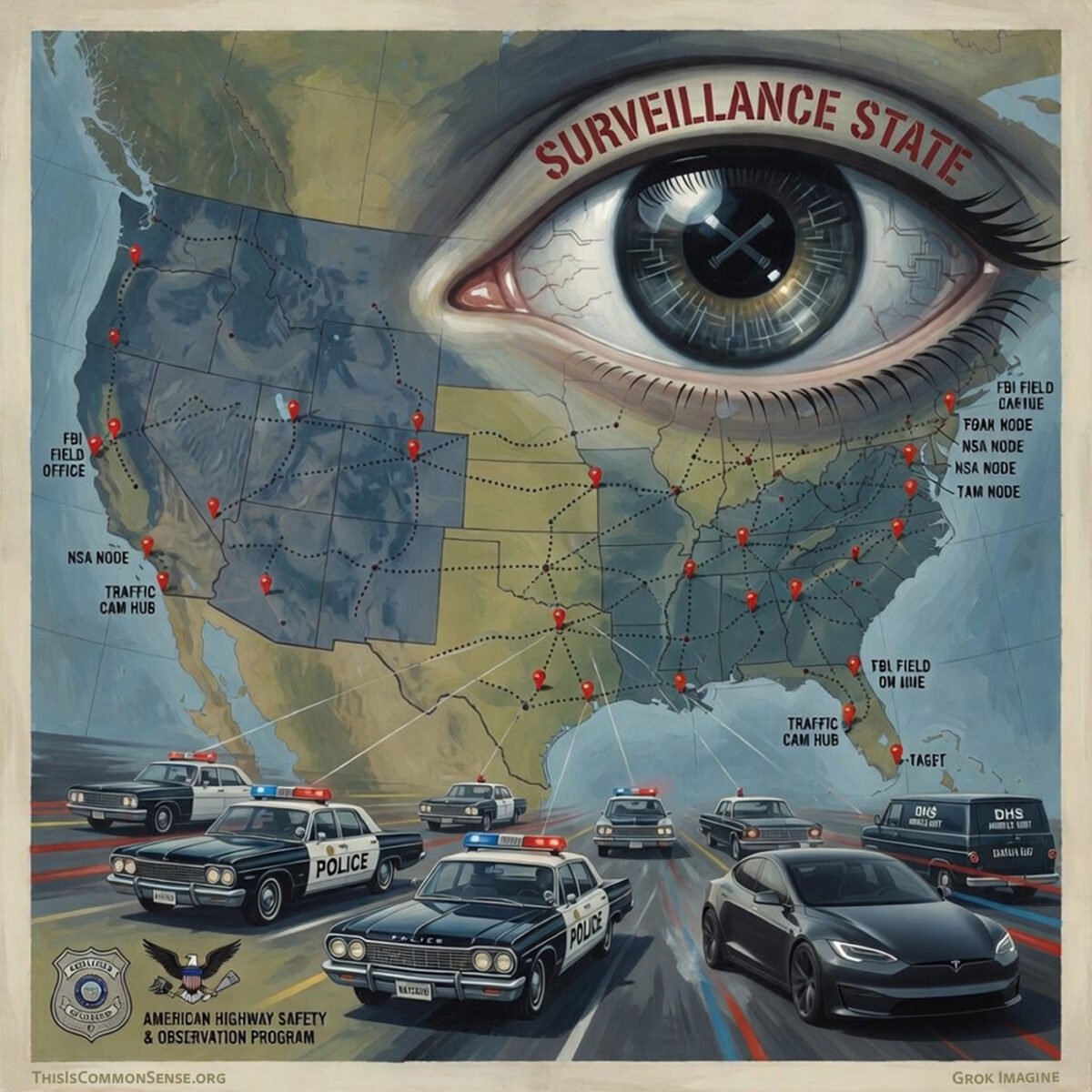
Is unconstitutionality like obscenity? — we can’t define it, but know it when we see it.
Take San Jose, California, and its automatic license plate reader system. I might not win an argument explaining how San Jose’s public surveillance relates to the Fourth Amendment to the United States Constitution. But. . . .
That amendment insists that people have a right “to be secure in their persons, houses, papers, and effects, against unreasonable searches and seizures,” and that governments may not search and seize property without a warrant “upon probable cause, supported by Oath or affirmation, and particularly describing the place to be searched, and the persons or things to be seized.”
How does one’s public goings-about in cars that are drivable only with a state-mandated license plate amount to something that must not be searched or surveilled? Our driving on roads is all out in the open, after all, not private.
Maybe we should stress the Fourth’s narrow guideline: warrants must describe the place to be searched, and the persons.
Broad-based tracking flouts that narrow stricture.
But really, I’m biased: mass surveillance is Orwellian. Do we want our government keeping track of us that much?
Especially as in San Jose, where not only can over a thousand police department employees scour the data sans any legal warrant, but the department also shares this resource with over 300 agencies across the state.
Creepy. That’s the word for it.
And that’s the word used by Institute for Justice lawyers who filed a lawsuit against San Jose’s practice.
Jacob Sullum’s article in Reason explains the legal arguments carefully as well as the many ways the information can be weaponized to, for example, retaliate against protesters.
Information is power, after all. And in the wrong hands . . . creepy.
This is Common Sense. I’m Paul Jacob.
Illustration created with Grok Imagine
See all recent commentary
(simplified and organized)
See recent popular posts
3 replies on “The C-word in Surveillance”
When some group use their capacity for violence to crowd-out the private sector, as the Federal and constituent states do in the provision of roads, that group cannot rightfully claim all the prerogatives that would be held by a private provider. The government must treat use of these roads as other than simply voluntary, and searches and seizures of vehicles or of persons on these roads should be treates as if taking place on roads owned by private parties.
Statists (both left and right) are constantly begging the question by pretending to a prior ownership, as if the nation began as their property, so that anyone on that property has ipso facto consented to their demands. But virtually everything held by the state was stolen or bought with that which was stolen.
Scouring the data is searching for a person, without a warrant.
Cut and dried.
Blew through the “secure in their persons” part.
The many conveniences of modern life mean we are being tracked and surveilled everywhere we go. Unless you live in a cave, security cameras are everywhere, tracking your movements out in public or in public or commercial buildings. Use of the internet creates a permanent record that can’t be undone. Your smartphone can track your location, allowing you to send and receive communications from anywhere. Big tech is also watching you, tracking your purchases, proclivities, etc. Big tech isn’t included in the 4th Amendment. Our interconnectedness makes it harder for even government to secure our 4th Amendment rights. We sacrificed security for convenience.