Categories
ideological culture public opinion too much government

Looking for Work

“Social sector” workers — described by Forbes as “nonprofit organizations and the social sector at-​large” — have been losing jobs because of budget cuts and corruption cuts.

Many newly unemployed are unhappy about having to job-​hunt. Some complain about having to take jobs from profit-​making businesses. Others lament sparse communication from prospective employers.

“When asked about barriers to finding employment, 85% of respondents cited lack of employer response as their primary challenge,” Aparna Rae’s not-​very-​shocking-​at-​all Forbes article elaborates. “The irony is stark: a sector built on human dignity subjects job seekers to dehumanizing ‘digital hiring mazes’ where qualified candidates are ghosted after final-​round interviews. The disconnect between mission and practice erodes the sector’s moral authority.”

Wow. Dehumanizing to have to … look for work (or customers)? Worse because your last job was all about dignity — unlike all those grubby profit-​sector jobs or, for that matter, jobs with nonprofits that rely only on voluntary private donations?

“I want to be seen and recognized as a human,” explains one representative job seeker. “The lack of communication and impersonal nature of the hiring process is demoralizing and makes job seekers feel devalued.”

Job hunting can be tough. It’d be nicer if qualified candidates who have been considered but lose out to other qualified candidates were always notified. Sure. But how does failure to do so represent a “disconnect” between mission and practice, and how does it “erode the [nonprofits’] moral authority”?

Job seekers might feel less demoralized if they didn’t take the impersonal aspects of the search so personally.

This is Common Sense. I’m Paul Jacob.


PDF for printing

Illustration created with NanoBanana and Firefly

See all recent commentary
(simplified and organized)

See recent popular posts
Categories
Accountability folly government transparency local leaders moral hazard porkbarrel politics responsibility too much government

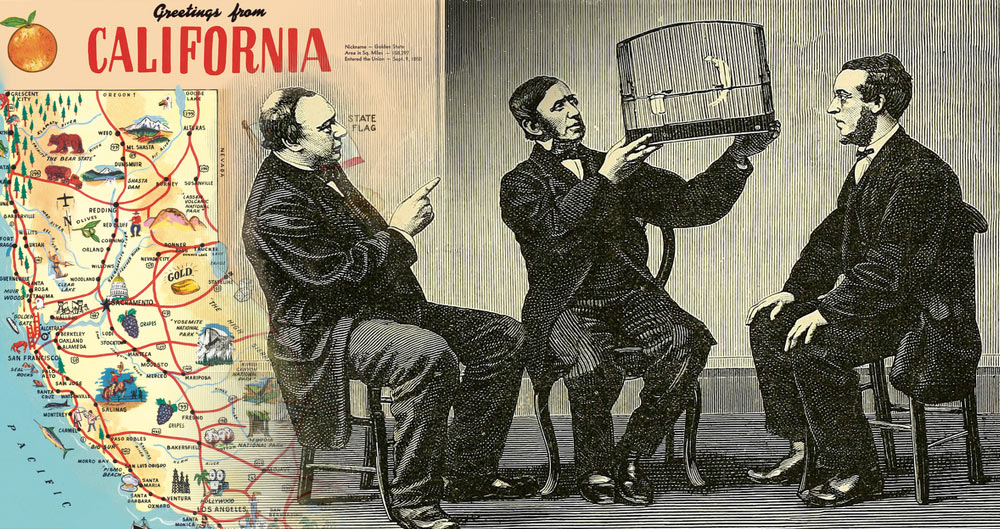
Babylon Goes Broke

A few Babylonian, er, California cities going bankrupt — Stockton, Vallejo, and Bell — should be seen as more than dead canaries in a coalminer’s care. 

Indeed, you don’t need special prophetic gifts to see the dangers posed by over-​promising cushy pensions to government workers. Californians are coming around. And the state’s governor, Jerry Brown, appears to be “calling for reductions in gold-​plated, unsustainable public-​sector pensions,” as Nick Gillespie informs us at Reason.

But statewide reforms will not be easy. The problem is huge, presenting grave costs. “Absent the ability to alter pensions, states and localities have to devote more and more of their taxes to simply covering the costs of retired workers,” Gillespie explains. “Worse still, they often raise taxes to cover rising costs, typically at the expense of providing basic services such as police and road maintenance.”

Yes, over-​promising defined-​benefit pension packages effectively distributes wealth away from basic government services and into the pockets of the people with whom politicians work most closely.

Unfortunately, the courts long ago decided that politicians’ promises to employees outweigh basic government duties. That is, the courts determined that “public-​sector employees at all levels of government had an inviolable right to the pension benefits that existed on the day they were hired.”

But the courts seem to be lightening up on this “California Rule,” and the governor has dared mention that, come “the next recession,” some headway might be possible.

No matter what you may think of this rather desperate hope, the writing is on the wall. And it is in red ink and numbers, not Babylonian.*

As America’s Babylon is finding out.

This is Common Sense. I’m Paul Jacob.


* And not “Mene, Mene, Tekel, Upharsin.”


PDF for printing