Once killing starts, it is difficult to draw the line.
Tacitus, Histories (100-110 AD), Book I, 39.
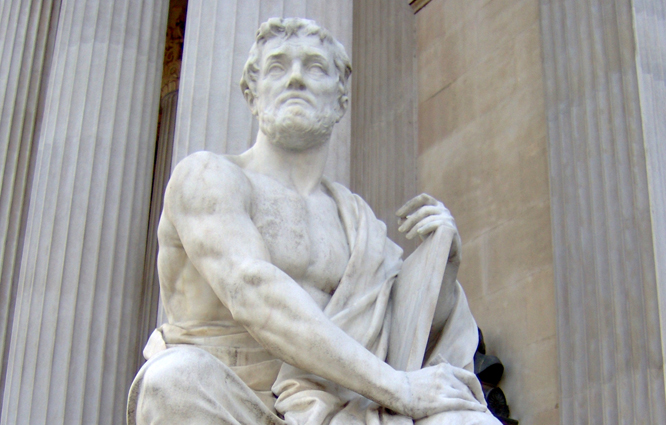
Once killing starts, it is difficult to draw the line.
Tacitus, Histories (100-110 AD), Book I, 39.
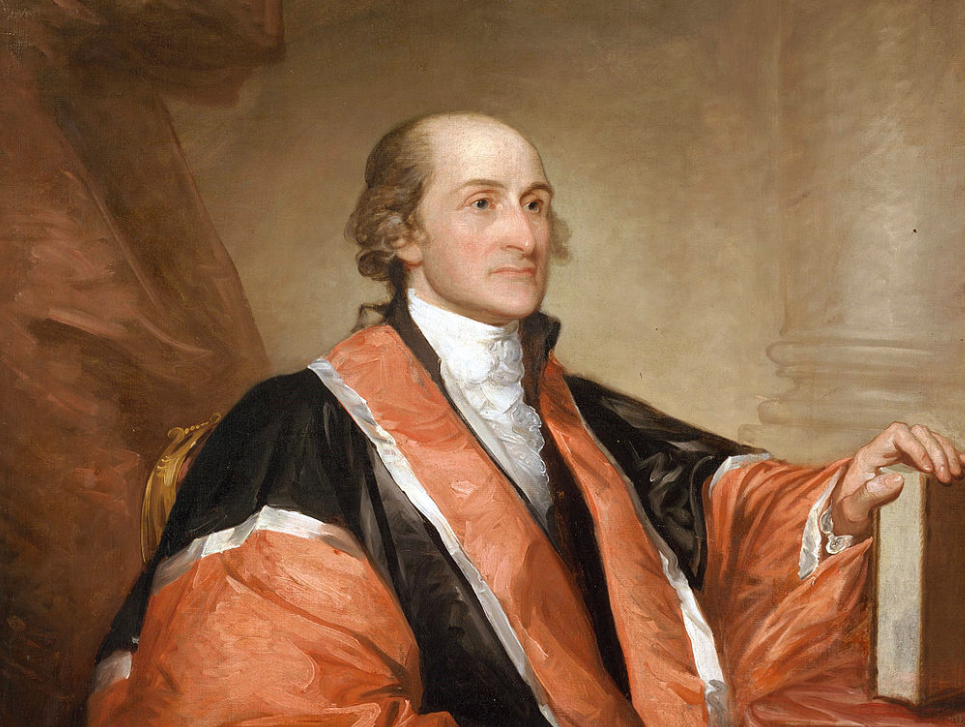
On September 24, 1789, the United States Congress passed the Judiciary Act, creating the office of the United States Attorney General and the federal judiciary system, and ordered the composition of the Supreme Court of the United States.
On the same day that President George Washington signed the bill into law, he officially nominated John Jay to the new position of Chief Justice of the Supreme Court. Jay (pictured in his official portrait, above) served in that position until 1795, when he resigned to take up his elected position as second governor of the State of New York. The Supreme Court heard only four cases during Jay’s Chief Justiceship; Jay refused to consult, officially, on legislation written by Alexander Hamilton, establishing the precedent that the Supreme Court has followed to this day: the Court would only rule on cases tried before it.

How we react to our enemies political opponents tells us a lot about ourselves. A lot of people do not like Tucker Carlson, despite (or because?) of the fact that a lot of Fox viewers really do like him a lot — he is a star, now.
So it may be instructive to consider one much-ballyhooed negative evaluation of The Tucker Phenomenon. Click on over to Townhall for today’s rumination.* Then click back here to consider the source(s).
* Note that the good folks at Townhall were not exactly onboard with Paul’s sarcastic title, so they changed it. Paul is in Europe, but this column will appear on this site on Tuesday.
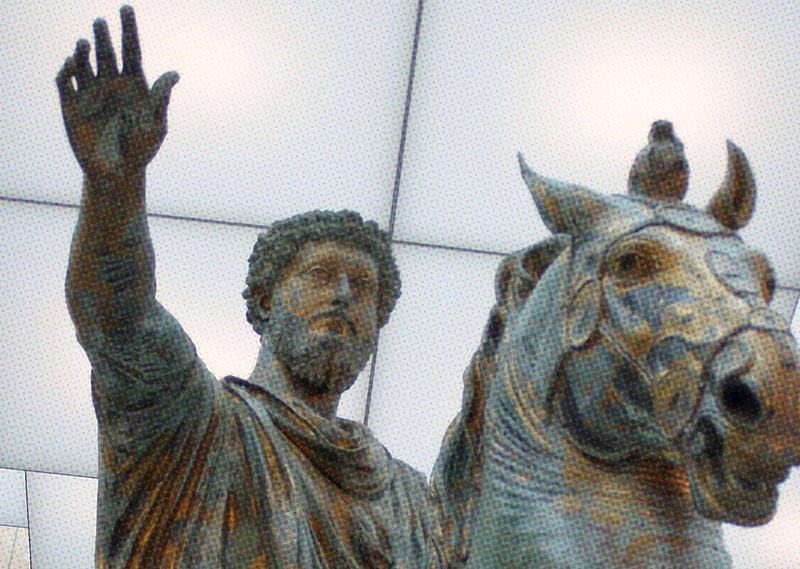
Remember that neither the future nor the past pains thee, but only the present. But this is reduced to a very little, if thou only circumscribest it, and chidest thy mind, if it is unable to hold out against even this.
Marcus Aurelius Antoninus, Meditations, VIII, 36.
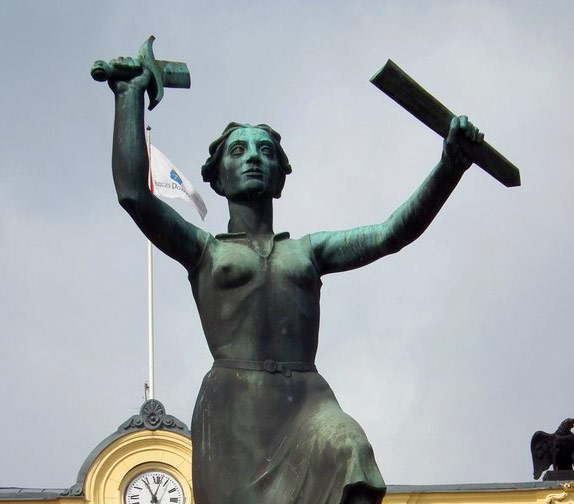
On September 23, 1905, Norway and Sweden signed the “Karlstad treaty,” peacefully dissolving the union between the two countries.

The latest revelations from Project Veritas:
Auferre, trucidare, rapere, falsis nominibus imperium; atque, ubi solitudinem faciunt, pacem appellant.
To ravage, to slaughter, to usurp under false titles, they call empire; and where they make a desert, they call it peace.
Tacitus, De vita et moribus Iulii Agricolae (89 AD), Close of chapter 30, Oxford Revised Translation.

On September 22, 1862, U.S. President Abraham Lincoln issued a preliminary proclamation that he would order the emancipation of all slaves in any state of the Confederate States of America that did not return to Union control by January 1, 1863. None returned, and the subsequent order, signed and issued January 1, 1863, took effect except in locations where the Union had already mostly regained control.
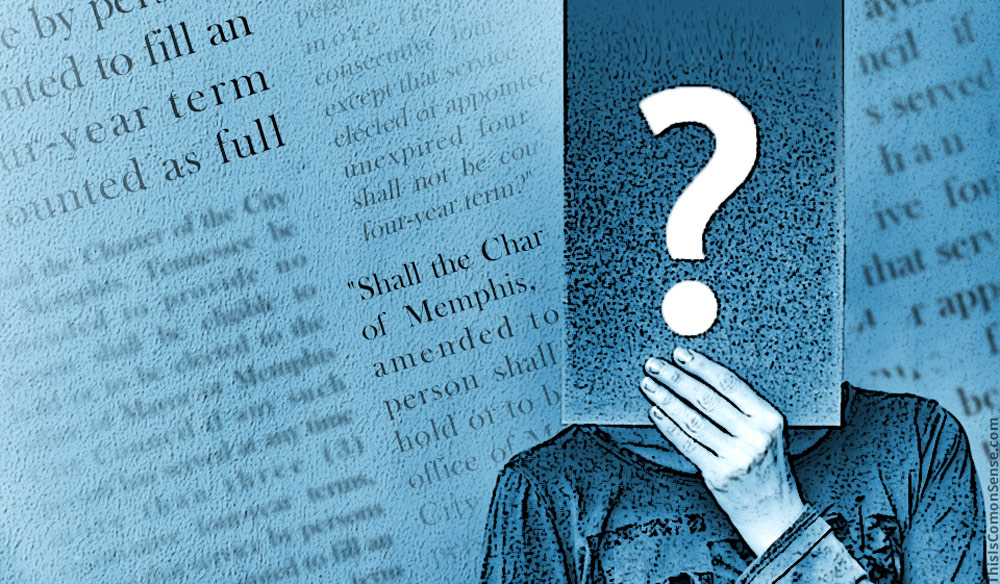
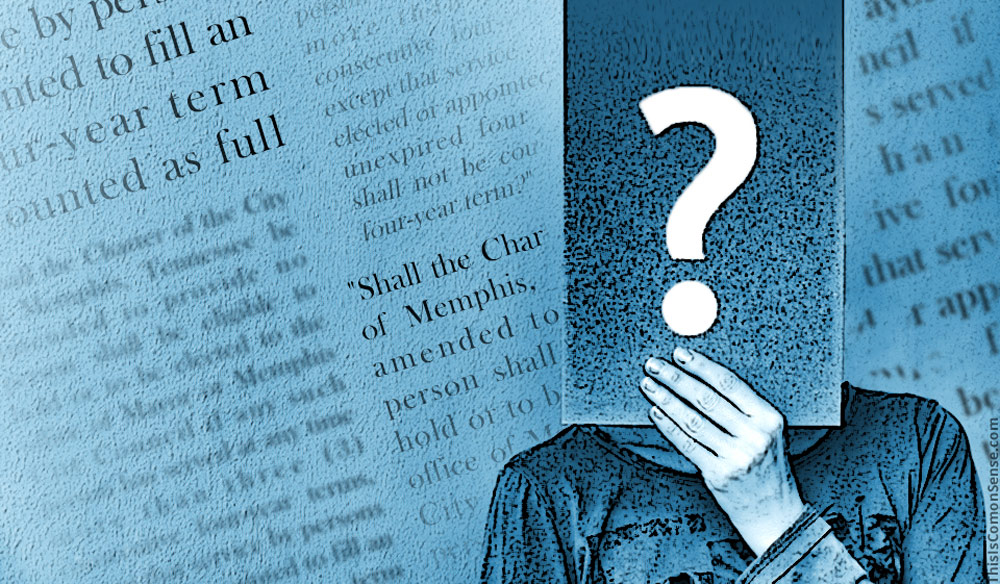
The three issues on the ballot in Memphis this November are “not complicated,” writes Commercial Appeal columnist David Waters, “unless you read the actual ballot questions.”
Which is all most voters will see.
All three directly affect the self-interest of members of the Memphis City Council, which placed them on the ballot and determined the language voters will attempt to decipher.
Waters called that ballot wording “incomprehensible” and “intentionally confounding.” His newspaper colleague, Ryan Poe, accused the council of “trying to stack the deck.”
The first measure would weaken the council’s term limits, passed in 2011 with a 78 percent vote and just about to kick in. The ballot language, Mr. Poe explains, “reads like voters are being asked to place limits on council members . . . rather than extend them.” By an extra term.
The second issue would repeal Instant Runoff Voting (IRV), which was brought forth by citizen petition and enacted via a 71 percent yes vote. The confusing ballot wording brings up a 1991 federal court decision without providing voters any context or explanation.
Though IRV has not yet been used, council incumbents fear it.* This becomes especially clear when you discover that the third ballot question is actually a sneakier, second attempt to repeal IRV.
“Instant runoffs, and run-off elections in general, tend to make it easier for challengers to unseat incumbents in multi-candidate district races,” argues Waters. He adds, “Incumbents generally become stronger the longer they are in office.”
To incumbent politicians, reform is a dirty word.
This is Common Sense. I’m Paul Jacob.
* Back in February, the council was caught paying a lobbyist to convince state legislators to restrict their city’s ability to implement Instant Runoff Voting.
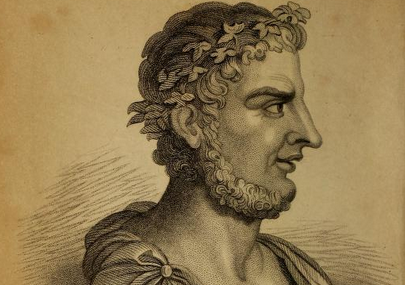
Sed quis custodiet ipsos custodes?
But who will guard the guardians themselves?
Juvenal, Sixth Satire.