Categories
incumbents political challengers term limits

Knock Down the Incumbency

Over the weekend, I suffered through Knock Down the House . . . so you don’t have to. 

While the documentary heralding four inexperienced Democratic women running for Congress in 2018 cost Netflix $10 million, I did not have to spend a dime — beyond my regular monthly subscription.

The award-winning film, directed by Rachel Lears, who wrote it along with her husband, Robin Blotnick, is expertly crafted. Unfortunately, it is geared to democratic socialists predisposed to adoring the subjects. 

The star is now Rep. Alexandria Ocasio-Cortez (D-N.Y.), who defeated then Rep. Joe Crowley, a ten-term, 20-year incumbent . . . the Number 4 Democrat in the House of Representatives.

In addition to Ocasio-Cortez, the movie follows Amy Vilela, seeking to replace a retiring Nevada Democrat; Cori Bush, challenging the Clay Family’s hereditary congressional dynasty in Missouri’s 1st district*; and Paula Jean Swearengin, battling incumbent Sen. Joe Machin in West Virginia’s Democratic Party Primary. Of the four challengers chronicled, all of whom received extensive support from two progressive groups, Justice Democrats and Brand New Congress, AOC was the only winner.

“Let’s assume all the energy in this room can get you on the ballot and into office,” offers a fellow at one of Ocasio-Cortez’s early meetings. “How, then, do we overcome the drop in power?”

“I think we really need to have to look at what that power does now,” AOC responds. “When it matters, [Rep. Crowley] doesn’t stand up for us; when it matters, he doesn’t advocate for our interests.”

Whatever one thinks of AOC’s politics, her point here is not without merit: the idea that we citizens benefit from longtime incumbents who ‘bring home the bacon’ is . . . baloney. 

This is Common Sense. I’m Paul Jacob.


* At the completion of this term, Rep. Lacy Clay, Ms. Bush’s opponent, will have served 20 years. His father, Bill Clay, held the seat for 32 years before that. Together, over half a century. The film alludes to the fact that Clay Jr. gained the seat in 2000 only after the surprise retirement of Clay Sr. on the very last day to file for the office . . . with Jr. filing, instead.

PDF for printing

Knock Down the House, socialism, term limits,

See all recent commentary
(simplified and organized)
See recent popular posts

Categories
Today

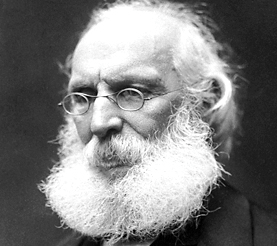
Mill and Passy

French economist and co-winner of the first (1901) Nobel Prize for Peace, Frédéric Passy (pictured above), was born on May 20, 1822.

English economist and philosopher John Stuart Mill was born exactly 16 years earlier.

Categories
Thought

Bill di Blasio

There’s plenty of money in this country, it’s just in the wrong hands.

New York Mayor Bill di Blasio, presidential campaign ad.


Categories
education and schooling

Down the Up Staircase

or: How I Stopped Worrying and Learned to Love Disadvantage

This weekend at Townhall, Paul Jacob elevates the college admissions discussion. Click on over, then back here for further education upgrades:

Categories
Thought

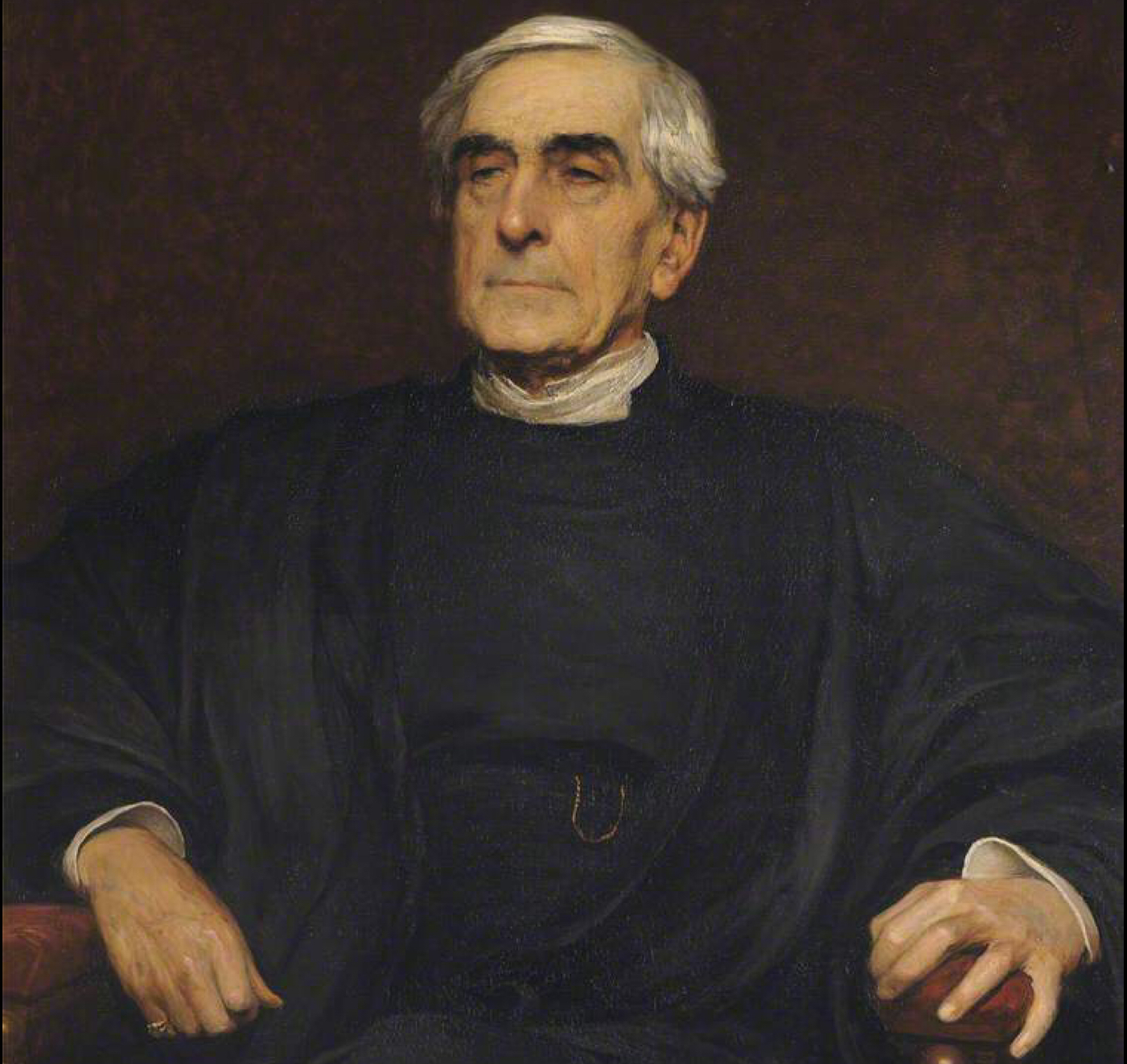
William Hepworth Thompson

We are none of us infallible, not even the youngest of us.

William Hepworth Thompson (1819–1886), attributed in Collections and Recollections by George W. E. Russell (1898) and also in Trinity College An Historical Sketch by G.M. Trevelyan (1943).

Categories
Today

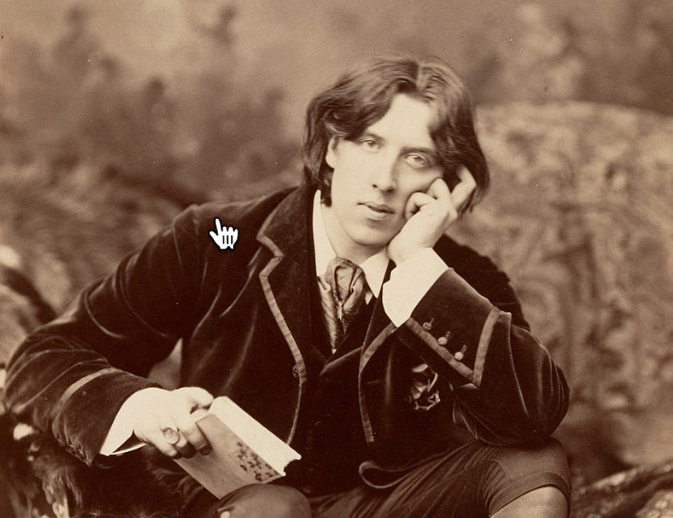
Wilde Released

On May 19, 1897, Irish author, playwright, and poet Oscar Wilde (October 16, 1854 – November 30, 1900) was released from Reading Prison, where he had finished, in ill health, his hard labor sentence for “gross indecency.” His “Ballad of Reading Gaol,” first published pseudonymously in a periodical with wide circulation amongst criminals, quickly achieved the status of a classic.

He died less than three years later, in exile in Europe. His most famous works include the play The Importance of Being Earnest, the novel The Picture of Dorian Gray, and the fascinating essay “The Soul of Man Under Socialism.”

Categories
by Paul Jacob video

The Florida Squelch

The second part of Paul’s video from last weekend:

Categories
Today

Heresy and Slavery

On May 18, 1593, playwright Thomas Kyd’s accusations of heresy led to an arrest warrant for fellow playwright Christopher (“Kit”) Marlowe.

Kyd was the famed author of The Spanish Tragedy, and Kit Marlowe [pictured] was known for a number of plays, including The Jew of Malta and The Tragicall History of the Life and Death of Doctor Faustus.

Marlowe died a few weeks later, on May 30, without having been arrested. The circumstances of his death were bizarre, suspicious — as if written by a playwright.

On May 18, 1652, Rhode Island passed the first law in English-speaking North America making slavery illegal.

Categories
Thought

Bertrand de Jouvenel

There are philosophers who have given their minds to the phenomenon of disregard of laws and have sought out its causes. Much more surprising, however, is the opposite phenomenon of respect for laws and deference to authority. . . . It is as true today as it was ten thousand years ago that a Power from which the magic virtue has gone out, falls.

Bertrand de Jouvenel, On Power
Categories
education and schooling

Gaming a Newly Rigged System

Education is important. I want my young adult offspring to get into a great college or university.

Sadly, my bribery fund is empty.

Must she, then, rely only upon working hard for good grades and preparing for the Scholastic Aptitude Test (SAT)? 

No. There is a workaround: find a way to improve our family’s Adversity Score.

“The College Board plans to assign an adversity score to every student who takes the SAT,” The Wall Street Journal reports, “to try to capture their social and economic background, jumping into the debate raging over race and class in college admissions.”

This year 50 universities, including Yale, used these scores; next year, 150 will do so. Students are assessed on 15 not fully disclosed factors, things such as the level of crime and poverty in one’s high school and neighborhood, “the educational level of the parents,” and “family stability.” 

“An adversity score of 50 is average,” notes the Journal. “Anything above it designates hardship, below it privilege.”

Hmmm, how to climb (or descend) the “Overall Disadvantage Index”? What sacrifices to make?

My wife and I could divorce. Coming from a single parent household would improve our daughter’s opportunities in higher education.

We won’t sink her chances by upgrading our own educations. That’s obvious.

And crime-free homeschools certainly place kids at a distinct disadvantage in being disadvantaged. I guess we could move to a more dangerous neighborhood. 

Heck — what am I thinking?! — we can stay put and just commit crimes ourselves. Show some entrepreneurial initiative! Don’t be dependent on others, for heaven sake! Be the change we wish to see in our world.

On that one, though, I better check my exuberance with my wife . . . if our divorce hasn’t yet been finalized.

This is Common Sense. I’m Paul Jacob.


SAT, college, racism, race, fairness,

See all recent commentary
(simplified and organized)
See recent popular posts