Categories
insider corruption term limits

House-Cleaning & Law-Following

Larry Hogan, Maryland’s popular Republican governor, has vowed to “clean house” in the wake of the scandals rocking the “private” non-profit University of Maryland Medical System (UMMS), set up by the State of Maryland. 

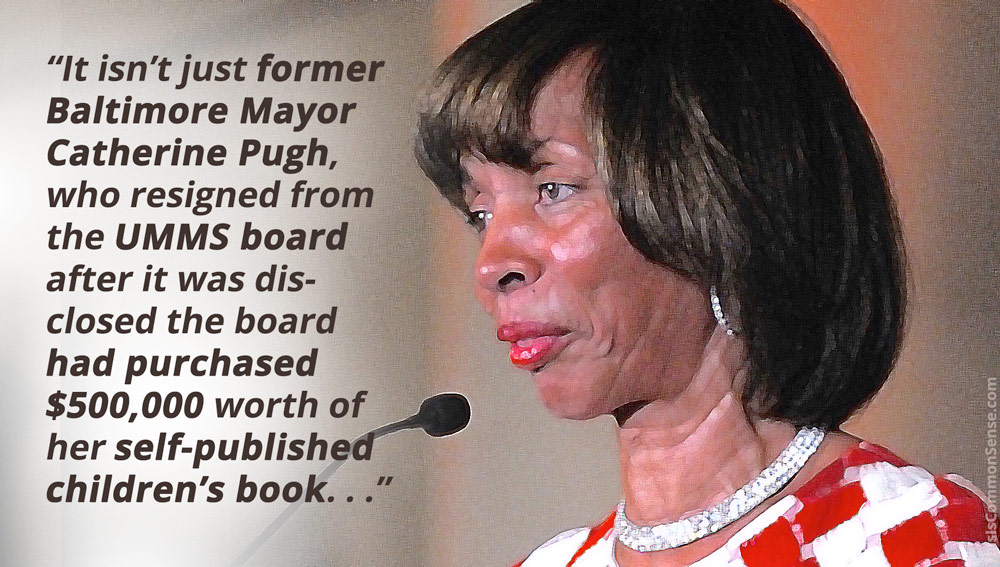
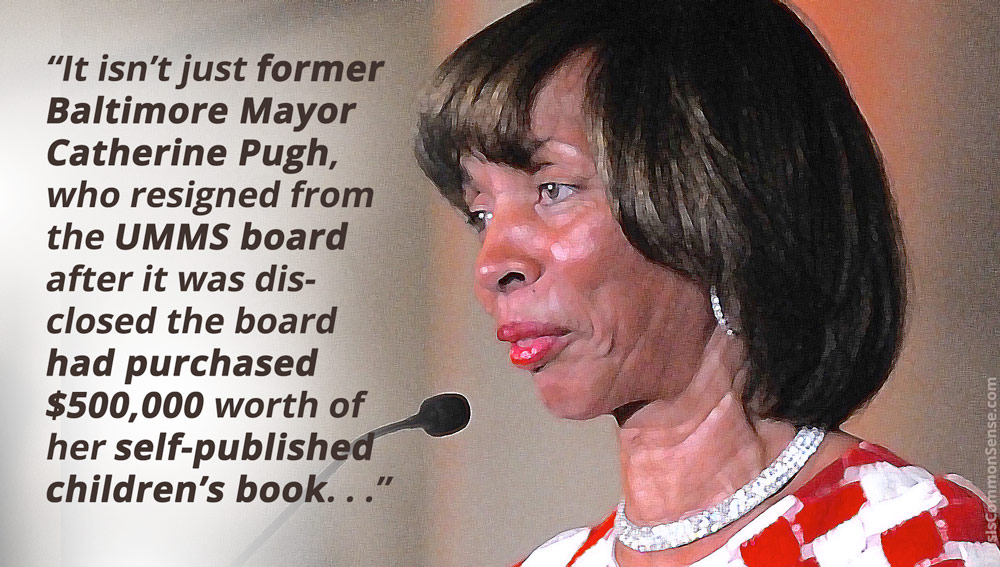
It isn’t just former Baltimore Mayor Catherine Pugh, who resigned from the UMMS board after it was disclosed the board had purchased $500,000 worth of her self-published children’s book, “Healthy Holly.” Yep, it’s always for the children. (Pugh also resigned as mayor after the FBI raided her home and office.)

In fact, nine of the 23 UMMS board members had money-making contracts with the system they “manage.” Not to mention that a recent Post exposé detailed how former state legislator and long-time board member, Francis Kelly, whose legislation established the system, had multi-million-dollar insurance contracts with UMMS.

Yet, as The Washington Post reports, “state law long has called for housecleaning . . . specifying that board members can’t serve more than two consecutive five-year terms.”

Gov. Hogan and his predecessors — both Republican and Democrat — simply ignored the law, reappointing board members beyond the limits.

“If members were allowed to essentially stay on the board in perpetuity,” former state senator, now U.S. Rep. Jamie Raskin (D-Md.) argued, “it’s a direct threat to the independence and accountability of the board.” 

Abandoning term limits, State Senator Jill Carter (D-Baltimore City) told the Post, was “part of the problem,” resulting in self-dealing.

Hmmm, think they’ll ever apply this knowledge to establishing term limits on their own powerful legislative bodies?

So much corruption, too few limits. 

This is Common Sense. I’m Paul Jacob.

PDF for printing

Catherine Pugh, corruption, Baltimore,

See all recent commentary
(simplified and organized)
See recent popular posts

Categories
Thought

Arthur Kenyon Rogers

There is no real paradox in the claim that satisfaction is open only to the man who stands prepared to give up pleasures. This only means, again, that satisfaction as a human goal is not an abstract ideal of limitless good, but presupposes a determinate human nature set to work out its destiny in determinate surroundings. That at which a sensible, human being aims is no unimaginable state of the intensest possible pleasure unaccompanied by pain, but the realization that he is making the very most of life that it is possible for him, with his particular interests and limita tions, to make, considering the means at his disposal. If one is not willing to accept these qualifications, he is not yet prepared to set out intelligently to secure satisfaction.

Arthur Kenyon Rogers, The Theory of Ethics (New York: The Macmillan Company, 1922).
Categories
Today

Nat Hentoff

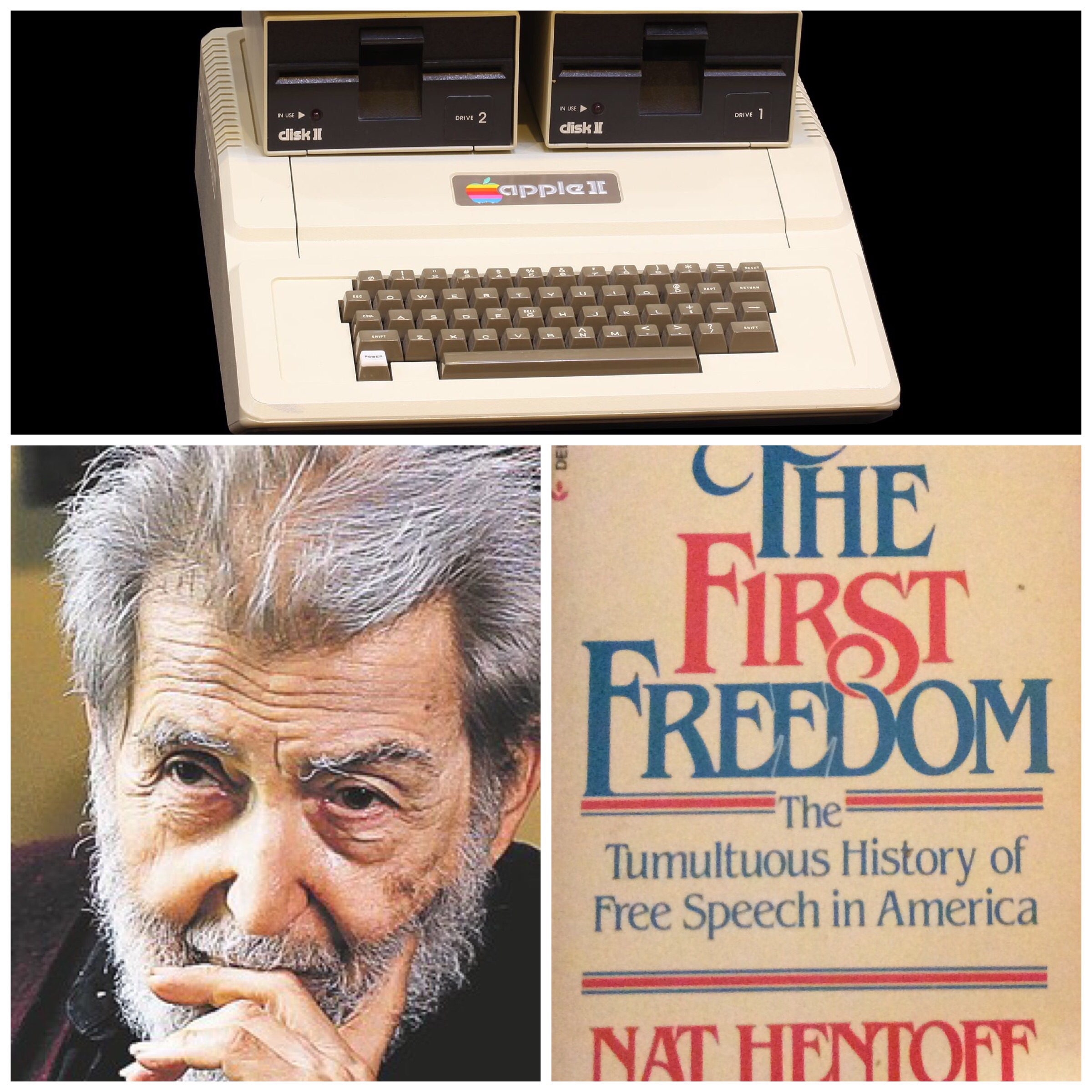
Apple shipped the first Apple II computer on June 10, 1977.

Born on this day: historian, jazz critic and civil libertarian Nat Hentoff (1925); children’s writer Maurice Sendak (1929); scientist and pioneer of “sociobiology,” E. O. Wilson (1929).

Categories
video

A Free People’s World Congress

A short reminiscence from Paul:

Categories
Today

John Hospers

Roman Emperor Nero committed suicide on this day in June, 68 AD, ending Rome’s Julio-Claudian Dynasty, later written about with verve by Suetonius and Robert Graves.

Also on June 9, James Oglethorpe received a charter from the British crown to start the Georgia colony (1732); William Jennings Bryan resigned his position as Secretary of State under Woodrow Wilson, disgusted over the handling of the sinking of the Lusitania (1915); philosopher John Hospers (pictured) — who would go on to run as a Libertarian candidate for the U.S. presidency in 1972 — was born in 1918.

Categories
by Paul Jacob term limits video

Tiananmen & Term Limits

Paul discusses how meaningful 1989’s Tiananmen protests were for him and for America, historically.

Categories
Today

Nineteen Eighty-Four

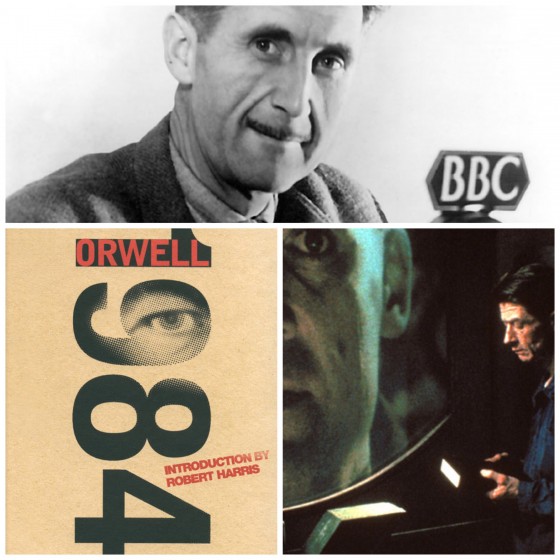
On June 8, 1949, George Orwell’s dystopian novel Nineteen Eighty-Four was published.

Categories
Fourth Amendment rights initiative, referendum, and recall

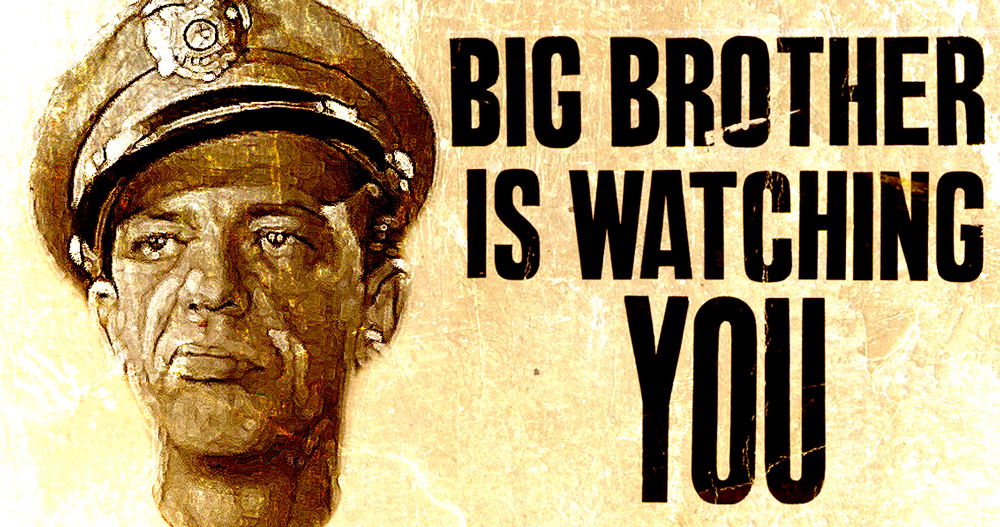
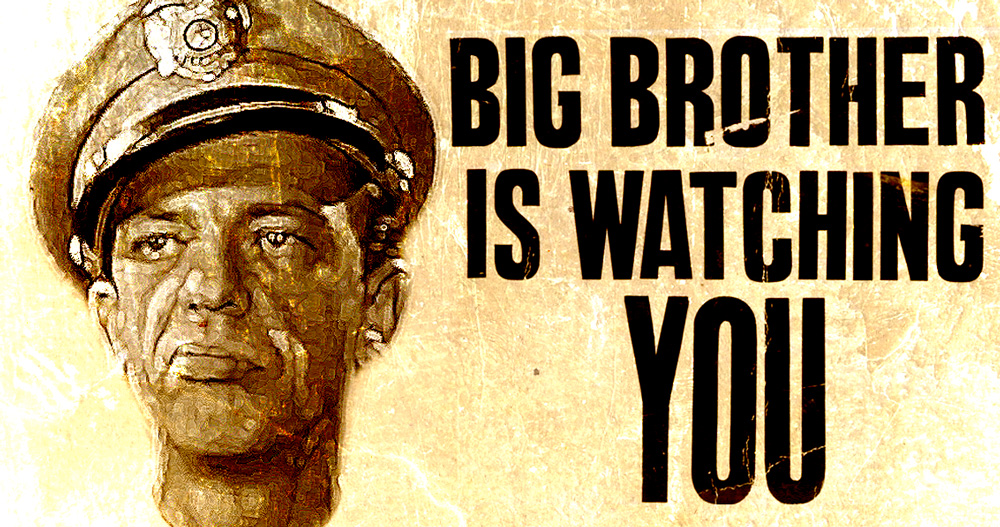
Big Brother or Barney Fife?

Alaska, Washington, Oregon, Montana, Missouri, Oklahoma, Louisiana, New Hampshire — these are the states that have shouted a big NO to the Federal Bureau of Investigation’s citizen scanning agenda and its database of 640 million faces. 

“As the FBI amasses hundreds of millions of photos for its facial recognition program (with little in the way of safeguards),” asks J. D. Tuccille in Reason, “is it also going to force us to bare our faces for cameras as we move through an increasingly surveilled country?”

Tuccille suggests wearing hats big enough to cover our faces from intrusive cameras. 

Most states do not prohibit surveilling people en masse or at random. And though Kimberly J. Del Greco, deputy assistant director of the FBI’s Criminal Justice Information Services Division, assures us of the operation’s above-board character — “there have been no findings of non-compliance, and no observations of unauthorized requests” — the possibilities of abuse are precedented . . . by past government surveillance.

So, is it any solace that it has so far proved wildly inaccurate? 

Sure, the aforementioned Del Greco claims the FBI’s algorithm is 99 percent accurate. But another study found one system in place with a sorry 98 percent inaccuracy rate. “It’s a creepy police state as administered by Barney Fife,” writes Tuccille. And while that is “pretty damned funny,” it would be not even a little bit funny if “you’re arrested based on a bad match.”

Constraining governments to forswear such practices on the streets, malls and public places of America is surely a good candidate for citizen use of initiative and referendum rights, where available — in states and cities around the U.S.

For these are not supposed to be the United States of Big Brother.

This is Common Sense. I’m Paul Jacob.


PDF for printing

big brother, Barnie Fife, surveillance, face recognition,

See all recent commentary
(simplified and organized)
See recent popular posts

Categories
Today

Founders

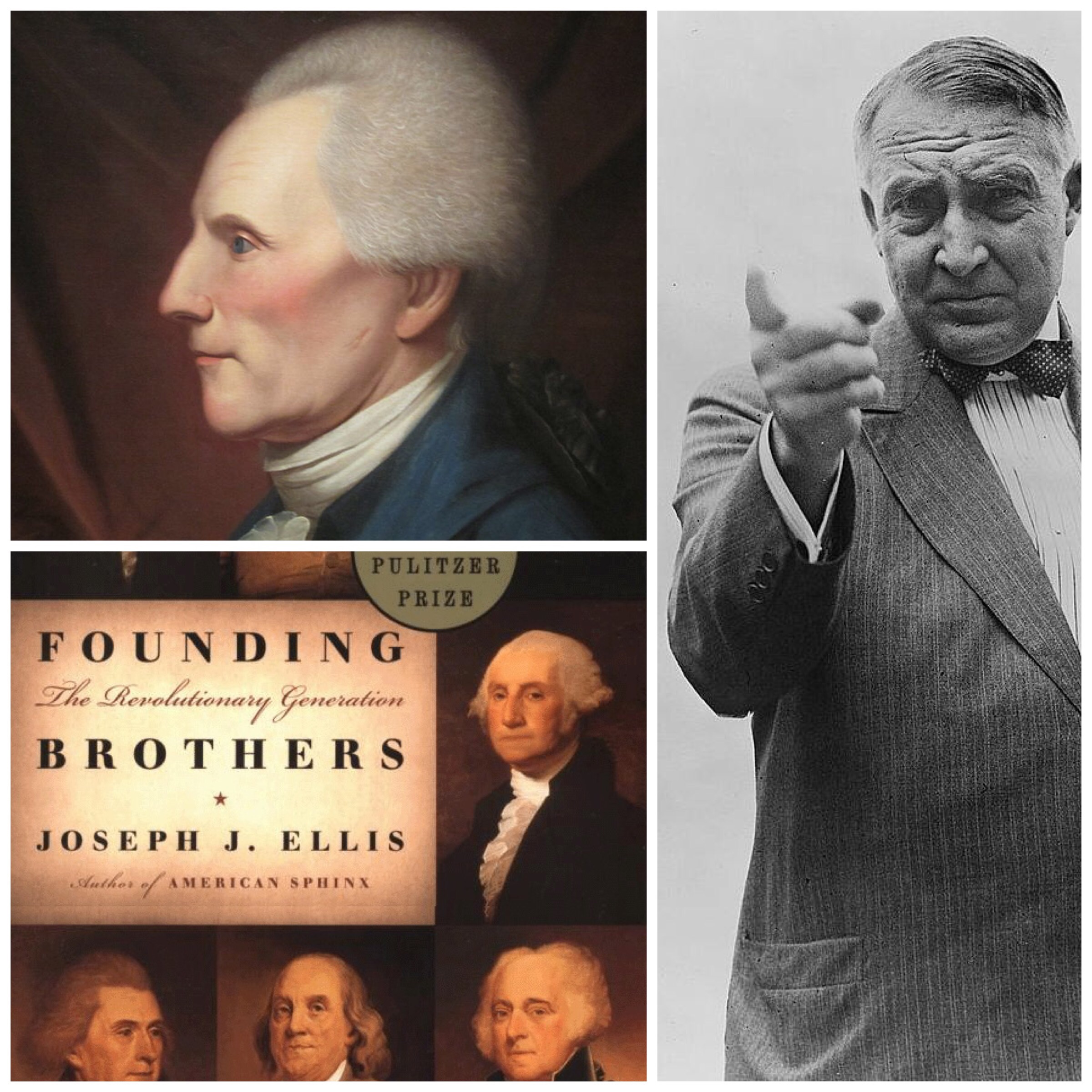
On June 7, 1776, Richard Henry Lee presented the “Lee Resolution” to the Continental Congress. The motion was seconded by John Adams, but was tabled for several weeks. The motion was finally passed on July 2, 1776.

During the 1916 Republican National Convention (June 7 – 10), Senator Warren G. Harding used the phrase “Founding Fathers” in his keynote address . . . and would go on using it in speeches thereafter. It caught on as a eulogistic way to refer to figures such as Thomas Jefferson and, yes, Richard Henry Lee, who orchestrated the American colonies’ break from England’s imperial monarchy.

Categories
Thought

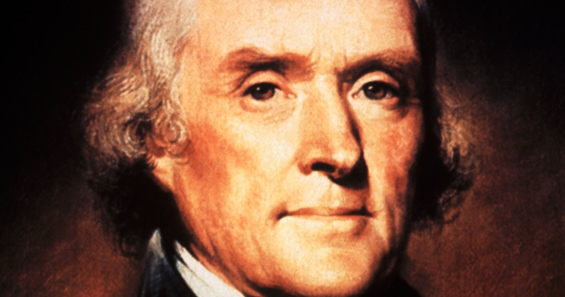
Thomas Jefferson

I know no safe depositary of the ultimate powers of the society but the people themselves; and if we think them not enlightened enough to exercise their control with a wholesome discretion, the remedy is not to take it from them, but to inform their discretion by education.

Thomas Jefferson, letter to W. C. Jarvis, 1820.