Categories
national politics & policies Popular

Bernie and Economic Law

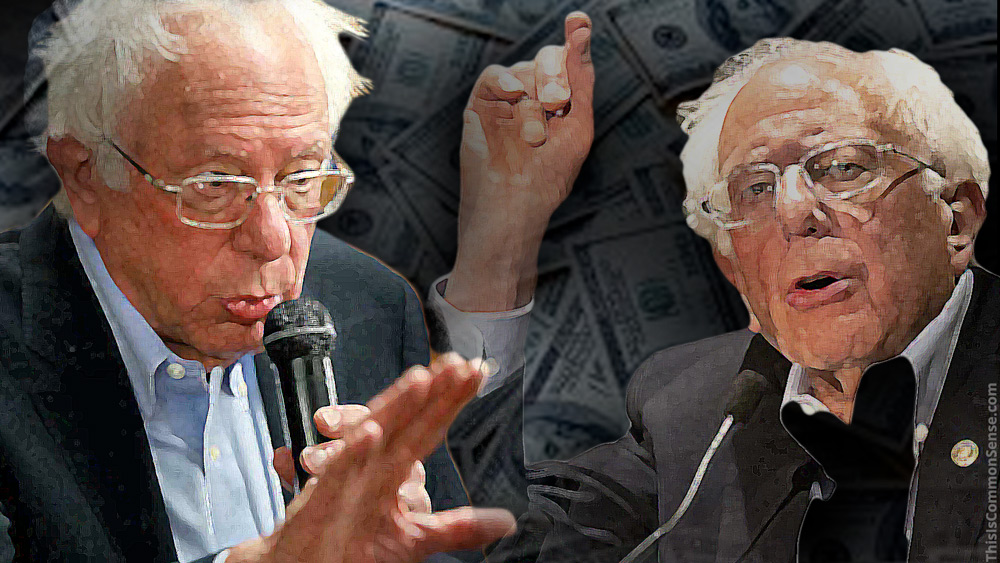
One of the things Vermont Senator Bernie Sanders is known for is his push for a $15 per hour “living wage.” But this is politics — a policy position is never complete until its advocates demonstrate just how idiotic the policy actually is.

As Bernie just did.

His presidential campaign has been embroiled in labor union negotiations and a mini-scandal.

Some staffers have been paid a flat salary, not according to a per-hour contract, making Bernie’s “living wage” commitment a bit murky. You see, these salaried employees worked longer hours than a typical 40-hour work week (as is common in political campaigns), dipping their wage breakdown below the $15/hour “minimum.” 

Now, no one is more deserving of this bit of policy blowback than resplendent millionaire Bernie Sanders.

Yet, it’s his campaign’s response that is especially droll: reduced hours!

So, while in one sense staffers got a pay raise, they did not get more money. Which is, as Matthew Yglesias acknowledged at Vox, “exactly the point that opponents of minimum wage increases are always making — if you force employers to pay more, they’re going to respond by cutting back elsewhere.” 

Ryan McMaken, at mises.org, dug deeper, noting that there are a number of ways that the new union deal could amount to cuts in real wages. By “cutting worker hours, the Sanders campaign elected to provide fewer ‘services’ in the form of campaign activities. In practice, this will likely mean fewer rallies, less travel, or fewer television ads.” Less chance for growth. And decreased likelihood for increased employment of other workers.

Not exactly shocking. But a lesson. A terrible way to run a business.

Or a campaign. 

Perhaps we should say, “Thanks, Bernie!”

This is Common Sense. I’m Paul Jacob.
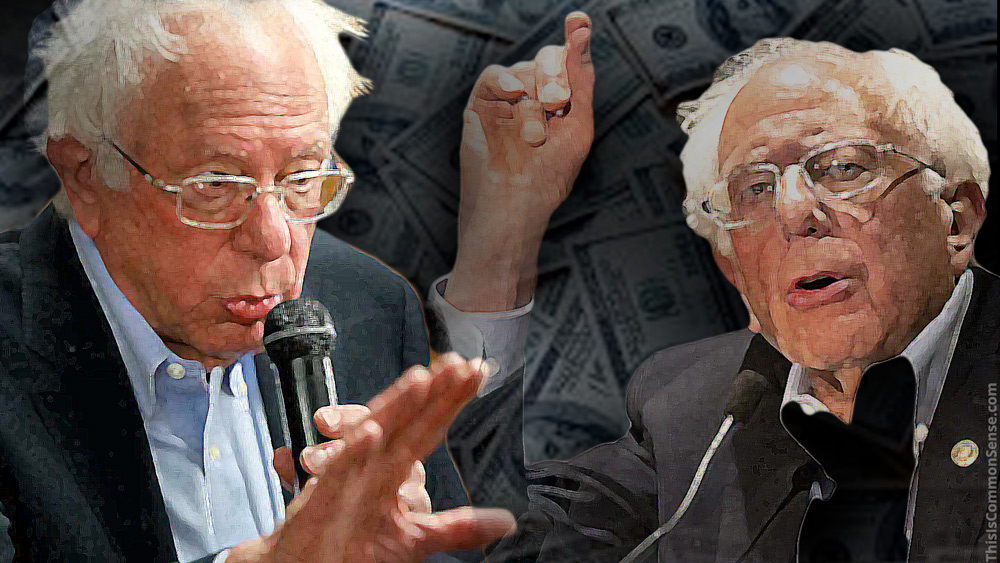

Bernie Sanders, minimum wage,

See all recent commentary
(simplified and organized)
See recent popular posts


Categories
Today

Splashdown!

On July 24, 1487, citizens in Leeuwarden, Netherlands, went on strike against a ban on foreign beer.

On the same day of 1823’s calendar, slavery was abolished in Chile.

Today marks the 50th anniversary of the splashdown of the Apollo 11 capsule into the Pacific Ocean. Astronauts Michael Collins, Buzz Aldrin, and Neil Armstrong spent more than eight days in space. The mission included 30 orbits of Earth’s satellite and a landing upon the lunar surface, an important milestone, so to speak, in humanity’s history of exploration. The astronauts brought back with them over 47 pounds of lunar rock, gravel, and dust.

On this day in 1974, the U.S. Supreme Court told President Richard Nixon that he lacked constitutional authority to withhold the infamous “Nixon Tapes” from Congress.

July 24 serves as Pioneer Day in Utah and as Simón Bolívar Day in Bolivia, Ecuador, Colombia, and Venezuela.

Categories
Thought

Murray N. Rothbard

When we see that the most ardent advocates of the minimum wage law have been the AFL-CIO, and that the concrete effect of the minimum wage laws has been to cripple the low-wage competition of the marginal workers as against higher-wage workers with union seniority, the true motivation of the agitation for the minimum wage becomes apparent.

Categories
national politics & policies too much government

Make Deficits Great Again?

Is Donald Trump really “draining the swamp”? 

It’s overflowing.

Stan Collender, writing last year in Forbes, noted just what a big spender the president really is. Now, an update: fiscal year 2019 sports a deficit of $1.09 trillion, up considerably from the $897 billion projected earlier this year; the next year is expected to nudge the deficit even higher, to $1.1 trillion.

The whys aren’t a mystery: it is politically difficult to cut an expected benefit to any constituency. It looks stingy — though it is the very opposite. Spending other people’s money — including taxpayers’ — is not generosity. For a politician, it is naked self-interest. Buying votes.

Worse than merely corrupt, it’s corrupting — since the People are increasingly tempted to look to government to supply special voting bloc advantages rather than the mutual, universal advantage of liberty and justice for all.

Collender speculated that a $2 trillion deficit is “definitely within view” because “Trump is demanding that federal spending and the government’s red ink be increased even further.”

Judd Gregg, writing yesterday for The Hill, summarizes current GOP fiscal policy as “now the most profligate and debt-driving party in the nation’s history.” 

He’s not wrong, but I question his next line: “Fiscal restraint is no longer part of the cloth the Republican Party wears.”

Careful wording. 

Republicans sometimes talk a good game, but are known to be big spenders when not opposing a Democratic president. The Class of 94 was effective against Bill Clinton. Under unified government in the aughts, though, under George W. Bush, they went on a spree.

Maybe Republicans just need a good enemy.

Bernie Sanders for President? 

Perhaps any socialist Democrat will do.

This is Common Sense. I’m Paul Jacob.


PDF for printing

money, case, window, floating, deficit, spending,

See all recent commentary
(simplified and organized)
See recent popular posts

Categories
Today

Typewriter

On this day in 1829, American William Austin Burt patents the “typographer” — a precursor to the typewriter.

Categories
Thought

H. L. Mencken

One horse-laugh is worth ten thousand syllogisms. It is not only more effective; it is also vastly more intelligent.

Categories
term limits

They’re Called Term Limits

Looking for an exemplar of condescending witlessness? Take Steve Benen, producer of MSNBC’s Rachel Maddow Show. Please! 

Last week, I praised Democratic presidential candidate Tom Steyer for endorsing term limits, while Benen panned him at The Maddow Blog, calling term limits a “gimmick.”

So, when Aristotle argued for mandatory rotation in office, that was just a stunt?

“I imagine most term-limit proponents mean well,” concedes the snooty Benen, about congressional term limits’ whopping 82 percent public support. But, he goes on, “whether they appreciate the details or not, forcing experienced policymakers out of office, even if their constituents want to re-elect them, has an unintended consequence: inexperienced officials inevitably find themselves more dependent on outside groups and lobbyists . . .”

Are we supposed to believe that lobbyists and special interests are being kept at bay by Congress’s current careerists? 

Supposedly appealing to an “underlying principle,” Benen then maintains that “there’s simply no reason for the federal government to impose arbitrary constraints on voters’ ability to choose their own members of Congress.”

Oh, that’s really rich — as if “the federal government” is dictatorially cramming term limitation down the throats of poor politician-adoring voters. 

Benen notes that Steyer is “not the only Democratic candidate endorsing term limits,” acknowledging that Beto O’Rourke has also proposed the reform. Actually, there are eight more Democratic presidential candidates who have voiced support.* 

Mr. Benen’s sophistication boils down to the tired slogan: “We already have term limits; they’re called elections.”

That may fly for the insiders at MSNBC and in Congress, but the vote the American people most want to see is on a constitutional amendment for congressional term limits.

This is Common Sense. I’m Paul Jacob.


* Those candidates are: New Jersey Senator Cory Booker, former HUD Secretary Julian Castro, Maryland Congressman John Delaney, New York City Mayor Bill DiBlasio, New York Senator Kirsten Gillibrand, former Colorado Governor John Hickenlooper, Massachusetts Congressman Seth Moulton, and entrepreneur Andrew Yang.

PDF for printing

term limits, flag, hand, stop,

See all recent commentary
(simplified and organized)
See recent popular posts


Categories
Today

Only Nine?

On July 22, 1937, the U.S. Senate voted down Franklin Delano Roosevelt’s court packing scheme.

Categories
Thought

Herbert Spencer

Whoever hesitates to utter that which he thinks the highest truth, lest it should be too much in advance of the time, may reassure himself by looking at his acts from an impersonal point of view. Let him duly realize the fact that opinion is the agency through which character adapts external arrangements to itself—that his opinion rightly forms part of this agency—is a unit of force, constituting, with other such units, the general power which works out social changes; and he will perceive that he may properly give full utterance to his innermost conviction: leaving it to produce what effect it may. It is not for nothing that he has in him these sympathies with some principles and repugnance to others. He, with all his capacities, and aspirations, and beliefs, is not an accident, but a product of the time. He must remember that while he is a descendant of the past, he is a parent of the future; and that his thoughts are as children born to him, which he may not carelessly let die.

Herbert Spencer, from the last page of “The Unknowable,” Part One of First Principles, Second Edition (1867).
Categories
by Paul Jacob video

Something You Can Do

Paul tells tales from the early days of the movement — featuring stories about Speaker Tom Foley, Representative Dick Armey, and Senator William Proxmire — and also explaining precisely why people love term limits so much.

Inspiring:

The discussion starts with a famous PSA — used as “an effect” in our previous video.

Attention to advertising, Representative Dick Armey and Senator William Proxmire.

Oh, and Sam Nunn. Heavens, let’s not forget Sam Nunn!