Categories
Today

Mandela Released

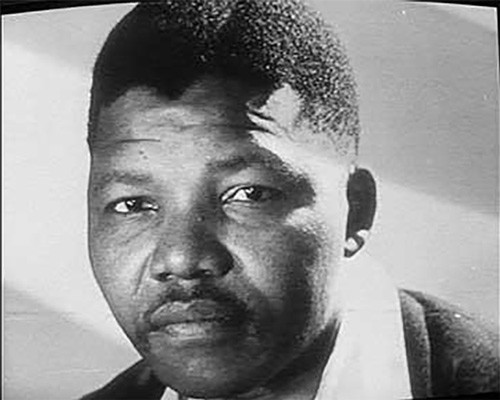
On Feb. 11, 1990, after 27 years in prison, Nelson Mandela was released by South African authorities.

Mandela had joined the African National Congress (ANC) in 1944, becoming deputy national president of the group in 1952. Arrested for treason in 1961, he was acquitted — but then arrested again in 1962 for illegally leaving the country. Convicted and sentenced to five years at Robben Island Prison, he was put on trial again in 1964 on charges of sabotage. He was convicted and sentenced to life in prison along with several other ANC leaders.

In 1989, F.W. de Klerk became South African president and began dismantling apartheid. De Klerk lifted the ban on the ANC, suspended executions, and in February 1990 ordered the release of Nelson Mandela.

Mandela subsequently led the ANC in negotiating an end to apartheid and the establishment of a multiracial government. In 1993, Mandela and de Klerk were jointly awarded the Nobel Peace Prize. One year later, the ANC won the country’s first free elections, and Mandela was elected South Africa’s president.

Categories
Thought

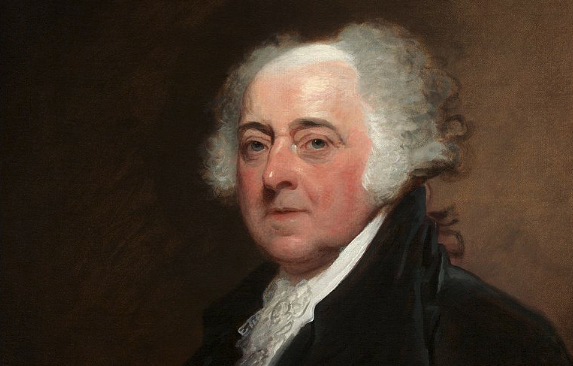
John Adams

There are two ways to conquer and enslave a country. One is by the sword. The other is by debt.

Misattributed to John Adams.

But it is in the spirit of President Adams’s thought:

The consequences arising from the continual accumulation of public debts in other countries ought to admonish us to be careful to prevent their growth in our own.

John Adams, First Address to Congress (November 23, 1797).
Categories
general freedom national politics & policies The Draft

Draft Winds Blowing

A month ago, the U.S. drone strike against an Iranian commander in Baghdad sparked enough public concern over military conscription to overwhelm the Selective Service System’s website. 

“With the ongoing military conflicts in Iraq and Afghanistan unlikely to end any time soon,” former Congressman Ron Paul writes, people are “right to be concerned about a return of the draft.”

“There is not going to be a draft,” SSS Director Don Benton emphatically declared. “At least, we don’t think so.”

The current context? Last February, a federal judge ruled male-only draft registration unconstitutional. On March 3, the Fifth Circuit will hear the government’s appeal of that ruling.*

A few weeks later, the National Commission on Military, National and Public Service will release their report to Congress on what to do with draft registration — jettison or keep and expand to young women — as well as the advisability of a year or two of compulsory government service after young people graduate from high school.

The issue is really very old unfinished business. “The U.S. draft proposal that no one supported,” reads the headline of a February 8, 1980, Canadian Broadcasting Corporation article on then-President Jimmy Carter’s proposal to register both men and women.

Back then, women were not permitted in combat units, and Carter’s proposal did not propose putting women into such positions. Still, as the CBC’s Washington correspondent at the time explained, “On Capitol Hill, the reaction was overwhelmingly negative.”

Especially because of a Catch-22. “Those who are for the draft are mostly against women being included,” he found. “Those who favor equal treatment for women are mostly against the draft.”

Nowadays, support for the draft is, if anything, even less enthusiastic.

This is Common Sense. I’m Paul Jacob.


* See National Organization for Men v. Selective Service System.

PDF For printing

draft, conscription, slavery, registration, force,

See all recent commentary
(simplified and organized)
See recent popular posts

Categories
Thought

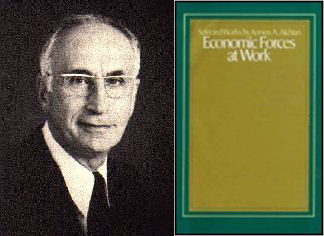
Armen Alchian

The fundamental purpose of property rights, and their fundamental accomplishment, is that they eliminate destructive competition for control of economic resources. Well-defined and well-protected property rights replace competition by violence with competition by peaceful means.

Armen Alchian, “Property Rights,” The Concise Encyclopedia of Economics

See a recent article on Alchian by Peter J. Boettke, “Why Did Armen Alchian Have to Teach Economists About Property Rights?”

Categories
Today

The Twenty-Fifth

On Feb. 10, 1967, the 25th Amendment to the U.S. Constitution was ratified by Nevada, the necessary 38th state to do so. The amendment sets the process for presidential succession, and reads:

Section 1. In case of the removal of the President from office or of his death or resignation, the Vice President shall become President.

Section 2. Whenever there is a vacancy in the office of the Vice President, the President shall nominate a Vice President who shall take office upon confirmation by a majority vote of both Houses of Congress.

Section 3. Whenever the President transmits to the President pro tempore of the Senate and the Speaker of the House of Representatives his written declaration that he is unable to discharge the powers and duties of his office, and until he transmits to them a written declaration to the contrary, such powers and duties shall be discharged by the Vice President as Acting President.

Section 4. Whenever the Vice President and a majority of either the principal officers of the executive departments or of such other body as Congress may by law provide, transmit to the President pro tempore of the Senate and the Speaker of the House of Representatives their written declaration that the President is unable to discharge the powers and duties of his office, the Vice President shall immediately assume the powers and duties of the office as Acting President.

Thereafter, when the President transmits to the President pro tempore of the Senate and the Speaker of the House of Representatives his written declaration that no inability exists, he shall resume the powers and duties of his office unless the Vice President and a majority of either the principal officers of the executive department or of such other body as Congress may by law provide, transmit within four days to the President pro tempore of the Senate and the Speaker of the House of Representatives their written declaration that the President is unable to discharge the powers and duties of his office. Thereupon Congress shall decide the issue, assembling within forty-eight hours for that purpose if not in session. If the Congress, within twenty-one days after receipt of the latter written declaration, or, if Congress is not in session, within twenty-one days after Congress is required to assemble, determines by two-thirds vote of both Houses that the President is unable to discharge the powers and duties of his office, the Vice President shall continue to discharge the same as Acting President; otherwise, the President shall resume the powers and duties of his office.

Categories
audio podcast

It Is(n’t) Over

In recapping the big stories of the week, Paul adds a lot more information and opinion than you get daily here. This is a more forgiving medium, allowing for greater length.

Yes, this is the weekend podcast:

This Week in Common Sense, February 3 – 7, 2020
Categories
Today

The Age of Tom Paine Begins

On Feb. 9, 1737, Thomas Paine was born in Thetford, England.

Paine would come to America in 1774 and by 1776 publish Common Sense, urging American independence. Later works included The Rights of Man (1792) and The Age of Reason (published in three parts in 1794, 1795, and 1807).

Paine died in 1809.

Categories
by Paul Jacob video

What Is (and Is Not) Over

The big stories this last week will loom over our imaginations and in memory for quite a long time:

This Week in Common Sense, February 3 – 7, 2020.
Categories
Today

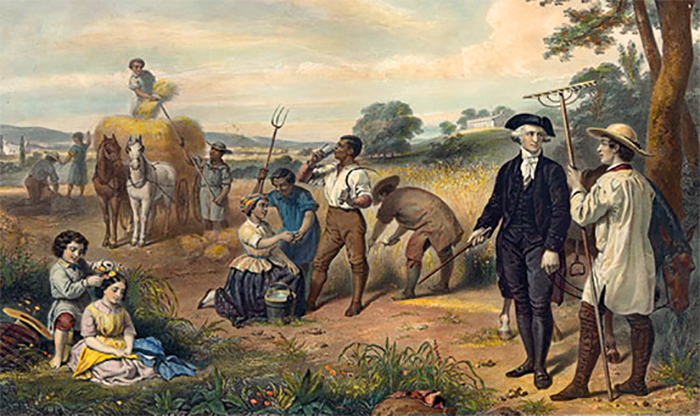
Delaware and Slavery

On February 8, 1865, Delaware voters rejected the Thirteenth Amendment to the U.S. Constitution, voting to continue the practice of slavery. Delaware belatedly and symbolically ratified the amendment on February 12, 1901.

Categories
initiative, referendum, and recall national politics & policies

Impeachments Are Forever?

The impeachment of President Donald J. Trump, just concluded in the Senate with an acquittal, was — so far as the Senate trial portion of the exercise is concerned — the least partisan presidential impeachment in U.S. history.

That’s because Senator Mitt Romney (R-Utah) was the first senator ever to vote against his own party in such a proceeding.

Before we give the notorious flip-flopper a ticker-tape parade, or query too deeply into his personal animus against Trump, let’s acknowledge that the House impeachment, proper, was heavily partisan, and is only going to get more-so.

What? you ask.

How can a past event get more or less of anything?

Well, House Republicans, expecting a big backlash against Democrats next November, are already plotting to “expunge” the impeachment from the record. 

As if to stick it to Speaker Nancy Pelosi’s bizarre point that her House’s action would be “an impeachment that lasts forever.”

Sorta like Pharaoh Thutmose III chiseling his mother’s name — Hatshepsut — off the monuments of Egypt.

The Republicans’ planned “damnatio memoriae” is a good clue to the moral of this story: the impeachment process is . . . “not good,” to apply a Trumpian mantra.

Now, the process of impeachment has long seemed to me like a great idea — another one from those wise framers of the Constitution.

But with persistent partisanship, this constitutional recourse has not worked out very well. 

Overall. 

Historically.

Whether in 1868, with Democrat Andrew Johnson, or 1999, with Democrat Bill Clinton, or today, with Trump’s failed ouster, the impeachment process has proved (Romney notwithstanding) maddeningly partisan, and looks like it will only get more partisan — with House Democrats already talking about a second impeachment of Trump.

We need some new form of recall.

Citizen-based, perhaps?

This is Common Sense. I’m Paul Jacob.


PDF for printing

Pharaoh Thutmose III, history, myth, memory,

See all recent commentary
(simplified and organized)
See recent popular posts