Categories
national politics & policies political challengers

The Mandela Effect

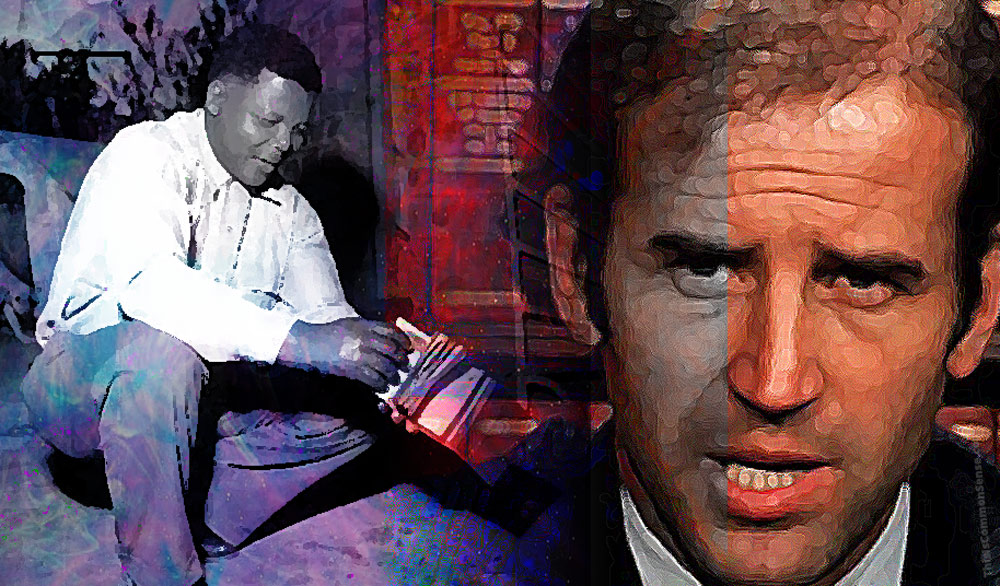
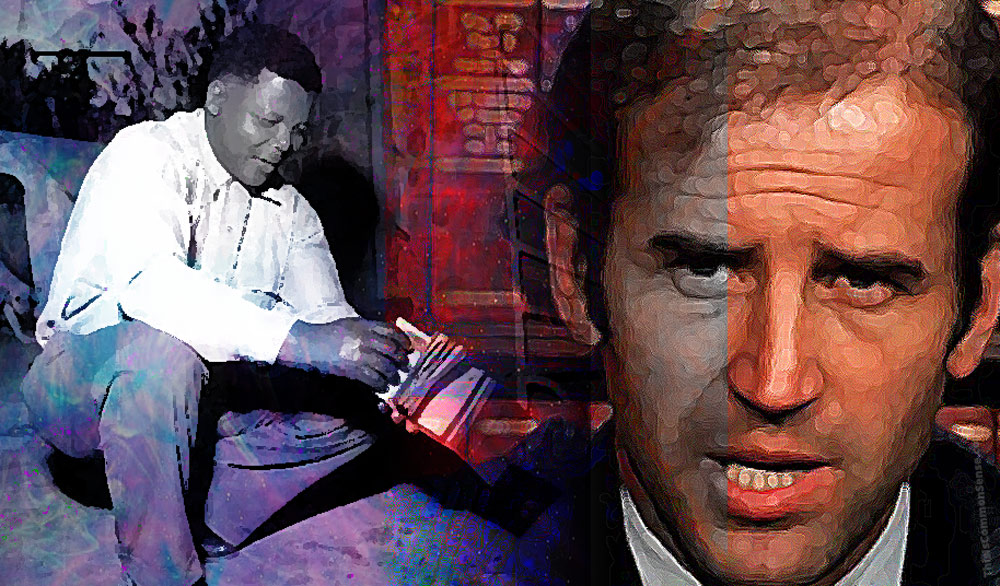
People have been known to plagiarize college term papers. Even a few political speeches have been surreptitiously copied and brazenly re-orated without proper attribution. But you can’t plagiarize getting arrested, can you?

Not really. What you can do is lie about being arrested — just make it up out of whole cloth. 

That may be what former Vice-President and once-upon-a-time Democratic Party presidential front-runner Joe Biden has been doing in recent days “as he confronts challenging political headwinds,” following fourth and fifth place finishes in Iowa and New Hampshire, respectively — though he came in (a distant) second in Nevada over the weekend.

“I had the great honor of meeting [Nelson Mandela],” Biden told a South Carolina crowd last week. “I had the great honor of being arrested with our U.N. ambassador on the streets of Soweto trying to get to see [Mandela] on Robbens Island.”

“No, I was never arrested,” U.N. Ambassador at that time, Andrew Young, now 87, told The New York Times, “and I don’t think he was, either.” 

Back in 1977, Mr. Biden was Senator Biden from Delaware. Methinks the arrest of a U.S. Senator by a foreign government might spark at least a single news story. Be informed: “A check of available news accounts by The New York Times turned up no references to an arrest.”

The Times also notes that Biden “did not mention it in his 2007 memoir when writing about a 1970s trip to South Africa.”

Plagiarism sunk Biden’s 1988 presidential campaign. This time out, the politician’s gaffes, bouts of bizarre truculence, and age-related physical failings have hampered his quest. Add to all that, now, the apparent fact that Joe can’t even get arrested.

This is Common Sense. I’m Paul Jacob.


N.B. The upshot of the Biden candidacy may amount to nothing more than an increased interest in “the Mandela Effect.”
PDF for printing

Joe Biden, Nelson Mandela,

See all recent commentary
(simplified and organized)
See recent popular posts
Categories
Thought

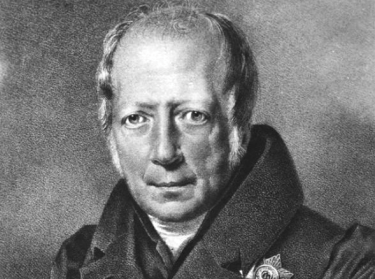
Wilhelm von Humboldt

To the yoke of necessity every one willingly bows the head. Still, wherever an actually complicated aspect of things presents itself, it is more difficult to discover exactly what is necessary; but by the very acknowledgment of the principle, the problem invariably becomes simpler and the solution easier

Wilhelm von Humboldt, Joseph Coulthard, translator, The Sphere and Duties of Government (1854).

Categories
Today

Grimke and Revels

February 25, 1805, saw the birth of Angelina Emily Grimké Weld, American abolitionist and feminist. She was the younger sister of the equally famed Sarah Moore Grimké.

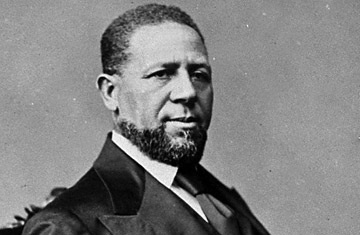
On February 25, 1870, the first African-American entered Congress to serve in the U. S. Senate. Hiram Rhodes Revels (Sep 27, 1827 – Jan 16, 1901) was a minister in the African Methodist Episcopal Church, a Republican politician, and college administrator. Born free in North Carolina, he later lived and worked in Ohio, where he voted before the Civil War. He was elected as the first African American to serve in the United States Senate, and was the first African American to serve in the U.S. Congress. He represented Mississippi in the Senate in 1870 and 1871 during the Reconstruction era.


In Law #46 of February 25, 1947, the Allied Control Council formally proclaimed the dissolution of Prussia.

Categories
ideological culture

Beautiful Colors, Ugly Terms

“My friends were asking for the ‘skin-color’ crayon,” explains 9-year-old Bellen Woodard. 

She realized the request was for the peach-colored crayon but, being the only black kid in her third grade Loudoun County, Virginia, classroom, she also knew her skin wasn’t peach-colored. As her mother told Washington Post columnist Theresa Vargas, it made her daughter feel “uncomfortable.”

Bellen used the term “dis-included.”

She and her mom discussed what to do and her mom proposed, “Just hand them the brown one instead.” But Bellen had an even better idea: “I think I just want to ask them what color they want because it could be any number of beautiful colors.”

Indeed.

“So that’s what she did,” wrote Vargas. “She started saying those words. She then heard her teacher say them, too. And soon, her entire class was talking about skin color in a way that went beyond peach.”

The third-grader also designed a kit called “More Than Peach” featuring not just peach-colored crayons but also colors such as “apricot,” “burnt sienna” and “mahogany.” In no time, her kits have been requested across the nation and now the Virginia Museum of History & Culture is adding one to their collection.

People come in so many wonderful hues and colors. It is something to celebrate — just as young Bellen Woodard has done.

Which reminds me of my distaste for the term “persons of color.” 

This term of art has become ubiquitous. Unlike Bellen’s efforts offering inclusion and understanding, “persons of color” serves to separate us. Because I’m labeled “white” . . . I’m “dis-included.” 

But I’m not white (a color) or translucent; I’m peachy — perhaps tan sometimes or bright red when sunburned. 

We are all persons of color. Beautiful colors. 

This is Common Sense. I’m Paul Jacob. 


PDF for printing

crayons, flesh, race,

See all recent commentary
(simplified and organized)
See recent popular posts
Categories
Today

A telegram

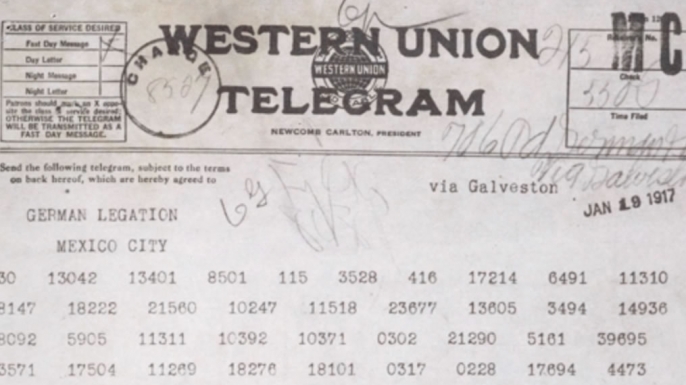
On February 24, 1917, United States ambassador to the United Kingdom, Walter Hines Page, was shown the intercepted Zimmermann Telegram, in which Germany offered to give the American Southwest back to Mexico if Mexico were to declare war on the United States.

On February 24, 1803, the Supreme Court, in Marbury v. Madison, established the principle of judicial review.

Categories
audio podcast

Listen: “I Might Make a Mistake”

Presciently titled podcast, for there is one error in it. Guess which it is:

Categories
Thought

Aristotle

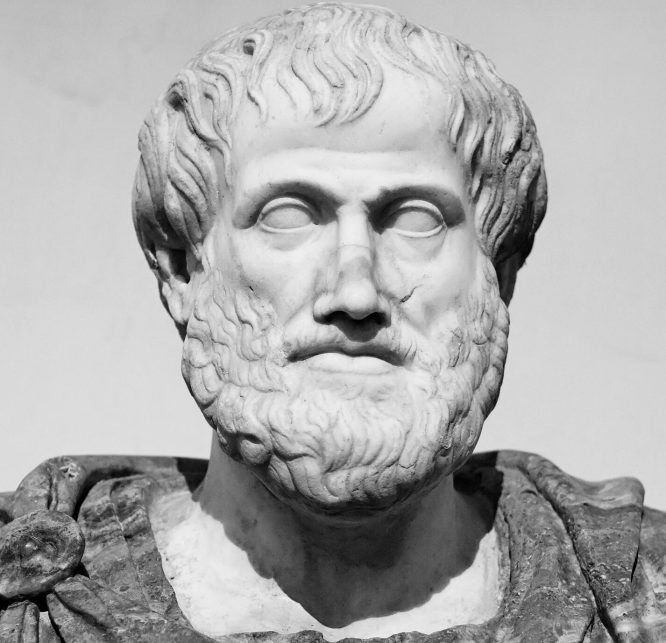
One swallow does not make a summer, nor does one day; and so too one day, or a short time, does not make a man blessed and happy.

Categories
Today

Zola and Menger

On February 23, 1898, Émile Zola was imprisoned in France after writing J’accuse, a letter accusing the French government of anti-Semitism and wrongfully imprisoning Captain Alfred Dreyfus. Zola was a leading force in extending realism to the novel.

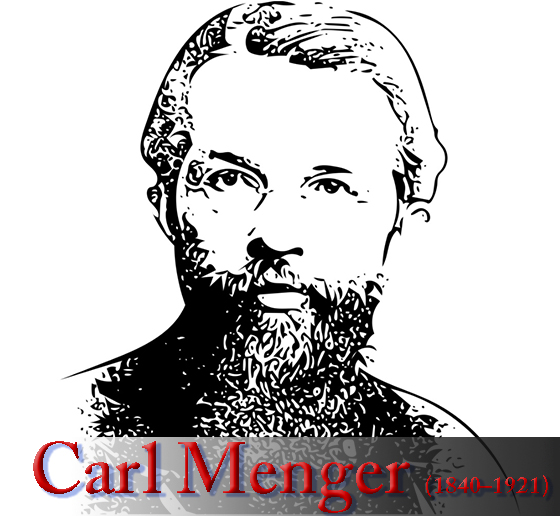
Fifty-eight years earlier, Austrian economist Carl Menger was born.

Menger would go on to contribute to the development of the theory of marginal utility, which supplanted cost-of-production theories of value in economics, in his first book, translated into English as Principles of Economics. Though expert in mathematics (he served as tutor in economics and statistics to Archduke Rudolf von Habsburg, the Crown Prince of Austria not long after the publication of the Principles), his approach to marginal theory was the least mathematical of his famous “co-discovers” of the principle, William Stanley Jevons and Leon Walras. Rooted in a subjective theory of value, it was the most realistic and least model-based of the marginalist revolutionaries, and he was most interested in price formation, not “price determination,” which focused almost exclusively on equilibrium conditions. He developed an evolutionary theory of money, as well. His second book expanded upon invisible hand processes in society.

Zola died in 1902; Menger died in 1921.

Categories
by Paul Jacob video

Liz Windsor Makes Me Sick!

…and other adventures in republican values.


This Week in Common Sense, February 17 – 21, 2020.
Categories
Today

Heroes Executed

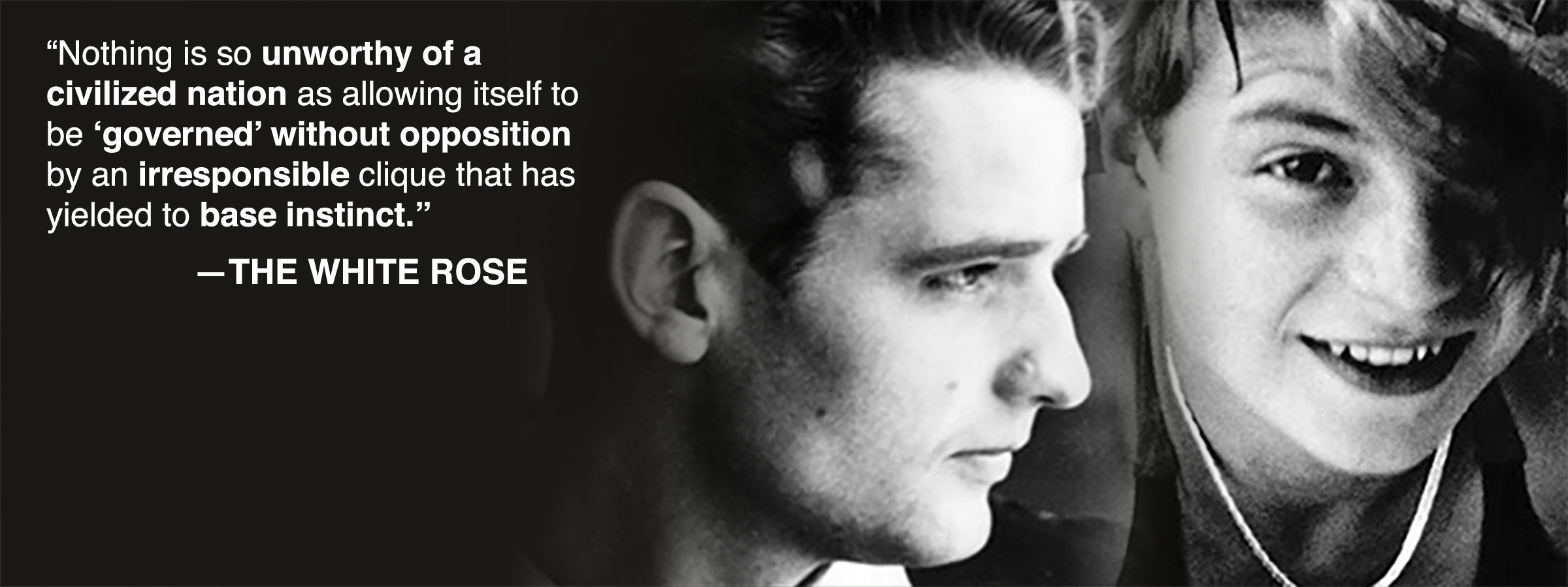
On Feb. 22, 1943, brother and sister Hans and Sophie Scholl, and their colleague in the White Rose resistance organization, Christoph Probst, stood trial before the Volksgericht — the People’s Court that tried political offenses against the Nazi German state. Found guilty of treason by Roland Freisler, head judge of the court, the three were executed that same day.

The method of capital punishment was guillotine.

Their six pamphlets had spread throughout German-held territory before the war ended.