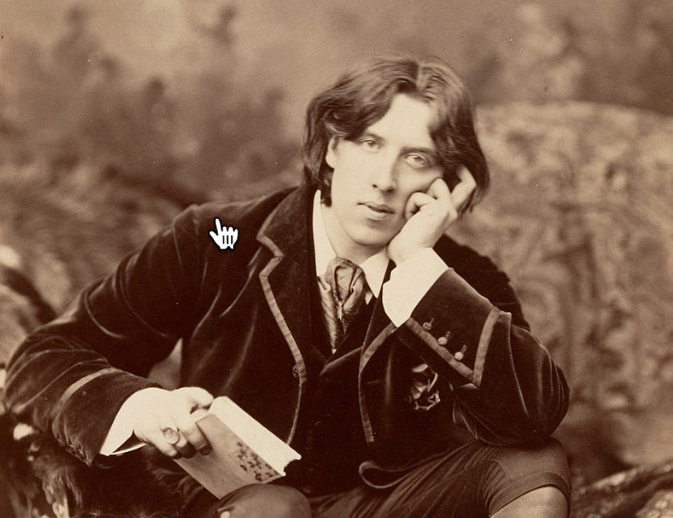
On May 19, 1897, Irish author, playwright, and poet Oscar Wilde (October 16, 1854 – November 30, 1900) was released from Reading Prison, where he had finished, in ill health, his hard labor sentence for “gross indecency.” His “Ballad of Reading Gaol,” first published pseudonymously in a periodical with wide circulation amongst criminals, quickly achieved the status of a classic.
He died less than three years later, in exile in Europe. His most famous works include the play The Importance of Being Earnest, the novel The Picture of Dorian Gray, and the fascinating essay “The Soul of Man Under Socialism.”
Shutting down capitalism almost worldwide may prove to be the grandest disaster of all time. Folks on the margin of poverty in poor countries are already starving. Though scads of people seem to think we could ride out a lockdown indefinitely just by cashing government checks, the problem is that if we don’t produce, we cannot buy and consume products.
A “universal basic income” won’t help if the re-distributed money chases few-to-no goods.
So how did we come to believe that we can just shut down most business activity and still survive?
Maybe the idea seems plausible because many people already do not work to survive. As their numbers have increased, our civilization has forgotten that they survive upon the work of others.
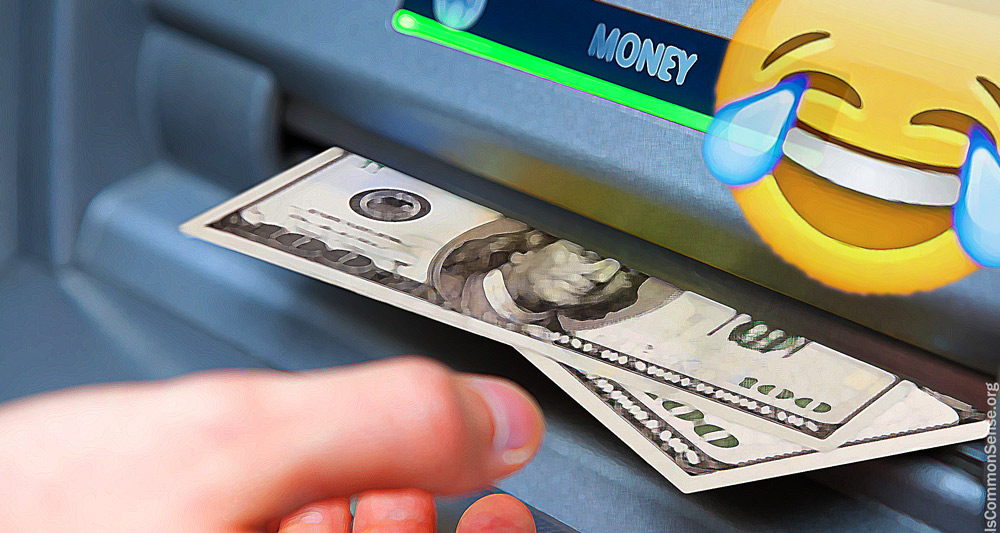
We guffaw at young children who, when their parents say something they want is too expensive, they innocently respond, ‘well, just go to the cash machine!’ But the more people rely upon checks and bank deposits from the government — for any reason — the harder it is to remember that the power to buy stuff doesn’t ultimately come from government. With taxation, redistribution and inflation thrown into the mix, even adults think of government as Cash Machine.
And the Cash Machine as a model for the economy.
To fight a virus, the world has shut down production — as if we do not survive by producing goods in order to consume them.
Government has reduced capitalism — and us — to absurdity.
Internally, the [ancient Greek] polis was implacable towards any individual who ceased to be totally absorbed in it. . . . The polis was completely inescapable. . . . The absence of individual freedom went hand in hand with the omnipotence of the State in every context. Religion, the sacral calendar, the myths — all these were nationalized, so that the State was at the same time a church, empowered to try charges of impiety, and against this dual power the individual was totally helpless. . . . In short, there could be no guarantees of life or property which could run counter to the polis and its interests. Although this enslavement of the individual to the State existed under all constitutions, it must have been at its most oppressive under democracy, where the most villainous men, ridden by ambition, identified themselves with the polis and its interests and could therefore interpret in their own way the maxim salus reipublicae suprema lex esto (‘let the safety of the Republic be the highest law’).
Jacob Burckhardt, The Greeks and Greek Civilization, 1999, p. 57-8.
On May 18, 1652, Rhode Island passed the first law in English-speaking North America making slavery illegal.
On May 18, 1593, playwright Thomas Kyd’s accusations of heresy led to an arrest warrant for fellow playwright Christopher (“Kit”) Marlowe.
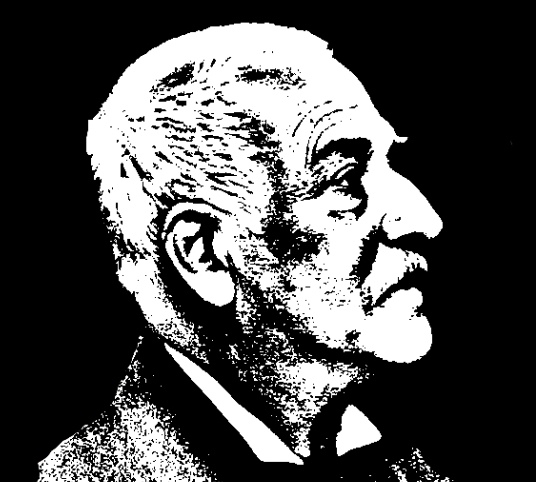
Kyd was the famed author of The Spanish Tragedy, and Kit Marlowe [pictured] was known for a number of plays, including The Jew of Malta and The Tragicall History of the Life and Death of Doctor Faustus.
Marlowe died a few weeks later, on May 30, without having been arrested. The circumstances of his death were bizarre, suspicious — as if written by a playwright.
There is no doubt in my mind that when we come to look back on this, the damage done by lockdown will exceed any saving of lives by a huge factor.
Professor Michael Levitt, as quoted in “Nobel prize-winning scientist: the Covid-19 epidemic was never exponential,” by Freddie Sayers, May 2, 2020. Levitt is Professor of Structural Biology at the Stanford School of Medicine and winner of the 2013 Nobel Prize for Chemistry. Levitt also said that “I think the policy of herd immunity is the right policy. I think Britain was on exactly the right track before they were fed wrong numbers. And they made a huge mistake.”
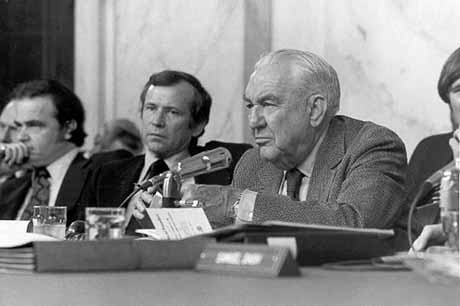
On May 17, 1973, televised hearings regarding the Watergate scandal began in the United States Senate. Sen. Sam Ervin chaired.
Little did participants know that the name of the hotel in which the White House-arranged break-ins occurred would provide a template for most future political scandals: “-gate” would be suffixed to nearly every other possible designator of scandal. The Democratic vendetta against Republican Donald Trump for winning the 2016 election has been called “Russiagate,” for example.
And on May 11, 2020, Trump retweeted a previous post with one additional word: “OBAMAGATE!”
This could be called a “suffixmeme.” Or “insufferable meme,” if you prefer.
This week began with medical devices and loose Trump talk and the predictable idiotic reactions, and ended with idiotic regulations by the FDA. Paul recaps and expands upon the week’s stories:
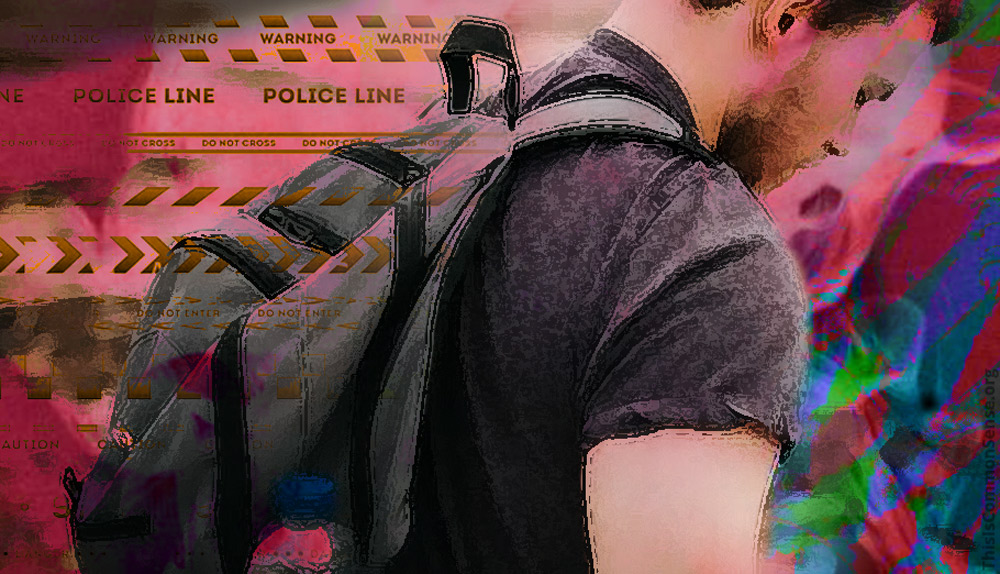
But a little tricky. The FDA doesn’t want to prohibit backpack pockets as such. Only backpack pockets that can hide vaping equipment, like an e-cigarette.
Such pockets could presumably also hold a pen, thermometer, stick of beef jerky, perhaps even a plastic straw or spindled dollar bill. The list of cacheable contraband is endless. But it’s the thoughtcrime that counts.
The FDA wants to deploy its power to regulate food and drugs to also bully makers of pockets and other things that facilitate peaceful actions of which FDA officials disapprove. For now the agency is sending stern letters to sellers of legal products.
Tomorrow it may send SWAT teams.
“The FDA is especially disturbed by some of these new products being marketed to children and teens by promoting the ease with which they can be used to conceal product use,” frets Mitch Zeller, king of the FDA’s Center for Tobacco Products. (It’s not an emporium.)
Various products that could help a person vape furtively are on the FDA’s hit list. Many of these products never hurt a fly. Backpack pockets in particular are getting a bad rap. I’m a fan of backpack pockets and hope the production of every kind of backpack pocket will continue unabated.
So, regardless of any animus that certain functionaries may feel about the covert carrying of e-cigarettes, pencils, or swizzle sticks, let them leave backpack pockets alone.