It is acquired wisdom and experience only that teach incredulity, and they very seldom teach it enough.
Adam Smith, The Theory of Moral Sentiments (1801, Ninth Edition).
Categories
Adam Smith
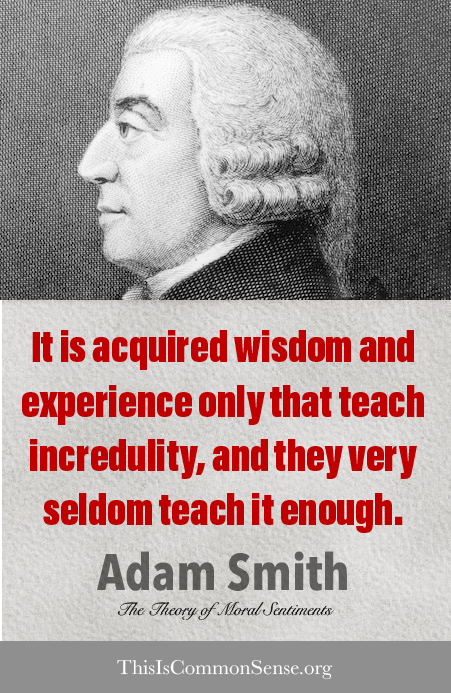
It is acquired wisdom and experience only that teach incredulity, and they very seldom teach it enough.
Adam Smith, The Theory of Moral Sentiments (1801, Ninth Edition).

The second part of the weekend podcast, in video form:
This Week in Common Sense, September 8-11, 2020.

The second part of this weekend’s podcast:
This Week in Common Sense, September 8-11, 2020.
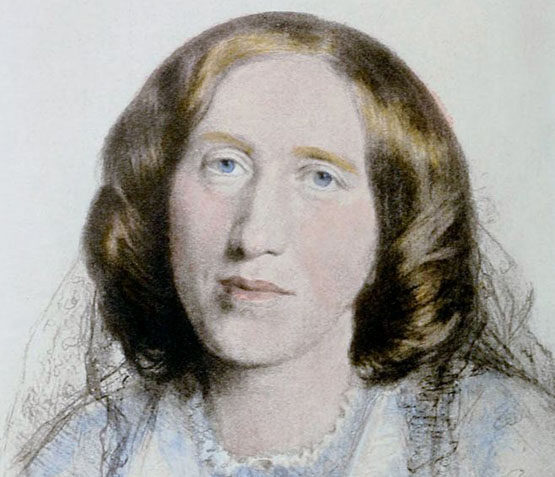
It is doubtful whether our soldiers would be maintained if there were not pacific people at home who like to fancy themselves soldiers. War, like other dramatic spectacles, might possibly cease for want of a “public.”
Mary Ann Evans (1819–1880), writing as George Eliot, The Mill on the Floss (1860)

John Calvin [pictured above] returned to Geneva on September 13, 1541, after three years of exile. His subsequent work in church reform and theology became known as Calvinism, and profoundly influenced the course of European and (eventually) American civilization, including several concepts of servitude and liberty.
On the same date in 1989, Desmond Tutu led South Africa’s largest march aganst Apartheid.

Paul Jacob reviews the biggest story of the week in this Part One of the weekend’s two-part podcast:

In this, the first part of the weekend podcast, Paul covers the biggest story of the week:
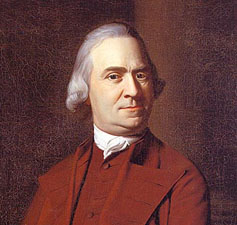
The natural liberty of man is to be free from any superior power on Earth, and not to be under the will or legislative authority of man, but only to have the law of nature for his rule.

On September 12, 1848, Switzerland became a unified federal state with a constitution limiting central government powers and providing decentralized state (canton) power patterned on the U.S. Constitution.
In 1880 on this date, H.L. Mencken was born. One of his earliest books was a debate with a socialist, The Men versus The Man (1910); his greatest lasting contribution was probably The American Language (1919) and its supplements (1945, 1948). His work has been collected in numerous anthologies, such as Alistair Cooke’s Vintage Mencken (1955) and the author’s own Mencken Chrestomathy.

We are not idiots.
We can see where a political program is heading before it is actually unveiled, right?
I know, you know: we are supposed to wait for the first actual piece of legislation to see the light of day before we criticize the agenda.
But that puts us at a disadvantage. Insiders can spend a lot of time working up new mandates before they reach a critique-able form. And during that incubation period, the ideas are out there, developing, gaining momentum. Festering.
What am I talking about?
Well, this: our rulers wriggle in delight, contemplating shooting us all with the vaccine being cooked up for SARS-CoV-2. Mandatory vaccination! We repeatedly hear, from the respected elected, that we cannot fully “re-open society” until the vaccine.
I cannot help having doubts: folks with badges and guns may soon demand that we be prevented from traveling, going into restaurants, buying food at supermarkets, or going to a movie theater or baseball game or church (!) until we get vaccinated . . . these “folks” . . . the Nancy Pelosis and Donald Trumps and Anthony Faucis . . . they are part of a system that has been spending tax money and borrowing to spend more and more and in this cause have already racked up trillions and trillions in public debt.
They didn’t bother protecting us from that.
The obvious itch to shoot hurriedly concocted biological agents into all our bloodstreams will definitely be pitched as “for our own good.”
But the pitchers who itch have no standing. Until they clean up their past messes, why would we trust them to accurately measure future consequences?
This is Common Sense. I’m Paul Jacob.
See all recent commentary
(simplified and organized)
See recent popular posts