Categories
Thought

Herbert Spencer

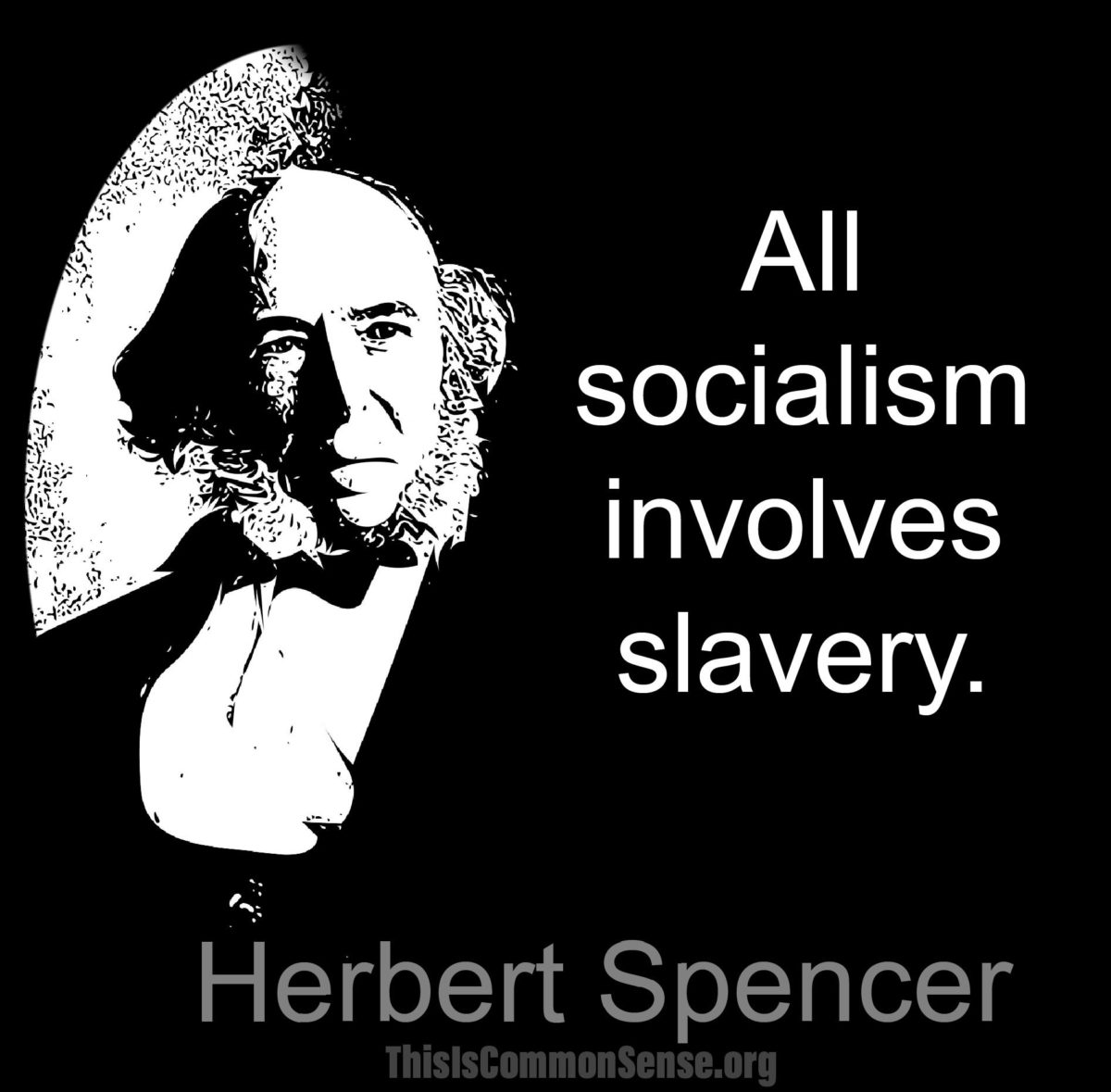
Influences of various kinds conspire to increase corporate action and decrease individual action. And the change is being on all sides aided by schemers, each of whom thinks only of his pet plan and not at all of the general reorganization which his plan, joined with others such, are working out. It is said that the French Revolution devoured its own children. Here, an analogous catastrophe seems not unlikely. The numerous socialistic changes made by Act of Parliament, joined with the numerous others presently to be made, will by-and-by be all merged in State-socialism—swallowed in the vast wave which they have little by little raised.

“But why is this change described as ‘the coming slavery’?,” is a question which many will still ask. The reply is simple. All socialism involves slavery.

Herbert Spencer, “The Coming Slavery,” The Man versus the State (1884); originally in The Contemporary Review (April 1884).
Categories
Today

Will Rogers

On November 4, 1879, American humorist Will Rogers was born. Aside from his cowboy act, and his work as an actor in Hollywood, he gained much fame for being a topical comedian “just reporting what’s in the papers.” Among his most famous quips? “Be thankful we’re not getting all the government we’re paying for.”

Categories
media and media people

Love in Their Hearts

“A lot of white liberals in New York City and Washington DC who run media have found, suddenly, the compassion and love in their heart for immigrants they didn’t know was there,” Ruben Navarrette, Jr., a journalist-turned-syndicated columnist, told Full Measure’s Sharyl Attkisson yesterday, “because for eight years, they didn’t give a crap about the fact that a Democrat and a black president was deporting all these people.”

“But now that Trump is there,” he added, “man, they do care, and do they love immigrants.”

Navarrette is “the most widely read Latino columnist in the country,” and Attkisson billed the interview as an “eye-opening personal insight on how the news is shaped today.”

When asked if editors had ever pressured him to take a specific angle on a story as a Latino, Navarrette answered Yes.

“But you don’t always,” Attkisson noted. “What problem has that posed?”

“I’ve been fired eight times in the course of 30 years,” deadpanned Navarrette. One of those firings was from CNN.

“I was at CNN for a number of years. . . . covering Barack Obama and the Obama administration’s really terrible record of deportations,” he explained. “Over eight years, the Barack Obama administration deported three million people, separated families, put kids in cages. 

“I was told by my boss,” Navarrette disclosed, “I needed to stop writing about that.”

One critical element in achieving immigration reform is to revive, first, the art of actual journalism. We citizens need facts and unbiased information to gain knowledge and, accordingly, instruct our representatives in government.

Spinning stories — or dumping them down the memory hole — in an attempt to push corporate media’s partisan political narratives, on the other hand, casts the press and democratic ideals in darkness.

Regardless of who is president.

This is Common Sense. I’m Paul Jacob.


PDF for printing

See all recent commentary
(simplified and organized)
See recent popular posts

Categories
Thought

Will Rogers

When you find yourself in a hole, stop digging.

Categories
Today

Army Disbands

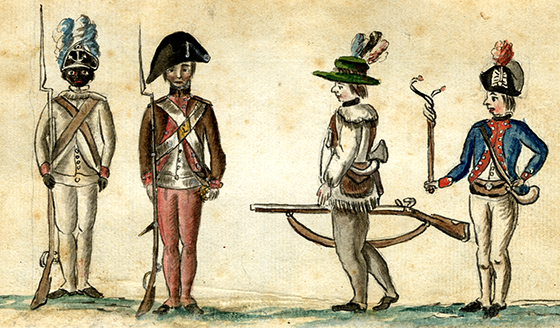
On November 3, 1783, the American Continental Army — its mission fulfilled — was disbanded.

On November 3, 1969, U.S. President Richard M. Nixon made a television and radio appearance, asking the “silent majority” to join him in solidarity on the Vietnam War effort.

Categories
initiative, referendum, and recall national politics & policies term limits

The Next Election

“If Tuesday’s vote sparks unrest,” a weekend Washington Post feature informed, “customers at Fortitude Ranch will be secure behind walls patrolled by armed guards.”

The Post highlighted a pricey survivalist “get away” in West Virginia and hyped for the rest of us “that violence could erupt, especially if the vote count drags on for days without a clear winner.”

Just as an aside, doesn’t it seem like we are getting less information about what happened yesterday and a lot more “news” about what is going to happen tomorrow? 

Anyway, I think we can trust each other. We’ve got to. Not on TV, but in real life. 

Part of that trust is believing that one election loss won’t alter all previous societal norms [cough: court-packing]. Yes, elections have consequences, but in a free country, losing an election should not be a scary event. Look at me, I have only voted for one winning candidate in my entire life!!!*

Whatever happens tomorrow . . . or days or weeks later . . . don’t worry. You have rights and there shall be another election before too long. Right? 

Rights?

“Eternal vigilance” being the rule about defending basic things like rights, the next election will always be the most important.

Ballot measures in Arkansas, Florida and North Dakota are about the next election. 

Sadly, dangerously, they seek to make it much harder and more expensive for citizens to petition issues onto the state ballot and gain an up or down decision from the voters. That’s why Citizens in Charge is fighting to defeat all three.

Proponents shriek that wealthy out-of-state interests must be stopped from changing the state constitution, but not a single word in any of the three amendments even touches on out-of-state funding. Instead, each makes the process more cumbersome and expensive, undercutting grassroots groups while having little effect on moneyed interests.

In North Dakota, voters passed a reform measure in 2018 creating a state ethics commission. The ballot issue was funded by an out-of-state group, and thoroughly despised by state legislators . . . who referred Measure 2 to the ballot.

Measure 2 allows the legislature to veto a vote of the people for a constitutional amendment and require the vote to be held a second time. Beyond the ugly optics of politicians vetoing the people, it will make passing an initiative amendment much more costly — again empowering wealthier interests at the expense of the less well-heeled.

In Florida, a constitutional amendment already requires a 60-percent supermajority vote. Amendment 4 would require the measure win a second time by that supermajority. In the nation’s third largest state, the expense of a second campaign weighs in favor of long-term established political interests and against grassroots reform.

In Arkansas, Issue 2 seeks to further weaken the already weakened term limits and Issue 3 endeavors to wreck the petition process to block a future term limits initiative. Previously, I’ve explained the duo of amendments as the “Lifetime Politicians Ruin Christmas Amendments.” Today, a “Trojan” Horse travels Arkansas telling the tale. 

Which is critical because Arkansas legislators refused to clue-in voters. The ballot titles that legislators placed on both measures tell voters precisely zero about the actual constitutional changes being voted upon. 

That our own representatives are attempting to knock out an important democratic check on themselves is not “the small stuff.”

We had better sweat it. 

And you can help Citizens in Charge fight back. It’s too late to do more toward tomorrow’s votes in Arkansas, Florida and North Dakota. With earned (free) media work and a shoestring budget of Facebook ads, we got our message out in all three states and have a shot to defeat each one.

Help us fight the new bills we know are coming as legislative sessions begin in January. Support our work with activists in Arkansas and North Dakota fighting Issue 3 and Measure 2, respectively, as they go on offense to demand change — perhaps by initiative.

Good luck to America tomorrow, but the campaign to prevent critical grassroots democratic checks from being hobbled and chopped and blocked continues. Because there is another election in 2022.

This is Common Sense. I’m Paul Jacob.


* And I still regret it. Who was it? Well, ours are secret ballots, but I will fully disclose the sordid details in the first three minutes of my podcast this weekend.

PDF for printing

See all recent commentary
(simplified and organized)
See recent popular posts
Categories
Today

Committee of Correspondence

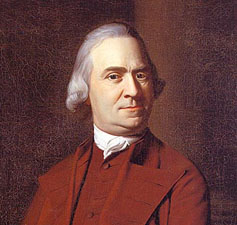
On November 2, 1772, Samuel Adams (pictured) and Joseph Warren formed the first Committee of Correspondence, which were instrumental in preparing the colonies from their 1776 breakaway from the British Empire of George III.

Categories
Thought

Yves Guyot

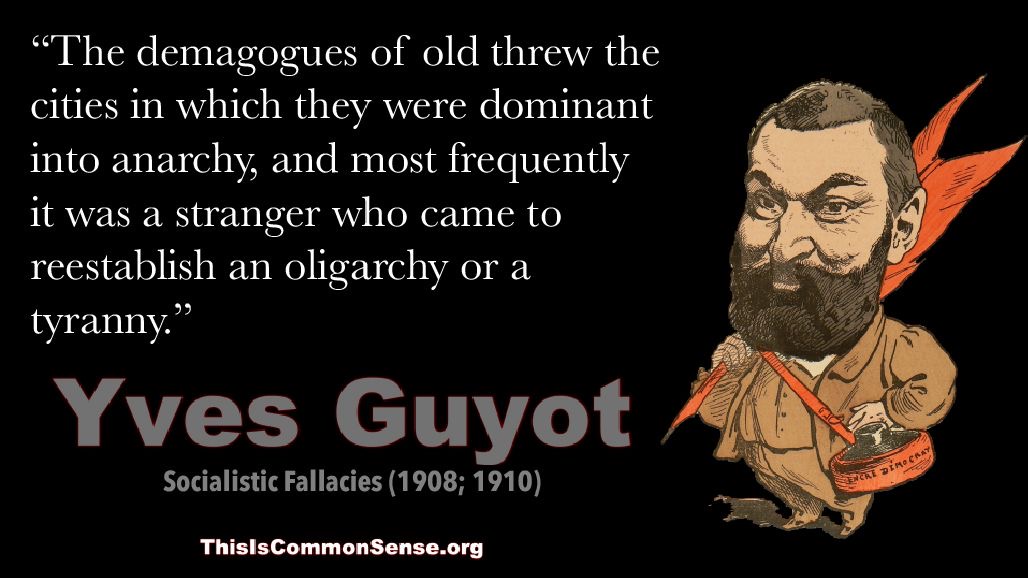
The demagogues of old threw the cities in which they were dominant into anarchy, and most frequently it was a stranger who came to reestablish an oligarchy or a tyranny.

Yves Guyot, Socialistic Fallacies (1908; 1910).

Categories
by Paul Jacob video

Watch: The Menace at the Top?

Paul covers the big stories of the week during this episode of the weekend podcast:

This Week in Common Sense, October 31, 2020.
Categories
Thought

Anne Brontë

There is always a ‘but’ in this imperfect world.

Helen Graham, a character in The Tenant of Wildfell Hall (1848), Ch. XXII: ‘Traits of Friendship,’ by Anne Brontë (writing as Acton Bell)