However deep you dig a well it affords no refuge in the time of flood.
Ernest Bramah, Kai Lung Unrolls His Mat, “The Story of Tong So, the Averter of Calamities” (1928).
Categories
Ernest Bramah
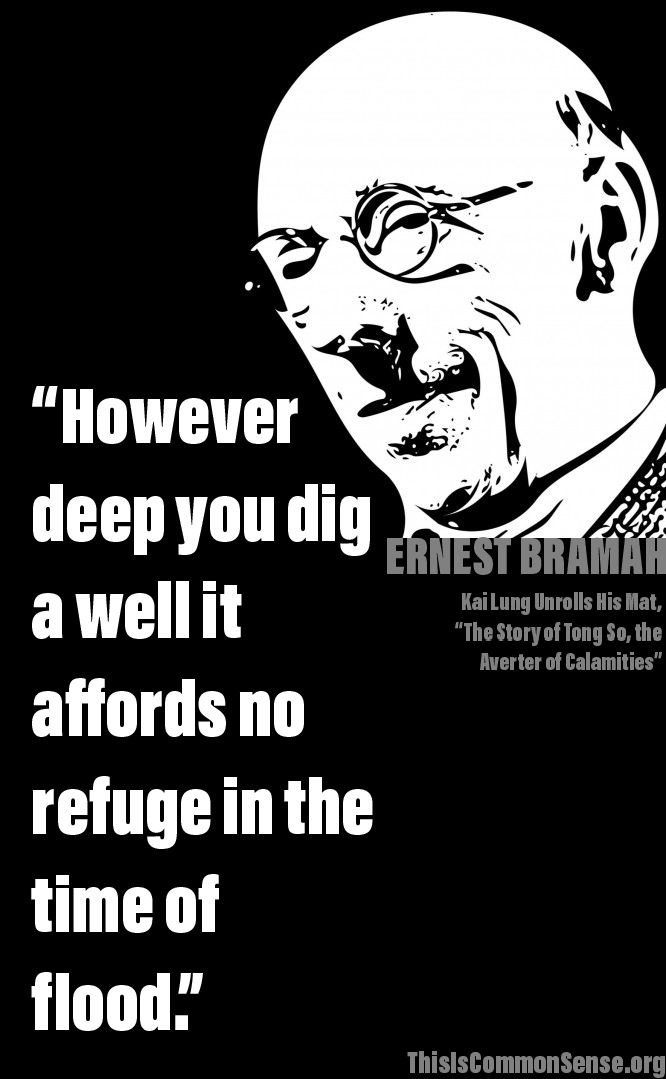
However deep you dig a well it affords no refuge in the time of flood.
Ernest Bramah, Kai Lung Unrolls His Mat, “The Story of Tong So, the Averter of Calamities” (1928).

“One can squint and see ballot measures as a kind of super-survey of the electorate, with much larger samples and actual stakes,” wrote Sasha Issenberg over the weekend in The Washington Post. “The results then can be interpreted as a pure representation of voter preferences on discrete issues, without the vexing overlay of partisan polarization, incumbency, candidate personalities, scandal or gaffes.”*
Which “can be seductive,” he warns in an essay entitled, “Ballot measures don’t tell us anything about what voters really want.”
Nothing?
Mr. Issenberg is willing to toss out these results because “ballot measure contests operate within a framework so different from elections for public office — with few financial limits”** and “lopsided spending.”
He cites Florida’s Amendment 2, pushing the state’s minimum-wage up to $15, where the yes-side spent nearly 10 times as much as the no-side. And California’s victorious Proposition 22, which he argues “declined to protect gig workers” even though that is exactly what it does, and where supporters also outspent opponents roughly ten to one.
Issenberg also points to marijuana-related issues passing while widely outspending opponents. “In New Jersey, where more than two-thirds of voters said yes to legalization,” he explains, “supporters spent 65 times more than the leading opposition committee . . .”
But that only amounts to proponents spending half-a-million, which doesn’t go very far in Jersey.
While Issenberg, the author, journalist, and UCLA political science teacher, acknowledges that “a higher minimum wage and marijuana legalization are broadly popular” and don’t require greater spending, he argues that lopsided “multiples” of spending, like in New Jersey, “are unimaginable in the world of people running for office.”
Really?
Just try. Numerous candidates for office run without any opposition at all or completely token competition. Take Illinois’s 4th congressional district, where incumbent Democrat Jesús Garcia outspent his Republican challenger by a margin of 704 to one — $593,219 to $843.
Look at the ballot measures decided weeks ago. Don’t squint; put your glasses on, if you need them. And unlike Issenberg, believe your eyes.
This is Common Sense. I’m Paul Jacob.
* Initiatives can suffer from the “personalities, scandal or gaffes” of their proponents. Still, there is clearly far less partisanship and no incumbent, per se.
** Actually, ballot measures have no limits at all. The federal courts have ruled that campaign contributions can corrupt candidates receiving them, but since ballot initiatives are written down in black-and-white and cannot be changed after the election, financial contributions cannot corrupt a ballot measure.
See all recent commentary
(simplified and organized)
See recent popular posts

On November 30, 1804, the United States House of Representatives began impeachment hearings against Supreme Court Justice Samuel Chase. The House thought he was too partisan, too “Federalist.”
The Senate later acquitted Chase.
On 1835 on this date, Samuel Clemens was born, later to achieve world fame as author and humorist Mark Twain (pictured above). His most beloved books include The Adventures of Tom Sawyer (1876) and his masterpiece, Adventures of Huckleberry Finn (1885). He died in 1910.

Freedom, privileges, options must constantly be exercised, even at the risk of inconvenience. Otherwise they fall into desuetude and become unfashionable, unorthodox — finally irregulationary. Sometimes the person who insists upon his prerogatives seems shrill and contentious — but actually he performs a service for all. Freedom naturally should never become license; but regulation should never become restriction.
The character Amiante, in Jack Vance, Emphyrio (1969).

Paul Jacob’s weekend wrap-up in color:
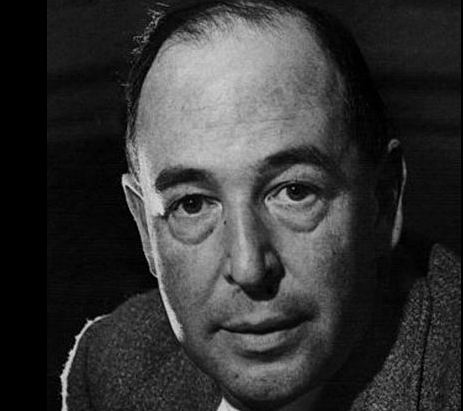
Irish-English medievalist, theologian, and novelist Clive Staples Lewis was born on November 29, 1898. Among his best known works are Out of the Silent Planet, The Problem of Pain, Miracles, and the “Narnia” fantasies for children. His novelistic retelling of the Psyche myth, Till We Have Faces, and political essays such as “The Humanitarian Theory of Punishment” and The Abolition of Man, will almost certainly stand the test of time.
Paul hopes for you, in your escapades and escapes, moves towards freedom.

In 1894, on November 28, economics journalist Henry Hazlitt was born. Halitt went on to write Economics in One Lesson, Time Will Run Back, and several books criticizing Keynesianism. He was the main proponent of the work of Ludwig von Mises and F.A. Hayek in America during the 1940s and 1950s.
Exactly one year earlier, women voted in a national election for the first time . . . in New Zealand. On the same date in 1917, the Estonian Provincial Assembly declared itself the sovereign power of Estonia. November 28 also marks the independence of Mauritania from France (1960), and East Timor from Portugal.
It is a mark of insincerity of purpose to spend one’s time in looking for the sacred Emperor in the low-class tea shops.

And the children sing: “you can’t always get what you want.”
It’s a Rolling Stone song, and its album version does actually feature a children’s chorus (over adult singers).
I mention it not because I’ve just listened to the non-choral version put up in April by the famous rock group, a special pandemic recording. Though I just did. And perhaps it’s on my mind because the song was used by Donald Trump on his way to the White House, and at the present moment it sure doesn’t look like he’s going to get a second term.
“No, you can’t always get what you want want./ But if you try sometime, you just might find/ You get what you need.”
A silver lining for Trump voters?
No. It just came to mind when I learned that employees at Penguin broke down in tears when they learned that the huge publishing company was going to publish Jordan Peterson’s follow-up to his 2018 best-seller, 12 Rules for Life.
There was weeping, and it wasn’t for joy.
You see, the young people in the company said that Peterson is “an icon of hate speech and transphobia.” Oh, and he’s also “an icon of white supremacy,” and the lamenter admitted that “regardless of the content of his book, I’m not proud to work for a company that publishes him.”
It is really hard to sympathize. A major publishing company in an open society must be expected to publish a wide variety of material. So, buck up, as Peterson likes to say. Unless you own the place, you can’t always publish what you want.
More importantly, note that word: icon. That’s an image that stands for something by looking like that something.
How does Peterson look like a white supremacist or transphobe?
By imputation. By ignoring his arguments. And by treating his fans as wholly other and as a unified mass.
Who can be hated and denied ever getting what they want.
But such desired censorship is certainly not what we need.
This is Common Sense. I’m Paul Jacob.
See all recent commentary
(simplified and organized)
See recent popular posts