Categories
Thought

President Merkin Muffley

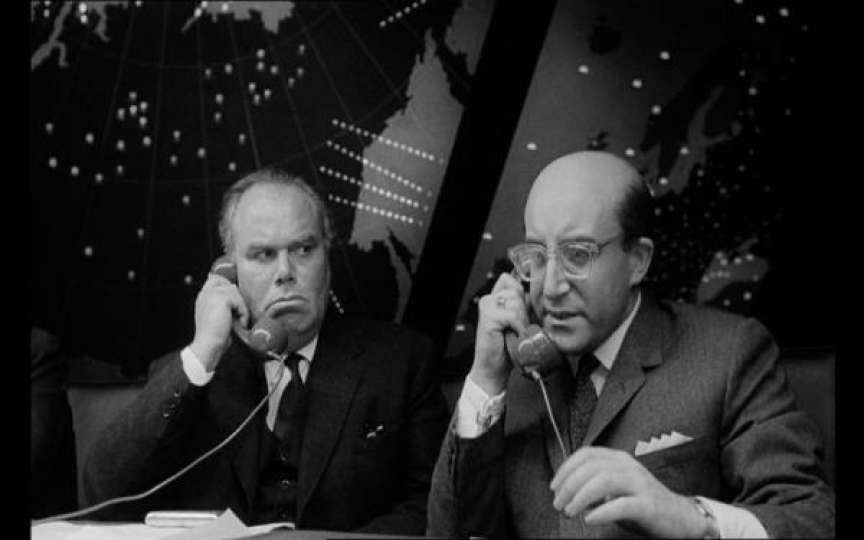
Hello? Uh, hello? Hello, Dmitri? Listen, I can’t hear too well, do you suppose you could turn the music down just a little? [pause] Oh, that’s much better. . . . Now then, Dmitri, you know how we’ve always talked about the possibility of something going wrong with the bomb. [pause] The BOMB, Dmitri! The hydrogen bomb! Well now, what happened is, uh, one of our base commanders, he had a sort of, well, he went a little funny in the head. You know. Just a little . . . funny. And uh, he went and did a silly thing. Well, I’ll tell you what he did, he ordered his planes . . . to attack your country. Well, let me finish, Dmitri. Let me finish, Dmitri. Well, listen, how do you think I feel about it? Can you imagine how I feel about it, Dmitri? . . . I’m just calling up to tell you something terrible has happened. It’s a friendly call. Of course it’s a friendly call. Listen, if it wasn’t friendly, you probably wouldn’t have even got it. They will not reach their targets for at least another hour. [pause] I’m sorry too, Dmitri. I’m very sorry. All right! You’re sorrier than I am! But I am sorry as well. I am as sorry as you are Dmitri. Don’t say that you are more sorry than I am, because I am capable of being just as sorry as you are. So we’re both sorry, all right? All right.

President Merkin Muffley, as played by Peter Sellers, speaking to the Soviet premier in Stanley Kubrick’s classic dark comedy, Dr. Strangelove or: How I Learned to Stop Worrying and Love the Bomb (1964), written by Terry Southern and Stanley Kubrick, based on the novel Red Alert (1958) by Peter George.
Categories
Today

1862

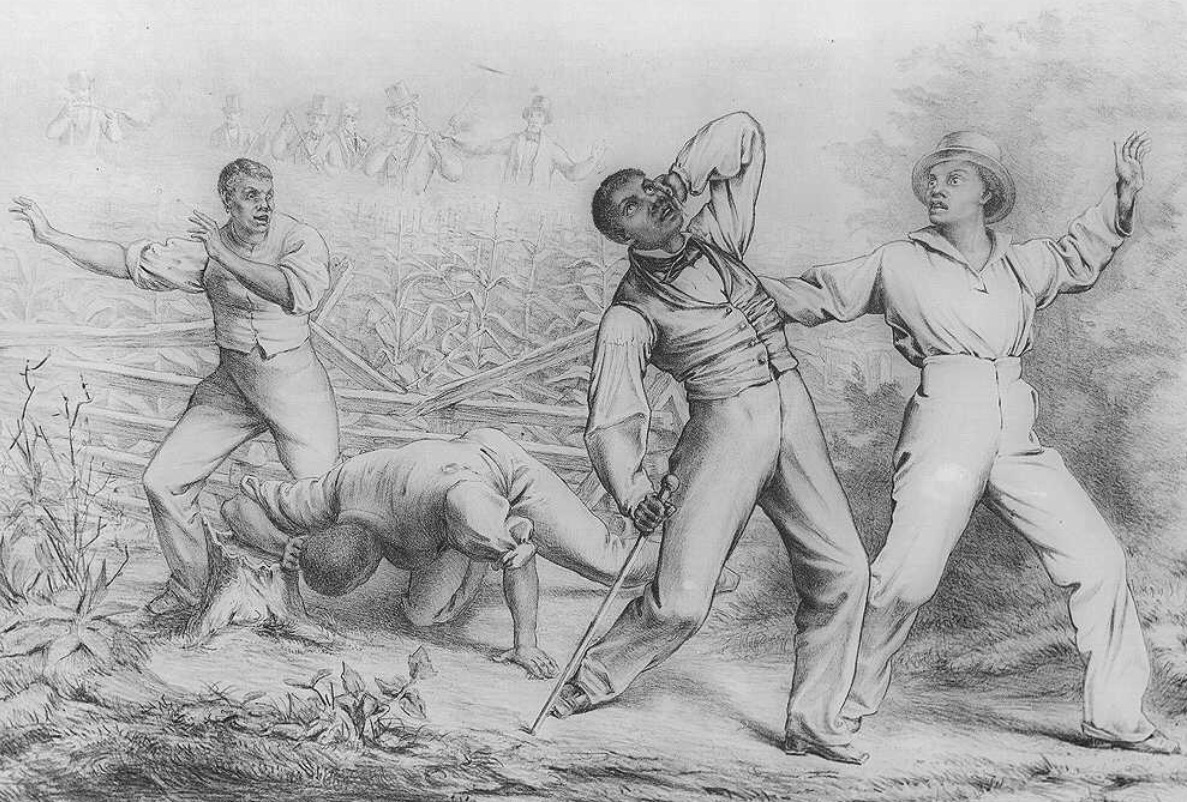
On March 13, 1862, the U.S. federal government forbade all Union army officers from returning fugitive slaves, thus effectively annulling the Fugitive Slave Act of 1850 and setting the stage for the Emancipation Proclamation.

Categories
general freedom national politics & policies

Zero Risk!

Stop trying to create a zero-risk society.

That’s the sensible advice — indeed, the title — of a Reason think-piece by Veronique de Rugy.

Every action has costs, at the very least in opportunities forgone, and all solutions to problems are better expressed as “trade-offs,” as Thomas Sowell put it. But, specific to this historic moment, “we will suffer many tragic effects from the pandemic-induced changes long after lockdowns are lifted,” Ms. de Rugy argues. First, the lockdowns themselves were a bust, “when all costs are considered, such as the short- and long-term health, educational and psychological harms the lockdowns caused, their costs far exceed[ed] their benefits.”

One humungous tragic effect of the pandemic is what she dubs “the utterly insane expansion of federal spending.” Acknowledging that it is now “traditional for the federal government to expand during emergencies,” de Rugy contends that “the size of the response this time around is both unprecedented and unwarranted.”

Well, hardly unprecedented . . . but it was the biggest over-reaction yet, and definitely unwarranted.

I wonder, though, if Veronique de Rugy may not have missed the biggest thing: the quickness with which we accepted a rushed-to-market-and-subsidized quasi-vaccine. 

I say “quasi,” because the Pfizer vaccine is not a normal vaccine . . . it is gene therapy. Experimental gene therapy. But hey: people should be able to try an experimental medicine.

But no one should be forced to take such a thing.

Why? The risk!

Oh, and our rights to medical freedom.

While people line up to take the “jabs” as they become available, surely de Rugy is right to caution that “Americans believing that governments can and must do anything to achieve a zero-risk society” is the riskiest notion of all.

This is Common Sense. I’m Paul Jacob.


PDF for printing

See all recent commentary
(simplified and organized)
See recent popular posts

Categories
Thought

Joseph Hiam Levy

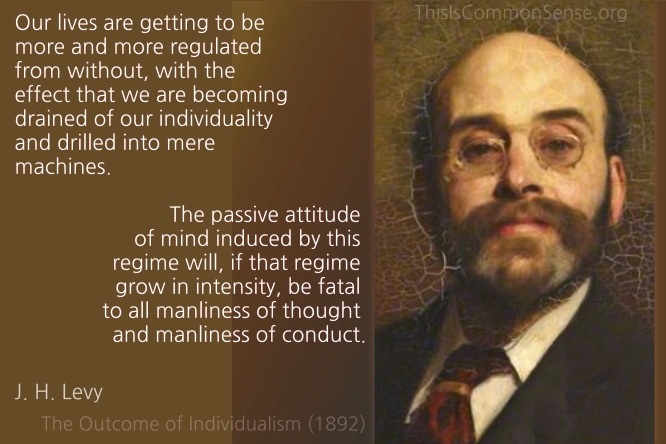
Our lives are getting to be more and more regulated from without, with the effect that we are becoming drained of our individuality and drilled into mere machines. The passive attitude of mind induced by this regime will, if that regime grow in intensity, be fatal to all manliness of thought and manliness of conduct. Discrimination, as any competent psychologist will tell you, is the most fundamental of our mental faculties. Our intellectual and moral natures come into play only when we discriminate and decide for ourselves.

Joseph Hiam Levy, The Outcome of Individualism (Third Edition, 1892), Conclusion.
Categories
Today

Two Criminals

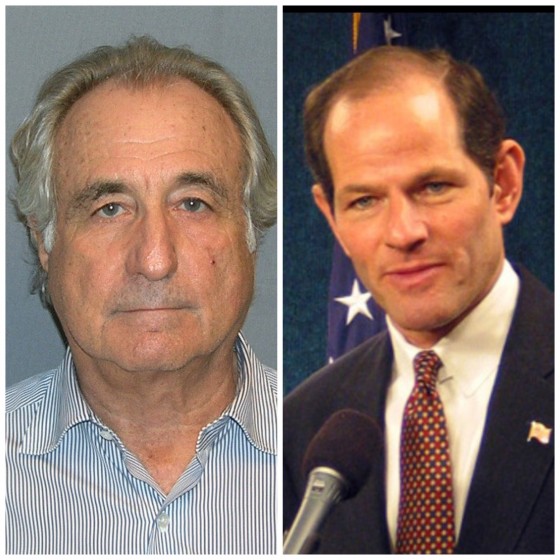
On March 12, 2009, financier Bernard Madoff pled guilty to pulling off perhaps the biggest swindle in U. S. history. One year earlier to the day, in the same city, New York, the state’s governor, Eliot Spitzer, resigned a mere two days after reports had surfaced that he was listed as a client in a high-end escort/call-girl prostitution ring.

The cause of freedom is advanced with every criminal nabbed and every hypocritical illiberal politician disgraced.

Categories
Tenth Amendment federalism too much government

Not Nitpicky

Austin, woke capital of Texas, may have some difficulty keeping its mask mandates going in the face of Governor Abbott’s lifting of the statewide mask orders. 

Abbott formulated this new policy last week, to nationwide controversy. Officials in Austin and Travis County responded by announcing their intent to keep the old orders in full effect until April 15. 

At least.

“Texas Attorney General Ken Paxton said on Wednesday that his office will take Austin officials to court,” explains The Epoch Times, “if they continue to refuse to comply with an order lifting mask mandates across the state.” 

Austin officials may think that the pandemic gives them a special license.

It doesn’t.

In these United States, the primary governmental entities are the states.

The federal government is built on top of the union of states, supreme only regarding the limited number of explicitly defined powers given to it in the Constitution. But beneath that, government entities are creatures of the states. Cities, counties, and metro governments are incorporated by their respective states, which retain overriding authority.*

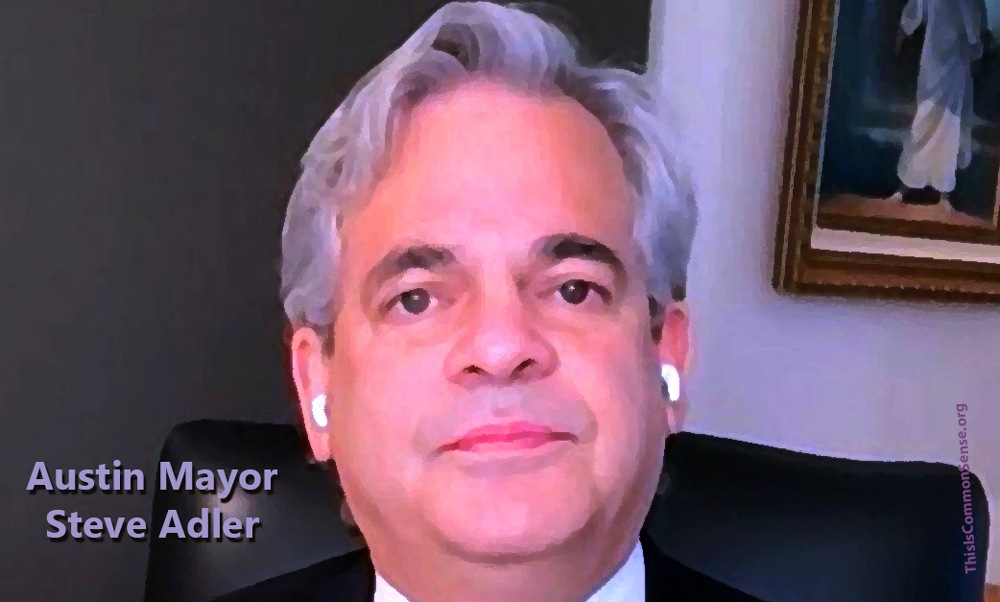
Yet, perhaps as a sign of the general lawlessness of trendy tyranny, a spokesperson for Austin Mayor Steve Adler told Forbes yesterday that the city does not intend to rescind the order and that officials “will continue to do everything within our power, using every tool available to us to reduce the spread of the virus.”

Is it nitpicky to demand that our public servants not do “everything in their power” — but only things within their authority?

No, it is Common Sense. I’m Paul Jacob.


* Under Abbott’s new policy, Texas businesses and individuals remain free to determine mask policies on their property. 

PDF for printing

See all recent commentary
(simplified and organized)
See recent popular posts

Categories
Today

Daily Courant

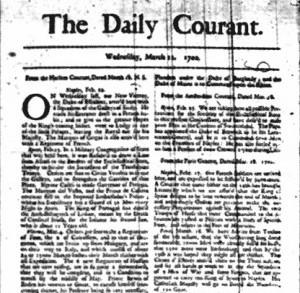
On March 11, 1702, The Daily Courant, England’s first national daily newspaper, was published for the first time. It was a one-sheet, concentrated on foreign news, sans commentary. The reverse side sported advertising. It was produced by Elizabeth Mallet (1672–1706), a printer and bookseller who lived, and published the paper, next to the Kings Arms tavern at Fleet Bridge in London.

Categories
Thought

Jeremy Bentham

Stretching his hand up to reach the stars, too often man forgets the flowers at his feet.

Categories
media and media people

HCQ Blackout

“The race to find vaccines for COVID-19 has dominated the headlines,” runs the opening of a CBS News story, “but there’s been less news about how to keep people with COVID out of the hospital.”

Accurate, so far as it goes, but something is missing.

The story that follows is about an anti-depressant developed decades ago, and “a small but ingenious clinical trial and a series of coincidences [that] have led scientists to look closely at fluvoxamine as a possible tool to keep newly diagnosed COVID-19 patients from becoming severely ill.”

The drug, the story tells, may do what has been claimed for a number of treatments (vitamins, minerals, and the infamous hydroxychloroquine, or HCQ): that is, prevent patients from developing COVID’s severe, deadly respiratory distress.

Yet, in a time of crisis, discussion of such treatments were regarded as “fake news” by social media; doctors and researchers who discussed them online had their videos removed and their posts suppressed. Neil Cavuto and others raised alarms. But now the American Journal of Medicine recommends HCQ, along with “Azithromycin, and Zinc for the treatment of Covid 19 outpatients.” 

So when CBS tells us that there has “been great caution about recommending repurposed drugs for COVID after the malaria drug hydroxychloroquine was promoted as a potential ‘game-changer’ by former President Trump — before it was tested in a large clinical trial on COVID patients,” let’s not forget what they are still hiding: that major media along with several governors and many “influencers” suppressed information about drugs that saved some lives and could have saved more.

All while seeking to eradicate the disease they feared most, Trump.

This is Common Sense. I’m Paul Jacob.


PDF for printing

See all recent commentary
(simplified and organized)
See recent popular posts

Categories
Thought

S. I. Hayakawa

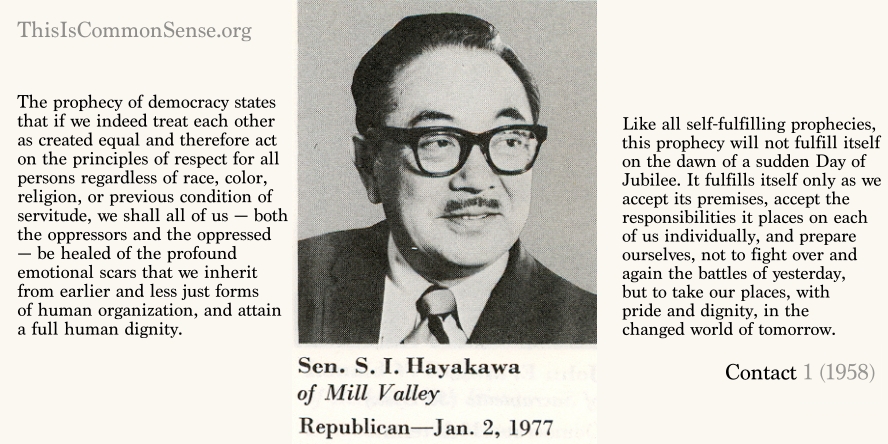
The prophecy of democracy states that if we indeed treat each other as created equal and therefore act on the principles of respect for all persons regardless of race, color, religion, or previous condition of servitude, we shall all of us — both the oppressors and the oppressed — be healed of the profound emotional scars that we inherit from earlier and less just forms of human organization, and attain a full human dignity. Like all self-fulfilling prophecies, this prophecy will not fulfill itself on the dawn of a sudden Day of Jubilee. It fulfills itself only as we accept its premises, accept the responsibilities it places on each of us individually, and prepare ourselves, not to fight over and again the battles of yesterday, but to take our places, with pride and dignity, in the changed world of tomorrow.

S. I. Hayakawa, “How to Be Sane Though Negro” (Contact 1, 1958), conclusion.