Categories
Today

Nobel Laureate Economist

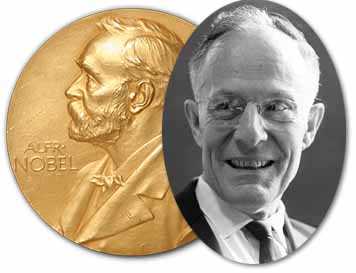
On April 30, 1902, economist Theodore W. Schultz was born. His work studying the quick post-war recovery in Germany and Japan led to his development of “human capital theory,” explicated in books such as Investing in People (1981) and several major papers, including “Investing in human capital” (1961) and “Transforming traditional agriculture” (1964).

He was co-winner (with William Arthur Lewis) of the 1979 Alfred Nobel Memorial Prize in Economic Sciences. Schultz died in 1998.

Categories
initiative, referendum, and recall

Pols Don’t Like Recalls

California State Senator Josh Newman has, for now, withdrawn a bill to let elected officials facing a recall see the names of petition signers so that they may be asked if they really mean it.

The Democrat complains that critics call his bill “an attack on not just the recall but on them and their constitutional rights. It wasn’t a good context to have a conversation.” 

So unfair!

The willingness of defenders of petition rights to speak up does sound pretty inconvenient for foes of this popular democratic check on power.

Perhaps we’re supposed to believe that under Newman’s legislation, the interviews would go like this: “Did you mean to sign the petition to recall me?” “I did.” “Just checking. Bye.”

Obviously, the targeted official’s opportunity and authority to quiz petition signers would enable his team to intimidate existing and prospective signers. The aim? Try to prevent a question with enough valid signatures from reaching the ballot.

Years ago, in other states, opposition campaigns sent retired FBI agents to knock on doors. Legal, but very intimidating. Which is why California does not make the names public.

The legislation would not have applied to the current petition drive to recall California Governor Gavin Newsom, an effort going splendidly with more than 1.5 million signers. But Newman’s bill was clearly motivated by the success of this campaign. 

Or perhaps it’s residual animosity toward the recall process . . . from Sen. Newman himself, having been recalled by voters in 2018. (He came back to win election once again in 2020.)

Of course, signing a petition in itself says “I want this question on the ballot.” If a petition signer changes his mind, there is a process to retract it. No bullying follow-up needed.

This is Common Sense. I’m Paul Jacob.


PDF for printing

Photo by Gage Skidmore

See all recent commentary
(simplified and organized)
See recent popular posts

Categories
Thought

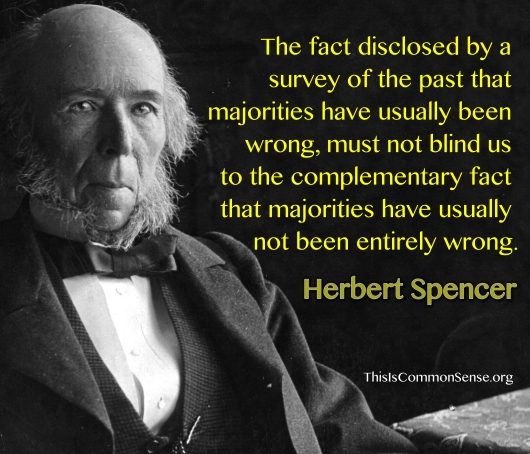
Herbert Spencer

The fact disclosed by a survey of the past that majorities have usually been wrong, must not blind us to the complementary fact that majorities have usually not been entirely wrong.

Herbert Spencer, First Principles (1862): Pt. I, The Unknowable; Ch. I, Religion and Science.
Categories
Today

Dachau

On April 29, 1945, U.S. troops of the Seventh Army liberated the Dachau concentration camp.

Categories
education and schooling ideological culture

De-colonize Our Music?

Music is, arguably, the crowning artistic achievement of our civilization. 

It grew out of many folk and ecclesiastical practices, but one of the great innovations that allowed both Bach and The Beatles, Beethoven and Broadway, Bartok and “beats,” is the theory of music. 

Which rests on that great innovation, musical notation.

Not my area of expertise, alas, but I tip my hat to the educators who know the physics and the art in precise and powerful ways.

Unfortunately, stupidly racist anti-racism has infected even music education. The latest example? The University of Oxford is considering a plan to get rid of teaching music through teaching notation.

“Sheet music is now considered ‘too colonial,’” explains The Telegraph, “while Beethoven and Mozart, and music curriculums in general, are believed to have ‘complicity in white supremacy.’”

While mainly an attack on classical music, our popular music rests upon a lot of basic western technique, too. The idea that musical notation is racist is itself bizarrely racist. Do these people think because whites invented musical notation, non-whites are oppressed by it? Yes, the opponents of western musical notation, who include “activist students” as well as “activist professors,” are apparently ashamed of a tradition focused on “white European music from the slave period.”

But until fairly recently, all civilization was “the slave period.” And Europe, which developed the tradition, wasn’t the world’s most slave-ridden society during the period of western music’s development: Africa and Asia were. 

Slavery is bad. Very bad. Freedom is good. Very good. But you don’t reject good things because they once upon a time touched bad things. We can have both freedom and music. 

And musical notation.

This is Common Sense. I’m Paul Jacob.


PDF for printing

Image from William Creswell

See all recent commentary
(simplified and organized)
See recent popular posts

Categories
Thought

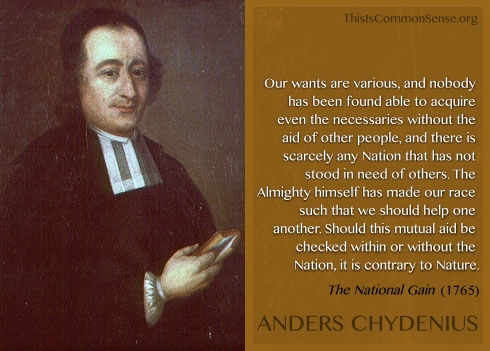
Anders Chydenius

Our wants are various, and nobody has been found able to acquire even the necessaries without the aid of other people, and there is scarcely any Nation that has not stood in need of others. The Almighty himself has made our race such that we should help one another. Should this mutual aid be checked within or without the Nation, it is contrary to Nature.

Anders Chydenius, The National Gain, §2 (1765).
Categories
Today

Maryland Makes Seven

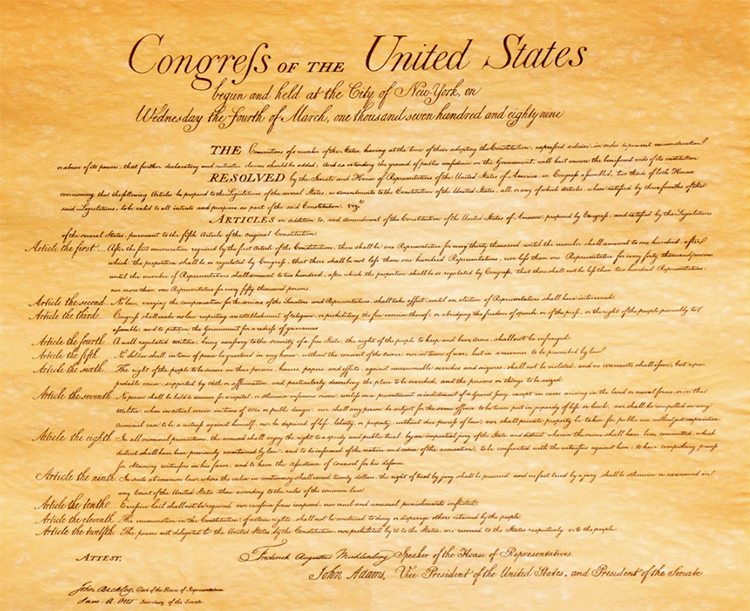
On April 28, 1788, Maryland became the seventh state to ratify the United States Constitution.

Categories
education and schooling tax policy

Race, Ignorance, Racism

Not spending millions more to hire and train swarms of Internal Revenue Service agents to poke, audit, investigate and squeeze more tax dollars from wealthier Americans would be — you knew this was coming — racist. 

That’s the new argument for siccing the IRS on wealthier Americans; they’re more likely to be white than black.

“The federal government is losing billions in unpaid taxes,” informs a Washington Post headline, “in part due to racial disparities in the tax code.”

What racially based inequalities, precisely?

“The inequity rests on long-established tax breaks that favor White Americans over Black Americans in three areas — marriage, homeownership and retirement, according to Dorothy A. Brown, an Emory University law professor,” writes Post columnist Joe Davidson. Because, for instance, “White people . . . are much more likely to be homeowners,” and more likely than blacks “to work for companies that offer tax favored retirement plans.”

Davidson offered no further discussion of marriage.

One can argue for or against hiring more IRS agents. (I’m against.) But to calculate the merits based on the skin color of the people most likely to be investigated is . . . racist.

Where does such skewed logic lead?

“The Virginia Department of Education (VDOE) is moving to eliminate all accelerated math options prior to 11th grade,” Fox News reports, “effectively keeping higher-achieving students from advancing as they usually would in the school system.”

This statewide policy designed to hurt so many individual students — and to help none — is predicated on closing a racial gap in math performance. By knee-capping the higher performing students of all races.*

So which is worse? That it’s a human rights violation . . . or that it is so incredibly stupid?

This is Common Sense. I’m Paul Jacob. 


* As a candidate in this year’s Virginia House elections explained to The Federalist, the proposed statewide policy “is incredibly belittling, arrogant, and racist in assuming that children of color cannot reach advanced classes in math.”

PDF for printing

Screenshot from Harrison Bergeron

See all recent commentary
(simplified and organized)
See recent popular posts
Categories
Thought

Marcus Aurelius

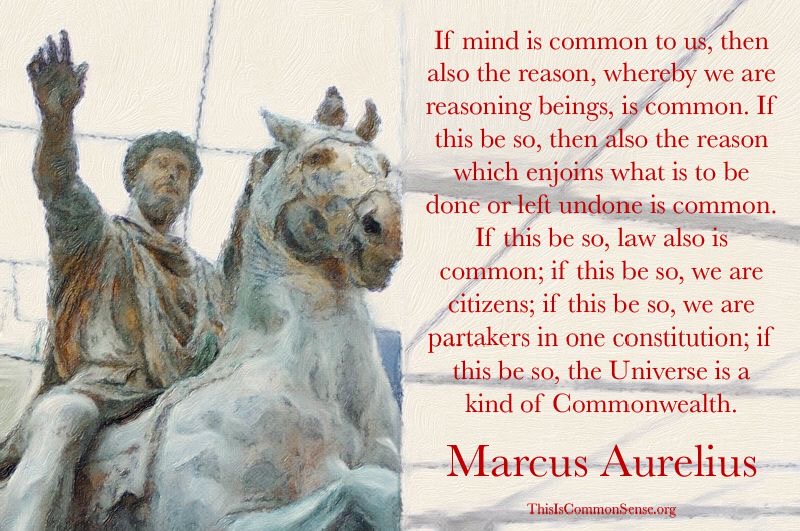
If mind is common to us, then also the reason, whereby we are reasoning beings, is common. If this be so, then also the reason which enjoins what is to be done or left undone is common. If this be so, law also is common; if this be so, we are citizens; if this be so, we are partakers in one constitution; if this be so, the Universe is a kind of Commonwealth.

Emperor Marcus Aurelius, Meditations (c. 121-180 A.D.), Book IV, 4 (A.S.L. Farquharson, translator).
Categories
Today

Wollstonecraft & Spencer

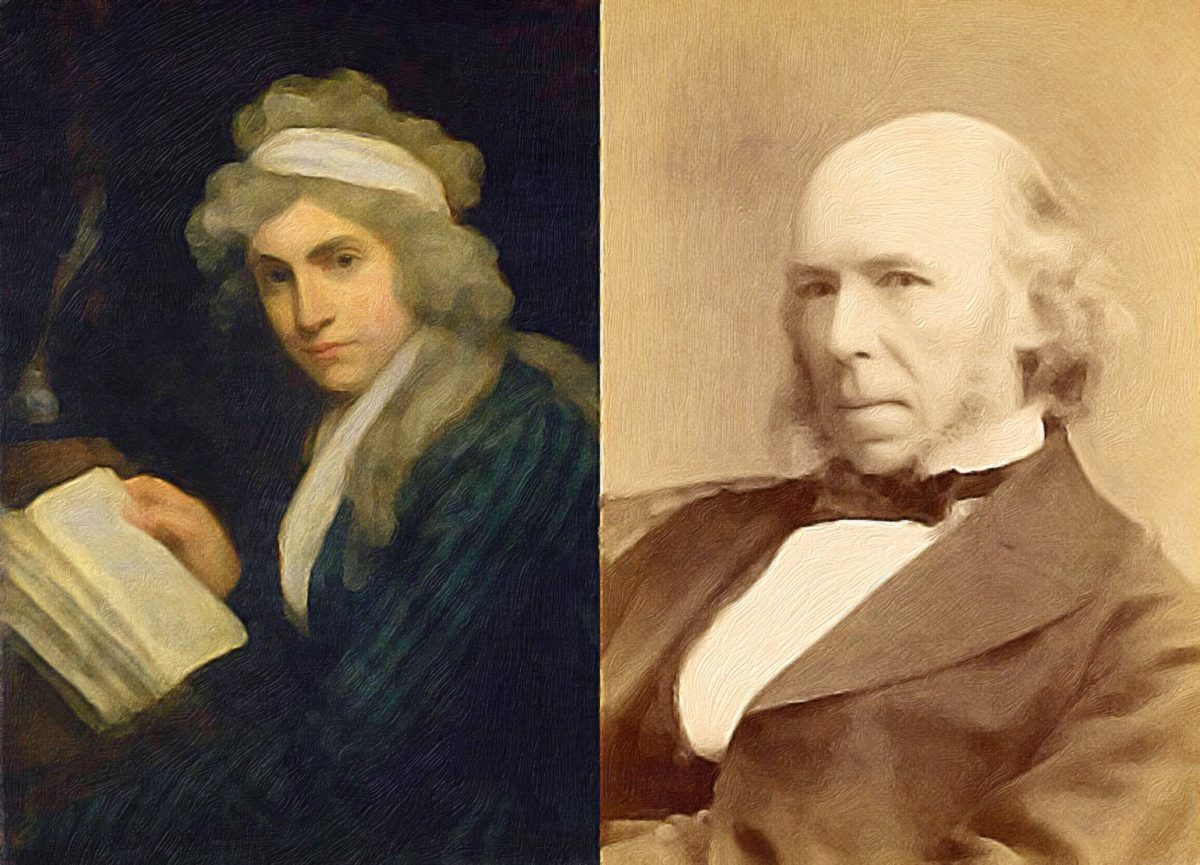
On April 27, 1759, English philosopher and author Mary Wollstonecraft was born. Wollstonecraft married anarchist philosopher William Godwin and the couple begat one daughter, Mary Shelley, author of Frankenstein: or, The Modern Prometheus. Wollstonecraft herself wrote several important political treatises, including her response to Edmund Burke’s Reflections on the Revolution in France (1790), A Vindication of the Rights of Men (1790), and her valiant effort in the emancipation of women, A Vindication of the Rights of Women (1792).

English philosopher, psychologist, sociologist, and political theorist Herbert Spencer was born in Derby, England, on April 27, 1820. Among Spencer’s most famous books are First Principles, Principles of Ethics (chiefly its first part, The Data of Ethics), The Study of Sociology, The Man versus the State, and two editions of Social Statics. Spencer was an evolutionary theorist as well as a religious and political philosopher, and coiner of the phrase “survival of the fittest.” He called the basic principle of a free political order “The Law of Equal Freedom.”