On June 14, 1777, U.S. Congress adopted the Stars and Stripes as the United States Flag.
Categories
Stars and Stripes
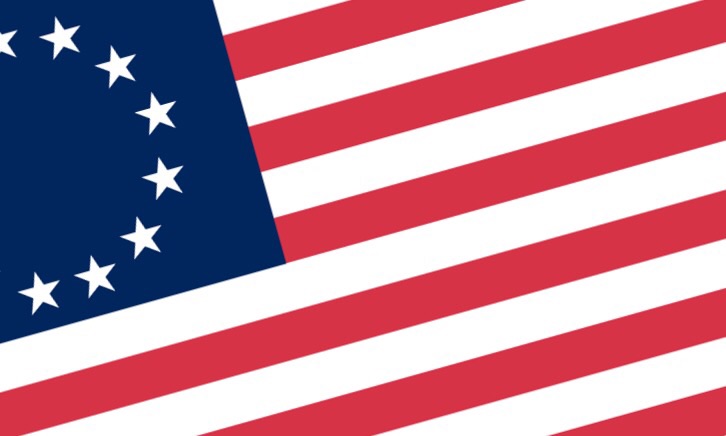
On June 14, 1777, U.S. Congress adopted the Stars and Stripes as the United States Flag.
Paul Jacob expands upon the biggest stories of the week as treated more concisely on this site, in the second week of June 2021.
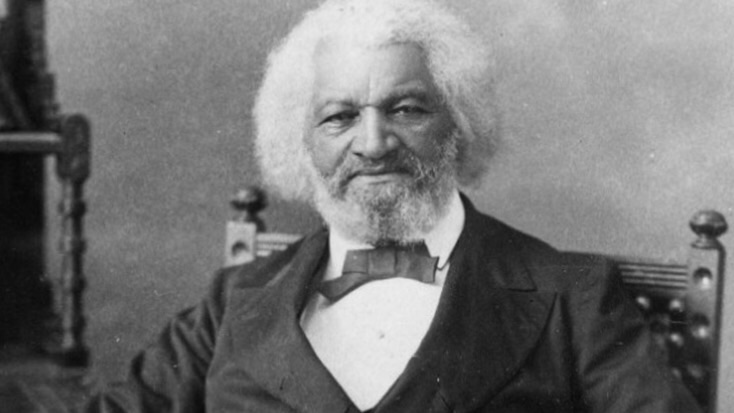
I had very strangely supposed, while in slavery, that few of the comforts, and scarcely any of the luxuries, of life were enjoyed at the north, compared with what were enjoyed by the slaveholders of the south. I probably came to this conclusion from the fact that northern people owned no slaves. I supposed that they were about upon a level with the non-slaveholding population of the south. I knew they were exceedingly poor, and I had been accustomed to regard their poverty as the necessary consequence of their being non-slaveholders. I had somehow imbibed the opinion that, in the absence of slaves, there could be no wealth, and very little refinement. And upon coming to the north, I expected to meet with a rough, hard-handed, and uncultivated population, living in the most Spartan-like simplicity, knowing nothing of the ease, luxury, pomp, and grandeur of southern slaveholders. Such being my conjectures, any one acquainted with the appearance of New Bedford may very readily infer how palpably I must have seen my mistake.
Frederick Douglass, Narrative of the Life of Frederick Douglass, 1845.
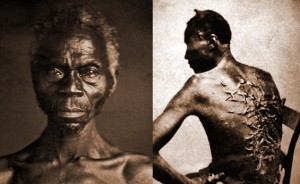
On June 13, 1774, Rhode Island became the first British colony in the Americas to prohibit the importation of slaves.
If you are being fed by politicians or bureaucrats, you know what to do:

In 1776, on June 12, the Fifth Virginia Convention at Williamsburg, Virginia, unanimously adopted a Declaration of Rights, several weeks prior to the adoption of the state’s constitution. George Mason (pictured above), who drafted the document, stated clearly in the preamble that rights must be “the basis and foundation of Government.”
The first four planks run as follows:
I. That all men are by nature equally free and independent, and have certain inherent rights, of which, when they enter into a state of society, they cannot, by any compact, deprive or divest their posterity; namely, the enjoyment of life and liberty, with the means of acquiring and possessing property, and pursuing and obtaining happiness and safety.
II. That all power is vested in, and consequently derived from, the people; that magistrates are their trustees and servants, and at all times amenable to them.
III. That government is, or ought to be, instituted for the common benefit, protection, and security of the people, nation or community; of all the various modes and forms of government that is best, which is capable of producing the greatest degree of happiness and safety and is most effectually secured against the danger of maladministration; and that, whenever any government shall be found inadequate or contrary to these purposes, a majority of the community hath an indubitable, unalienable, and indefeasible right to reform, alter or abolish it, in such manner as shall be judged most conducive to the public weal.
IV. That no man, or set of men, are entitled to exclusive or separate emoluments or privileges from the community, but in consideration of public services; which, not being descendible, neither ought the offices of magistrate, legislator, or judge be hereditary.
The Department of Labor’s Occupational Safety and Health Administration (OSHA) has a formal aim: to make workplaces safer. And, during this part of the pandemic, it has sought to encourage workers to get vaccinated with one of the several mRNA treatments that have been given the green light by the federal government, though not having gone through the many hurdles of the Food and Drug Administration’s normal trials.
Now, safety isn’t just one simple thing. In May, OSHA declared that companies requiring employees to get vaccinated will be held liable for injury and illness caused by those vaccines. Seems reasonable. If your employer requires you to get “the jab,” and you get sick — and all vaccines have secondary effects, making them dangerous for some people — then your employer should be held responsible.
Along with that divvying up of responsibility, OSHA has since May mandated reporting on negative effects of the vaccines on workers in those workplaces that require the inoculations.
But not anymore.
According to The Epoch Times, “to encourage American workers to get vaccines,” OSHA has just “suspended the legal requirement for employers to report work-related injuries resulting from vaccinations aimed at combating the CCP virus, which causes the disease COVID-19.”
Why? Well, the OSHA website now states that the administration “does not want to have any appearance of discouraging workers from receiving” the jab, and is also worried about appearing to “disincentivize” employers.
Yet the basic responsibility remains.
Liberty Counsel, a Christian ministry, speculates that the change in reporting was “politically motivated” and came from the Biden Administration.
A specific treatment is being promoted ostensibly for health reasons, but the agency promoting safety and health now downplays the importance of keeping track of any negative results.
That’s discouraging for safety, health and truth.
This is Common Sense. I’m Paul Jacob.
See all recent commentary
(simplified and organized)
See recent popular posts
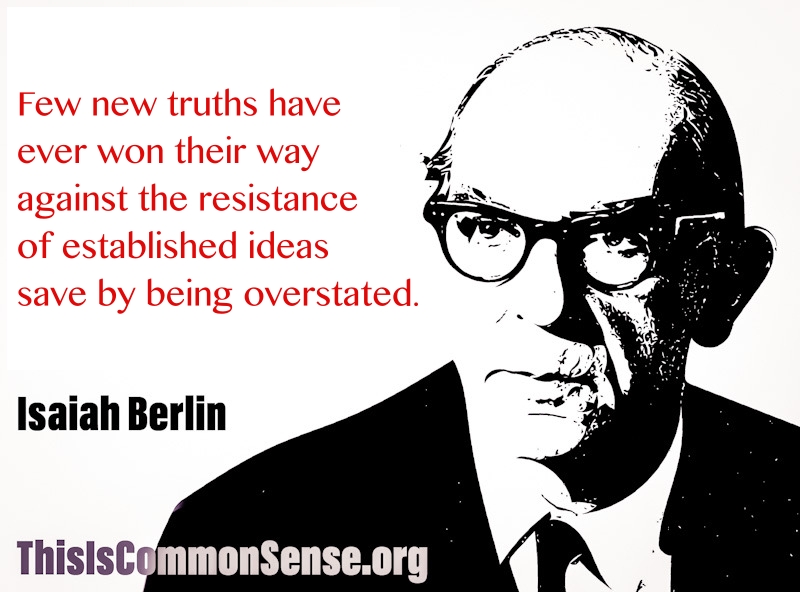
Few new truths have ever won their way against the resistance of established ideas save by being overstated.
Isaiah Berlin, As quoted in Communications and History: Theories of Knowledge, Media and Civilization (1988) by Paul Heyer, p. 125.
On June 11, 1776, the Continental Congress appointed John Adams, Benjamin Franklin, Thomas Jefferson, Robert R. Livingston, and Roger Sherman to draft a declaration of independence from Great Britain.
In 1963, Thich Quang Duc, a Buddhist monk, doused himself with gasoline and set himself aflame in a busy Saigon intersection as a protest against South Vietnam’s lack of religious freedom.
So far, the besieged businessmen of the Fells Point area of Baltimore are only threatening to withhold payments of taxes and fees to the city.
If and when they follow through, the plan is to place the withheld funds in escrow. The money would then be turned over to the city government if and only if the city again meets minimal standards of performance.
Tax resistance? Sure. But not in the usual mode.
Fells Point shop owners are rebelling against a “culture of lawlessness” in their streets, streets managed or mismanaged by the city. They want police to do more — be free to do more — about crime.
In a letter to Baltimore Mayor Brandon Scott and other officials submitted not long after several shootings in the area, thirty-seven Fells Point businessmen demand that the city “Pick up the trash. . . . Enforce traffic and parking laws. . . . Stop illegal open-air alcohol and drug sales. . . . Empower police to responsibly do their job. . . . Please do your job so we can get back to doing ours.”
What will happen? I fear that, despite this worthy protest, city officials will continue to turn a blind eye. I fear that they will regard the protest as a PR problem, one that will go away and allow them to go on with the usual business of government — the way they see it. Their evasive initial responses to the letter are not encouraging.
Baltimore businesspeople are not trying to dodge city taxes here. They understand very well that one cannot expect to get something for nothing. They just want to get something.
This is Common Sense. I’m Paul Jacob.
See all recent commentary
(simplified and organized)
See recent popular posts