The vlog version of the weekend podcast:
This Week in Common Sense, June 18, 2021.

The vlog version of the weekend podcast:
This Week in Common Sense, June 18, 2021.

“Oh eyes, no eyes, but fountains fraught with tears;
Thomas Kyd, The Spanish Tragedy (1592).
Oh life, no life, but lively form of death;
Oh world, no world, but mass of public wrongs,
Confused and filled with murder and misdeeds.”

On the 20th of June in 1787, at the Constitutional Convention in Philadelphia, Oliver Ellsworth moved to confine legislative powers to two distinct branches, and to strike the word “national” from the document. Edmund Randolph of Virginia had previously moved successfully to call the government the National Government of United States. Ellsworth moved that the government should continue to be called the United States of America.
The final wording eventually became “All legislative powers herein granted shall be vested in a Congress of the United States, which shall consist of a Senate and House of Representatives.”
And, yes, the word “national” does not occur anywhere in the Constitution.
John F. Kennedy authored the Encyclopædia Britannica’s article on Ellsworth. This was Kennedy’s only contribution to the Encyclopedia.

It’s been quite a week for America in the international realm. Yet Paul Jacob still laughs. Occasionally:
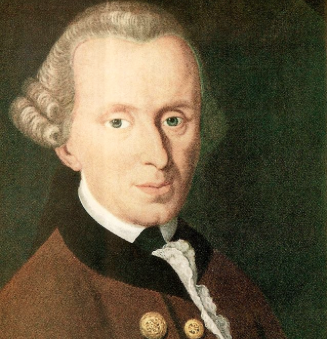
The civil state regarded purely as a lawful state, is based on the following a priori principles:
These principles are not so much laws given by an already established state, as laws by which a state can alone be established in accordance with pure rational principles of external human right.
Immanuel Kant, Theory and Practice (1791).

“Juneteenth” (a portmanteau of June and nineteenth) also known as Freedom Day, Jubilee Day, Liberation Day and Emancipation Day, is a holiday celebrating the emancipation of those held as chattel slaves in the United States. Originating in Galveston, Texas, it is now celebrated annually on June 19 throughout the United States, with increasing official recognition. It is commemorated on the anniversary date of the June 19, 1865, announcement of General Order No. 3 by Union Army general Gordon Granger, proclaiming freedom from slavery in Texas.
In June, 1941, Czech economist and politician Václav Klaus was born on the 19th; other June 19 births include Salman Rushdie in 1947, Kathleen Turner in 1954, and Laura Ingraham in 1964.
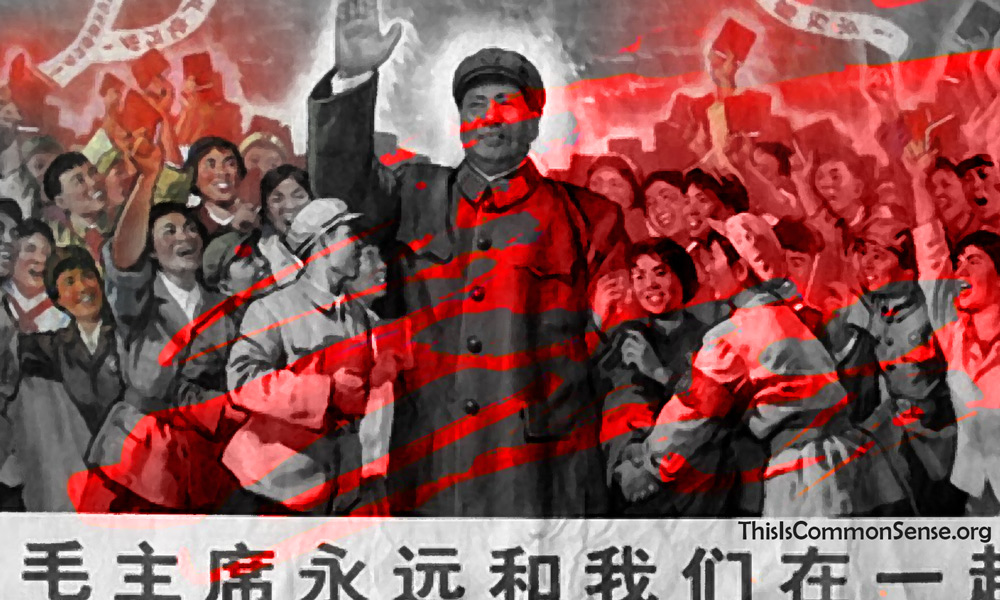
“More than 50 million total deaths,” writes Washington Post columnist David Von Drehle, summing up the cost of Communist Mao Zedong’s decades of re-making Chinese society from the “Great Leap Forward” to the “Cultural Revolution.”
“. . . entirely self-inflicted,” Von Drehle adds.
“A free market of ideas would never have settled on such terrible policies,” he declares, “and a limited government could not have enforced them.”
Exactly! Is it finally morning in Washington?
The columnist articulates two principles: (1) “a free society is a great solver of problems and finder of answers because more brainpower is better than less,” and (2) “while a big government can certainly give a great boost to a good idea, it can also put enormous force behind a bad idea — and when it does, the effects can be catastrophic.”*
He highlights China’s brutally enforced One Child policy, instituted in 1979, whereby the government, according to One Child Nation documentarian Nanfu Wang, bragged it had “successfully prevented 400 million babies from being born.” Through forced abortions and infanticide!
“This draconian, ill-considered measure,” Von Drehle charges, “has brought China to the brink of population decline at a time when the rising nation is still too poor, on a per capita basis, to support swelling ranks of elderly pensioners on the backs of a dwindling number of young workers.”
So, in 2016, “the all-powerful government permitted couples to have two children,” he explains. “Birthrates have continued to drop, moving the Central Committee to raise the cap last month to three children.”
Regardless of the number, what could be more totalitarian than the government deciding how many children you may have?
This is Common Sense. I’m Paul Jacob.
* Like covering up a virus outbreak that turns into a pandemic killing almost 4 million people worldwide — and over 600,000 Americans?
See all recent commentary
(simplified and organized)
See recent popular posts
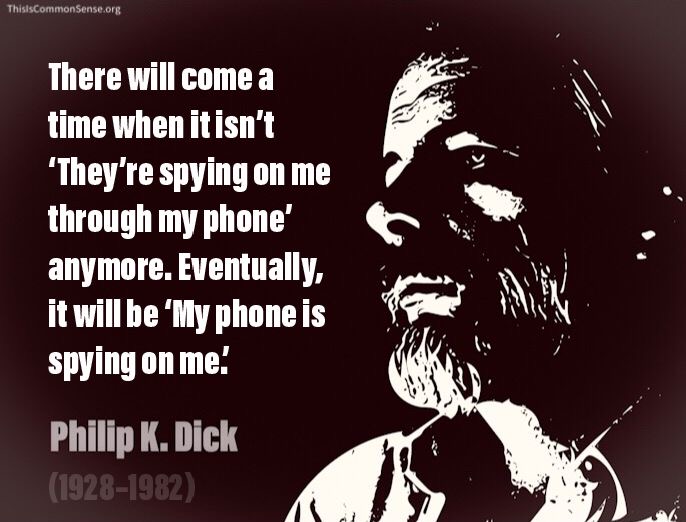
There will come a time when it isn’t ‘They’re spying on me through my phone’ anymore. Eventually, it will be ‘My phone is spying on me.’
On June 18, 1838, Auberon Edward William Molyneux Herbert was born.
Auberon Herbert was a Liberal Member of Parliament who, after reading the writings of Herbert Spencer, became a radical individualist, authoring essays such as “The Ethics of Dynamite,” “A Politician in Trouble About His Soul,” and “The Right and Wrong of Compulsion by the State.”

The G7 summit provided much-needed comic relief.
Biden’s mumbling and stumbling elicited titters and gasps. (His slip in constantly referring to Libya when he meant Syria was, if not funny, at least revealing.) But maybe the greatest moment of pandering silliness came from Britain’s Boris Johnson.
“We’re building back better together,” Johnson said. “And building back greener and building back fairer and building back more equal and how shall I — and in a more gender-neutral and perhaps I — a more feminine way! How about that?”
A naked appeal to feminists. Which the “conservative” politician does not seem to understand isn’t the same thing as appealing to women in general.
His answer got play mainly because he mouthed a slogan with aesthetic stickiness: “build back better.”
But the opportunity to “build back” at all is the result of governments first destroying so much of commercial and civil life. Maybe politicians are the last people we should trust to do that.
The big news out of the summit was the idea of a “universal 15 percent corporate tax,” to establish a “level playing field.”* And prevent what Treasury Secretary Janet Yellen calls “a race to the bottom” — by which she means the escape of international corporations to lower-tax areas overseas.
MSNBC puts this notion in context: “the average corporate tax rate across 177 different jurisdictions in 2020 was just under 24%.”
Instead of trying to maximize revenue by raising taxes, high-tax governments could simply reduce taxes. That would keep corporations within territory, and over time keep revenue flowing.
That would be a “race to a level playing field” without all the political hoopla.
This is Common Sense. I’m Paul Jacob.
* And somehow this new this new “universal” tax is said to exclude China!
See all recent commentary
(simplified and organized)
See recent popular posts