Categories
Thought

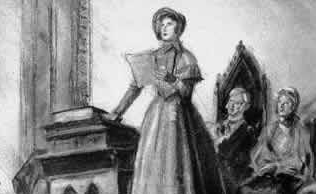
Mary Wollstonecraft

Society . . . as it becomes more enlightened, should be very careful not to establish bodies of men who must necessarily be made foolish or vicious by the very constitution of their profession.

Mary Wollstonecraft, A Vindication of the Rights of Woman (1792), chapter one.
Categories
Today

Seneca Falls

On July 19, 1848, a two-day Women’s Rights Convention opened in Seneca Falls, New York.

Categories
by Paul Jacob video

Watch: A Choir of Crickets

Paul Jacob talks about what the mainstream media won’t.

Categories
Thought

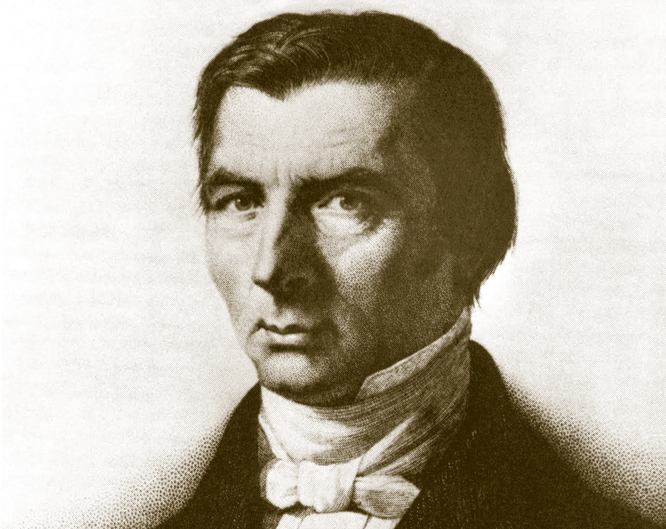
Frédéric Bastiat

If the greatest philosophers have been able to deceive themselves as to the iniquity of slavery, how much easier is it for farmers and manufacturers to deceive themselves as to the nature and effects of the protective system.

Frédéric Bastiat on protective tariffs, in Economic Sophisms: Second Series (1848), The Natural History of Spoliation.”
Categories
Today

A Day of Loco Foco Glory

Echoes of political events past:

Second Declaration of Independence, Or Grand Loco Foco Federal Glorification! To Come Off at the Court House, in the Village of Syracuse, on Saturday, the 18th Day of July, A.D. 1840

Categories
audio podcast

Listen: Inquiring Minds Want to Know

But media minds want to squelch your inquisitiveness.

Categories
Thought

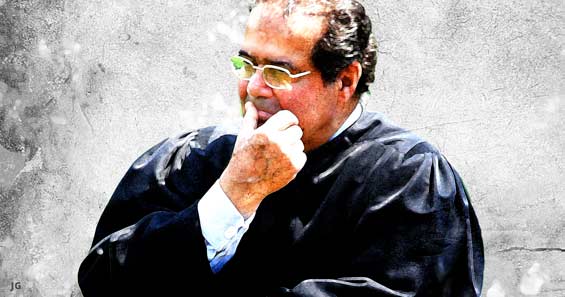
Antonin Scalia

It is one of the unhappy incidents of the federal system that a self-righteous Supreme Court, acting on its Members’ personal view of what would make a “more perfect Union” (a criterion only slightly more restrictive than a “more perfect world”) can impose its own favored social and economic dispositions nationwide.

Categories
ballot access partisanship

Fear & Its Peddlers

“We’re facing the most significant test of our democracy since the Civil War,” President Joe Biden hyperbolically orated on Tuesday at the National Constitution Center in Philadelphia.

“That’s not hyperbole,” he insisted, repeating, for emphasis, “Since the Civil War.”

Referring to state legislation passed or proposed by Republicans regarding various election procedures, Mr. Biden must remember the Jim Crow Era with its “literacy tests, poll taxes, elaborate registration systems, and eventually whites-only Democratic Party primaries to exclude black voters,” since he also smeared these current Republican polices as a “21st-century Jim Crow assault.”* 

President Joe painted a picture of “unprecedented voter suppression” and “raw and sustained election subversion” and more.

Somehow, the media chorus line just repeats this nonsense.

Ignore the years of prominent Democrats’ straight-faced berating of Republican support for voter ID laws as nothing more than a purposely racist suppression tactic . . . immediately followed the Democrats’ recent about-face claim that they had always supported voter ID.

Even as they continue to push federal legislation that would effectively obliterate such ID laws in 35 states.**

Then contrast the bill passed in Georgia or being considered in Texas with the process in Biden’s home state of Delaware, which “doesn’t allow 24-hour or no-excuse drive-through voting,” as Karl Rove explains in The Wall Street Journal. 

“It won’t begin early voting until 2022 and then for . . . fewer days than Texas,” which has had early voting for more than three decades.

Somehow, Mr. Biden has never denigrated Delaware for Jim Crow-ism. 

Yet he may be right that “bullies and merchants of fear and peddlers of lies are threatening the very foundation of our country.”

Peddler of lies, know thyself.

This is Common Sense. I’m Paul Jacob.


* Not to mention that a certain “Biden crime bill” passed decades ago may have led to more disenfranchisement of voters — especially voters of color — than any single piece of legislation since . . . the Civil War.

** This HR1 would also allow partisan control of the Federal Election Commission, for the first time ever — the most potentially speech-suppressing provision of any state or federal legislation.

PDF for printing

See all recent commentary
(simplified and organized)
See recent popular posts

Categories
Thought

Pythagoras

It is not proper either to have a blunt sword or to use freedom of speech ineffectually. 

Neither is the sun to be taken from the world, nor freedom of speech from erudition.

Pythagoras, as quoted Florilegium of Stobaeus, Thomas Taylor, translator (1818).
Categories
Today

Ethiopia

On July 16, 1931, Ethiopia’s Emperor Haille Selassie I signed a new Constitution. Not exactly a model of limited government, the new document proved that the emperor was in keeping with the time, which was a period of weakening constitutional limits in America, Europe, and Britain. A flavor of the document can be gained by its most “rights-oriented” measures:

Art. 22. Within the limits laid down by the law, Ethiopian subjects have the right to pass freely from one place to the other.
Art. 23. No Ethiopian subject may be arrested, sentenced, or imprisoned except in pursuance of the law.
Art. 24. No Ethiopian subject may, against his will, be deprived of his right to be tried by a legally established court.
Art. 25. Except in cases provided for by law, no domiciliary searches may be made.
Art. 26. Except in cases provided by the law, no one shall have the right to violate the secrecy of the correspondence of Ethiopian subjects.
Art. 27. Except in cases of public necessity determined by the law, no one shall have the right to deprive an Ethiopian subject of any movable or landed property which he owns.
Art. 28. All Ethiopian subjects have the right to present to the Government petitions in legal form.
Art. 29. The provisions of the present chapter shall in no way limit the measures which the Emperor, by virtue of his supreme power, may take in the event of war or public misfortunes menacing the interests of the nation.