Virtue is not always amiable. Integrity is sometimes ruined by prejudices and by passions.
John Adams, diary (February 9, 1779).
Categories
John Adams

Virtue is not always amiable. Integrity is sometimes ruined by prejudices and by passions.
John Adams, diary (February 9, 1779).
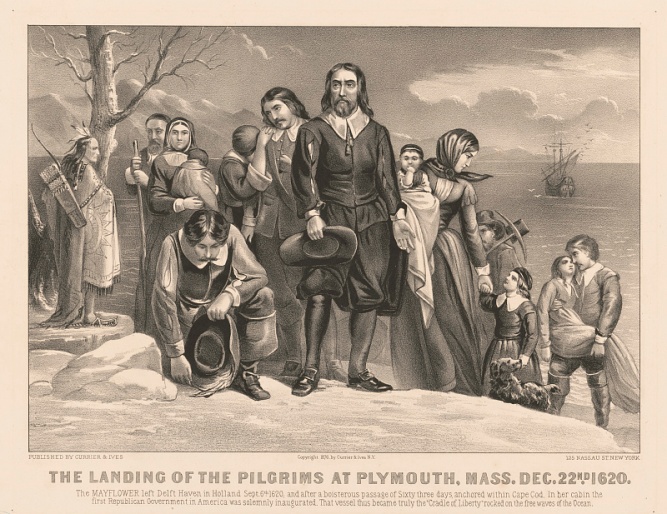
On December 13, 1623, Plymouth colonist established the system of trial by 12-men jury.


Liberty, if I understand it at all, is a general principle, and the clear right of all the subjects within the realm, or of none. Partial freedom seems to me a most invidious mode of slavery. But, unfortunately, it is the kind of slavery the most easily admitted in times of civil discord: for parties are but too apt to forget their own future safety in their desire of sacrificing their enemies. People without much difficulty admit the entrance of that injustice of which they are not to be the immediate victims. In times of high proceeding it is never the faction of the predominant power that is in danger: for no tyranny chastises its own instruments.
Edmund Burke, “A Letter to John Farr and John Harris, Esquires, Sheriffs of the City of Bristol, on Affairs of America” (April 3, 1777), in Writings and speeches (Little, Brown and Company, 1901), page 198.

On December 12, 1939, Finnish forces defeated those of the Soviet Union in the first major victory of what became known as the Winter War, in the Battle of Tolvajärvi.
December 12th birthdays include:
* Erasmus Darwin (1731) – English physician, slave trade abolitionist, inventor and poet
* John Jay (1745) — First Chief Justice of the United States
* William Lloyd Garrison (1805) — American abolitionist, editor of The Liberator
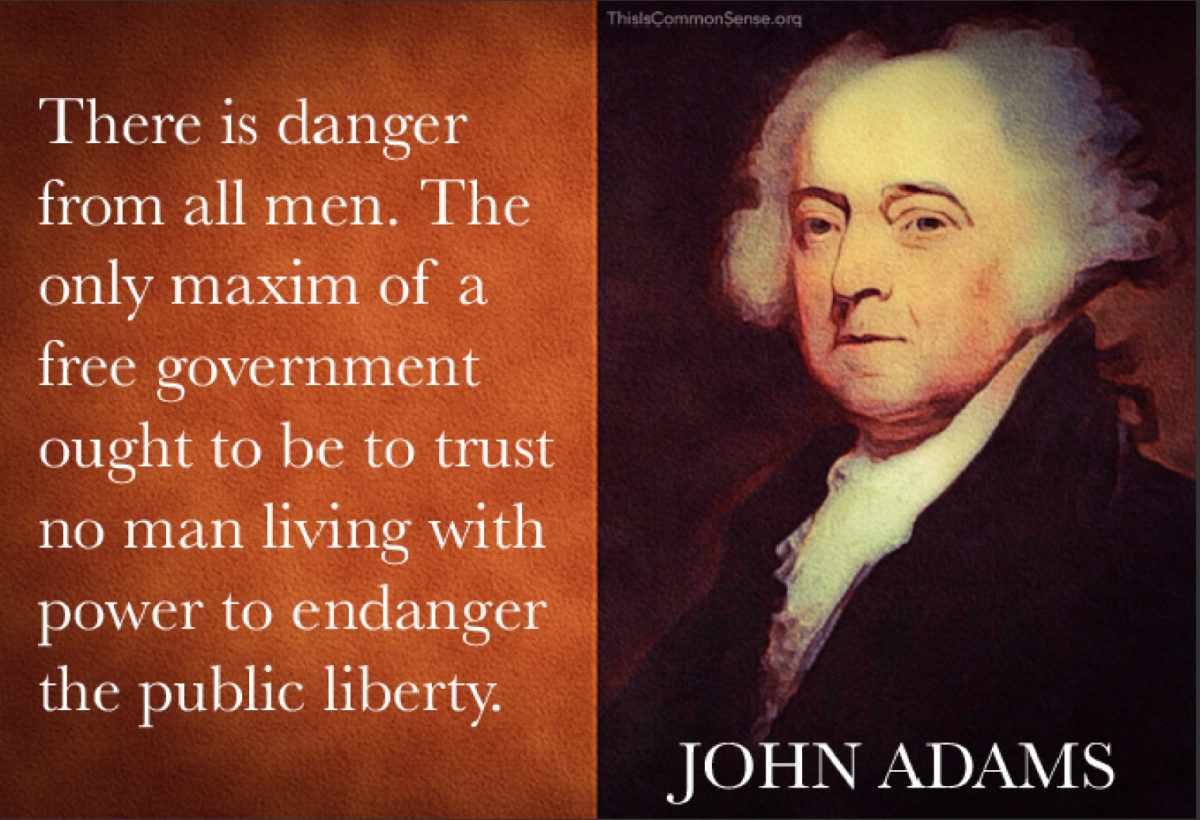
There is danger from all men. The only maxim of a free government ought to be to trust no man living with power to endanger the public liberty.
John Adams, in notes for an oration at Braintree (Spring 1772).

In this episode of the weekend podcast, Paul Jacob looks closely at two major stories: politicians’ itch to extend draft registration to young women, and Democrats scratching at their even bigger itch, the move to let non-citizens vote in American elections.
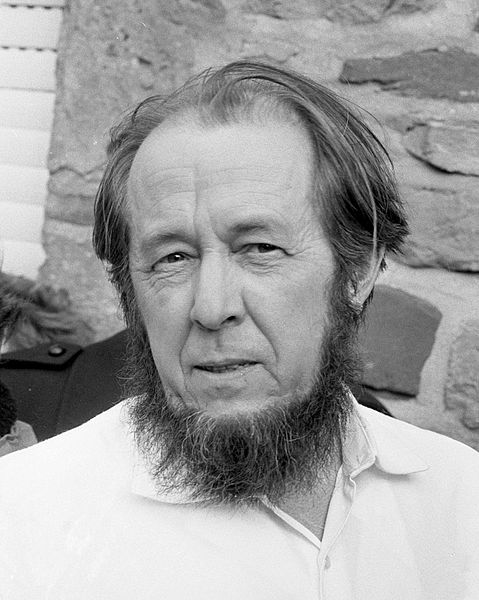
Aleksandr Isayevich Solzhenitsyn was born on December 11, 1918. Solzhenitsyn became a novelist, philosopher, historian, and dissident who helped bring down the totalitarian Soviet Union. Solzhenitsyn’s novels include One Day in the Life of Ivan Denisovich (1962) and Cancer Ward (1966). His behemoth history of Soviet prison camps, The Gulag Archipelago, was a major event in the cultural eclipse of far left ideology in the West, when it was published in 1973.
Solzhenitsyn died on August 3, 2008.

President Biden has a funny way of admitting that his nominee for Comptroller of the Currency had to withdraw for being, well, too communist. He says Saule Omarova faced “inappropriate personal attacks that were far beyond the pale.”
Is calling a communist a communist . . . personal?
As for “inappropriate” . . . negative attacks against an appointee are only inapt if groundless or unrelated to prospective performance.
Ominously, Omarova’s paper on Marxism got memory-holed after she was nominated; she refused to cough it up to the Senate Banking Committee. Written back in her college days in the USSR — was that too long ago to serve as fair evidence?
Fast-forward.
An undated but recent video clip shows Omarova musing that oil companies should “go bankrupt if we want to tackle climate change.”
A 2019 Twitter tweet opines: “Say what you will about old USSR, there was no gender pay gap there. Market doesn’t always ‘know best.’”
Mass murder, mass repression — but hey, no gender pay gap!
In a 2020 paper, “The People’s Ledger,” Omarova proposed “a structural shift at the very core” of the current system. The Fed balance sheet “should be redesigned to operate as . . . the ‘People’s Ledger’: the ultimate public platform for both modulating and allocating the flow of sovereign credit and money in the national system.”
Central bank accounts would “fully replace — rather than uneasily co-exist with — private bank deposits.”
Not sure what that means, precisely? No wonder: slogging through the paper, we find vagueness — maybe even evasion. My guess: it’s all about massively increasing control over our wallets and lives.
Typical, but not just of Marxists, of the Washington elite more broadly.
This is Common Sense. I’m Paul Jacob.
See all recent commentary
(simplified and organized)
See recent popular posts
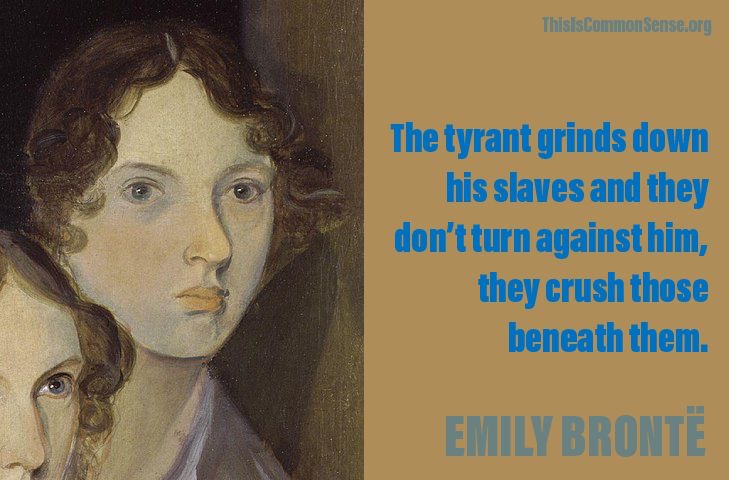
The tyrant grinds down his slaves and they don’t turn against him, they crush those beneath them.
The character Heathcliff, in Emily Brontë’s Wuthering Heights (1847).