Categories
Thought

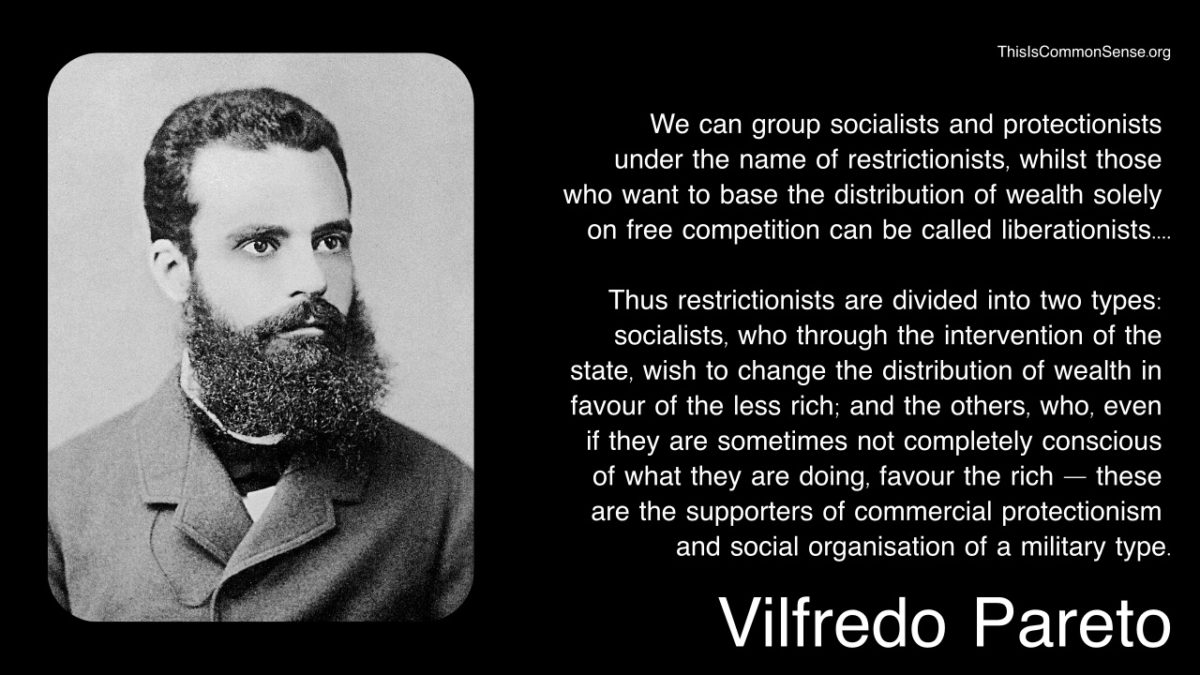
Vilfredo Pareto

We can group socialists and protectionists under the name of restrictionists, whilst those who want to base the distribution of wealth solely on free competition can be called liberationists….

Thus restrictionists are divided into two types: socialists, who through the intervention of the state, wish to change the distribution of wealth in favour of the less rich; and the others, who, even if they are sometimes not completely conscious of what they are doing, favour the rich — these are the supporters of commercial protectionism and social organisation of a military type.

Vilfredo Pareto, “Socialism and Freedom,” 1891.

Categories
Today

Corn Law

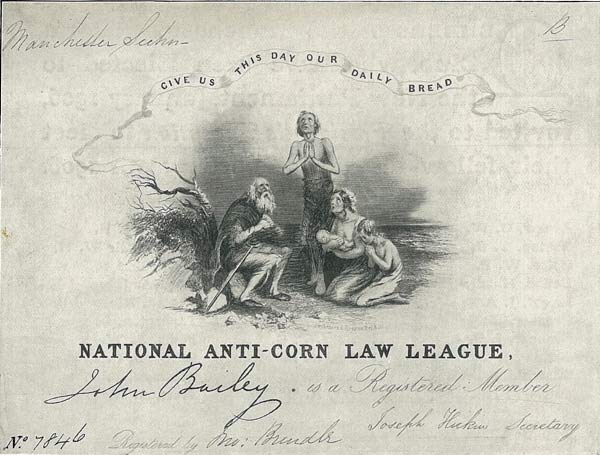
On January 31, 1849, the Corn Laws were abolished in the United Kingdom, one of the most impressive and far-reaching anti-protectionist moves of all time. “Corn” stood for all grains, including wheat, oats, barley, etc.; the free-trade agitation by John Bright and Richard Cobden was one of the main impetuses for the reform.

On Jan. 31, 1865, the United States Congress proposed the Thirteenth Amendment to the U.S. Constitution, submitting it to the states for ratification. The Amendment’s main section reads: “Neither slavery nor involuntary servitude, except as a punishment for crime whereof the party shall have been duly convicted, shall exist within the United States, or any place subject to their jurisdiction.”

On Jan. 31, 1990, the first McDonald’s fast food restaurant opened in the Soviet Union. Having once traveled to Moscow, I’m exceedingly thankful for this.

Categories
by Paul Jacob video

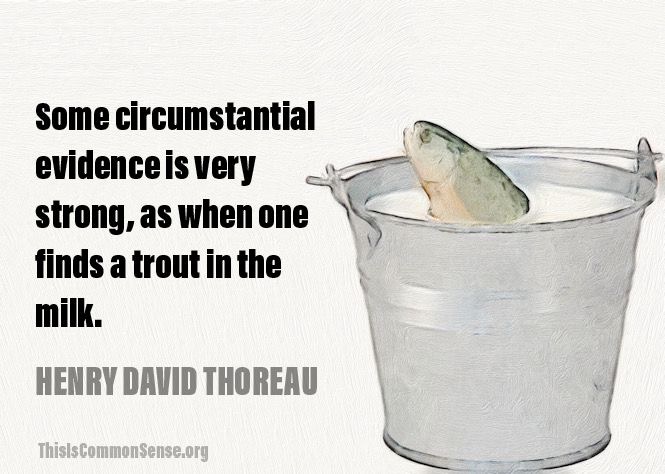
Watch: Trout, Milk, Mania

In this episode of This Week in Common Sense, we start with the bust of Nefertiti, chat about the Neil Young spat with Joe Rogan and Spotify, and then lay into the big stories of the week — for yes, Paul Jacob smells something fishy in mainstream media and world politics!

Please go to Rumble, sign on, and subscribe — and give us a “rumble” if you like what we do. The audio podcast version is hosted on SoundCloud and available via most podcatchers.

Categories
Common Sense

William Saroyan

Everything and everybody is sooner or later identified, defined, and put in perspective. The truth as always is simultaneously better and worse than what the popular myth-making has it.

William Saroyan, Memories of the Depression (1981).
Categories
Today

Non-Violence … and Violent Reaction

On Jan. 30, 1948, Indian leader Mohandas K. Gandhi, known for his non-violent, non-cooperation struggle for freedom and national independence, was assassinated by a Hindu extremist.

On Jan. 30, 1956, Martin Luther King, Jr.’s home was bombed in retaliation for his work on the Montgomery Bus Boycott.

On Jan. 30, 1972, British soldiers killed fourteen unarmed civil rights marchers in Northern Ireland in what came to be known as “Bloody Sunday.” Soldiers shot 26 unarmed protesters and bystanders – 13 males, seven of whom were teenagers, died immediately, while another man died of his injuries nearly five months later. In the immediate aftermath, an investigation by the British Government largely cleared the soldiers and British authorities of blame. A second investigation begun in 1998, released a report in 2010 declaring that all of those shot were unarmed, and that the killings were both “unjustified and unjustifiable.”


Not quite fitting today’s “non-violence elicits violence” theme, on January 30, 1835, Richard Lawrence attempted to shoot former military leader and then-President Andrew Jackson, but failed. He was subdued by a crowd, including several congressmen. That marked the first attempt on the life of a sitting U.S. president.

Categories
audio podcast

Listen: A Trout in the Milk

Paul smells something fishy in major media and world politics:

Categories
Thought

Vilfredo Pareto

Social movements usually follow the line of least resistance. While the direct production of economic goods is often very hard, taking possession of those goods produced by others is very easy. This facility has greatly increased from the moment when deprivation became possible through the law and not contrary to it.

Vilfredo Pareto, “Socialism and Freedom,” 1891.
Categories
Today

Gallatin

On January 29, 1761, Albert Gallatin was born. Gallatin served as the fourth United States Secretary of the Treasury — a post in which he served longer than any other in American history — advanced the anthropological and linguistic study of native Americans, and became the subject of a biography by Henry Adams. Called the “father of American ethnology,” he has been honored with a 1967 U.S. stamp as well as many place names, including the Gallatin National Forest in Montana.

Categories
crime and punishment folly ideological culture

Stop & Go on Crime

In last week’s news conference, President Biden seemed to wave a green light to Vladimir Putin: Russian military forces may make a “minor incursion” into neighboring Ukraine. Was Biden applying to diplomacy, I wondered, the permissive posture so many other Democratic officials have taken, domestically? Crime’s fine, if small enough. 

If so, Biden’s not leading — Democrats around the country are changing direction. 

“We are in a crisis,” San Francisco Mayor London Breed announced last month, declaring a state of emergency. “Too many people are dying in this city. Too many people are sprawled all over our streets. And now we have a plan to address it.”

Her approach? Simple: End the “reign of criminals” by taking “the steps to be more aggressive with law enforcement . . . and less tolerant of all the bullsh*t that has destroyed our city.”

The New York Times called it “a sharp break with the liberal conventions that have guided her city for decades.” 

“About time,” was California Governor Gavin Newsom’s response.

When Philadelphia District Attorney Larry Krasner responded to questions about rising crime by arguing, “We don’t have a crisis of lawlessness, we don’t have a crisis of crime, we don’t have a crisis of violence,” former Mayor Michael Nutter expressed incredulity.

“How many more Black and brown people, and others,” Nutter wrote in the Philadelphia Inquirer, “would have to be gunned down in our streets daily to meet your definition of a ‘crisis’?”

Still, upon taking office weeks ago, Manhattan DA Alvin Bragg “ordered his prosecutors to stop seeking prison sentences for hordes of criminals and to downgrade felony charges in cases including armed robberies . . .” the New York Post reported.

“The identical platform,” noted a police supervisor, “has not worked out in San Francisco, Chicago, Philadelphia and Baltimore.”

Or anywhere else. Ever.

This is Common Sense. I’m Paul Jacob. 


PDF for printing

See all recent commentary
(simplified and organized)
See recent popular posts
Categories
Thought

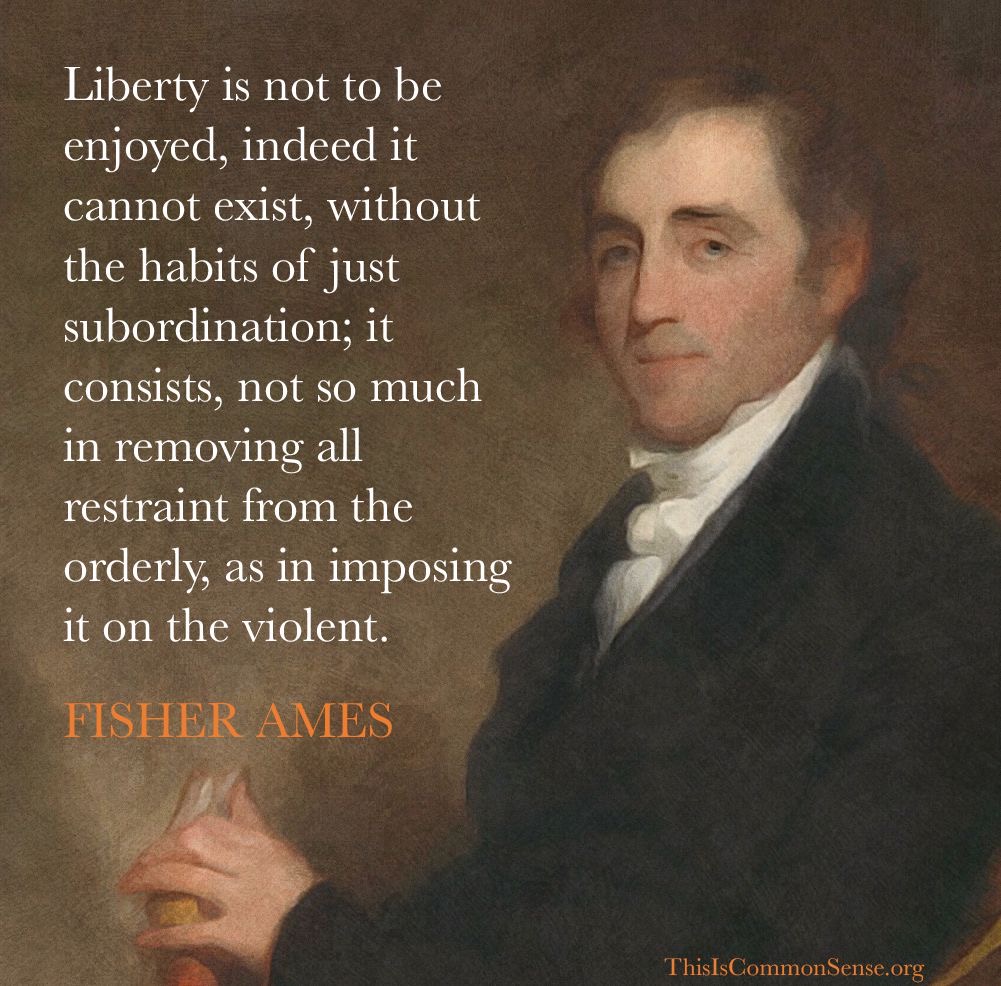
Fisher Ames

Liberty is not to be enjoyed, indeed it cannot exist, without the habits of just subordination; it consists, not so much in removing all restraint from the orderly, as in imposing it on the violent.