Categories
Thought

Marina Ovsyannikova 

Sadly, I’ve spent the last few years working for Channel One, doing Kremlin propaganda, and I’m very ashamed of this. Ashamed that I allowed lies to be broadcast from TV screens. Ashamed that I allowed others to zombify Russian people. We were silent in 2014 when all this started. We didn’t protest when the Kremlin poisoned Navalny. We just silently watched this inhuman regime at work. And now the whole world has turned its back on us. And the next ten generations won’t wash away the stain of this fratricidal war. We Russians are thinking and intelligent people. It’s in our power alone to stop all this madness. Go protest. Don’t be afraid of anything. They can’t lock us all away.

Marina Ovsyannikova, pre-recorded statement explaining her on-air protest against the invasion of Ukraine.
Categories
Today

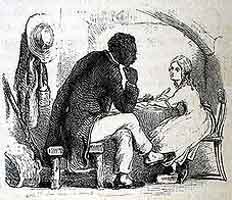
Uncle Tom’s Cabin

On March 20, 1852, Harriet Beecher Stowe’s anti-slavery novel Uncle Tom’s Cabin was published.

Categories
audio podcast

Listen: It’s Complicated, Isn’t It?

Paul on the nature of World War III, now underway:

This Week in Common Sense, third week of March 2022.

Categories
Thought

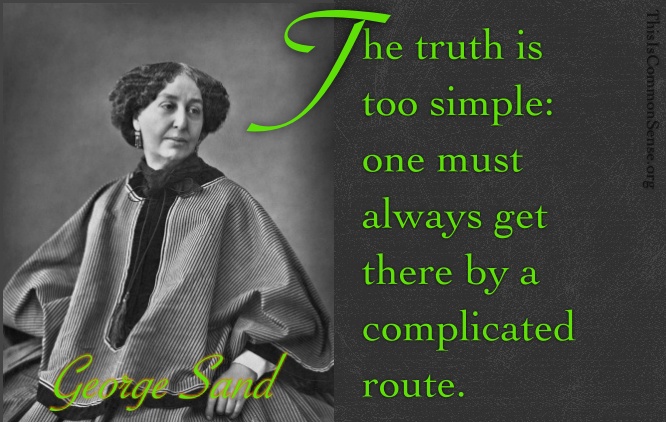
George Sand

Le vrai est trop simple, il faut y arriver toujours par le compliqué.

The truth is too simple: one must always get there by a complicated route.

Amantine Lucile Aurore Dupin, aka, George Sand, Letter to Armand Barbès, (May 12, 1867), published in Georges Lubin (ed.) Correspondance (Paris: Garnier Freres, 1964-95) vol. 20, p. 412; Bruce Kajewski Traveling with Hermes (Amherst: University of Massachusetts Press, 1992) p. 32.

Categories
Today

House of Lords

On March 19, 1649, England’s House of Commons passed an act abolishing the House of Lords, declaring it “useless and dangerous to the people of England.”

This was during Oliver Cromwell’s rule as Lord Protector, after the execution of Charles I. The House of Lords did not again meet until the Convention Parliament of 1660, under the Restoration of the monarchy.

Categories
crime and punishment First Amendment rights Fourth Amendment rights

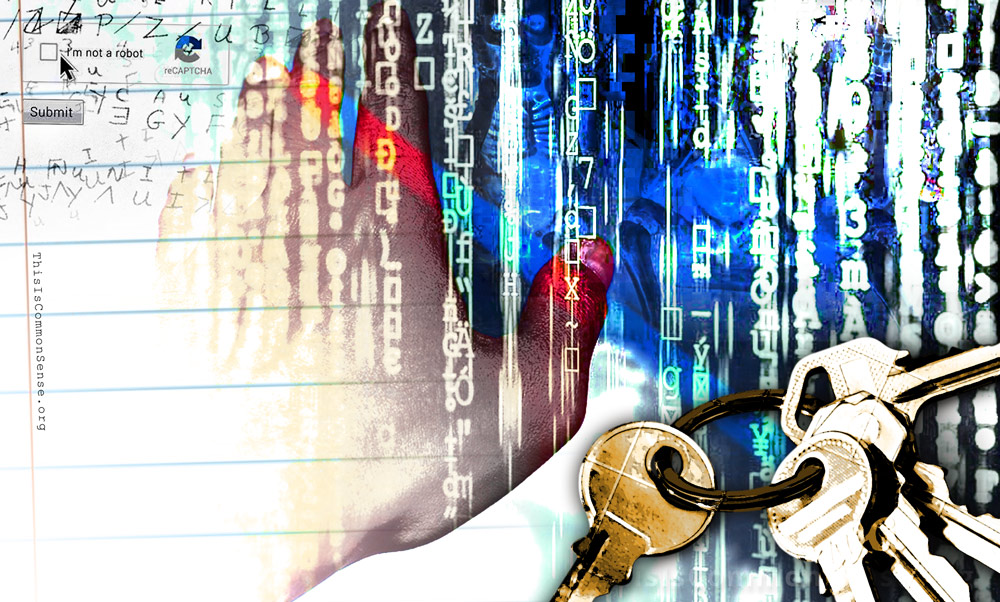
A Guide for the Surveilled 

If you’re hounded — or merely have reason to suspect you are about to be hounded — by censors and spies, there are things you can do to protect yourself.

Self-defense often starts with your communication devices, the kind of things that Big Brother and Big Corporate Overlords tend to target. Reclaim the Net has put together a fairly comprehensive overview and explanation of ways to reduce your risk.

For example:

● Use a strong passkey.

● Turn off fingerprint unlock and face unlock.

● Be alert to phishing attempts.

● Delete unused apps and data.

● Delete photo metadata before sending or posting photos.

● Disable location services.

● Use airplane mode when preventing access to you is more important than having access yourself.

● Usea VPN to evade censorship and tracking.

● Be careful what kind of information about yourself you make public.

● Take steps to recover a confiscated or stolen device, or at least to make its data unrecoverable.

● Use anonymous accounts.

● Use encrypted text messengers.

● Switch to more privacy-conscious browsers, search engines, and ISPs.

Depending on your circumstances, some of these tips will be more relevant than others, of course. But it’s worth perusing the whole list.

Of course, to go to all this trouble, you’d have to believe that big governments and mega-corporations are trying to surveil you. As if we lived in one of those dystopian futures they talk about in scary science fiction stories.

And who could ever believe that?

Well . . .

This is Common Sense. I’m Paul Jacob.


PDF for printing

See all recent commentary
(simplified and organized)
See recent popular posts

Categories
Thought

Ilana Mercer

The nice men in periwigs who came up with the Fourth Amendment were recklessly naive to imagine that branches of a government, each of whose power is enhanced when the power of the other branches grows, would serve to check one another.

Ilana Mercer, reported in “Quacking Over Ducksters As Freedoms Go Poof,” WorldNetDaily.com, January 3, 2014.
Categories
Today

Sunflower & Hawaii

March 18 marks the 8th anniversary of the 2014 Sunflower Student Movement, wherein students occupied the Taiwanese legislature to block a trade agreement between Taiwan and China, which the public came to believe gave too much economic leverage to China, a power that regularly threatens to invade the free and democratic island nation.

The event awakened a deep concern about China’s dangerous encroachment as well as further impressing a “Taiwanese identity.” The protest also is believed to have influenced the 2014 Umbrella movement in Hong Kong as well as leading to electoral victories in Taiwan for the pro-independence Democratic Progressive Party in 2016 and again in 2020. This website salutes the Sunflower Student Movement and hopes this date may be long remembered as the day the modern world first stood up and said “No” to totalitarian China.


On March 18, 1959, President Dwight D. Eisenhower signed a bill enabling Hawaii to become the 50th state in the Union. The official day of statehood was set for (and became) August 21 of that year.

The statehood signing occurred exactly 85 years after The Kingdom of Hawaii formalized its treaty with the U. S. establishing exclusive trading rights.

Categories
national politics & policies

Bipartisan Daylight?

Is there a case for switching back and forth to “save daylight”? To me, it seems a typically dumb thing governments do.

I can quote experts who argue that Daylight Saving Time doesn’t save much, and causes no small amount of harm, while others could quote experts saying the opposite.

It really comes down to holding to respectable standards. The reason to oppose Daylight Saving Time is that our time zones should have a touch of truth about them. 

Before railroads stretched across America, words like “noon” and “midnight” and “ante meridiem” and “post meridiem” possessed clear meanings in every locality. The morning ended when the Sun was directly overhead (solar noon), and the afternoon began just after. 

The hours of the day corresponded to this.

But with railroads, traveling quickly west or east engendered chaos as engineers’ pocket watches provided no real manageable time to schedule trains and keep them to schedule. So time zones were invented, grouping longitudinal neighbors together to make it easy to know when to adjust moving clockwork mechanisms. Still, there was a connection between clocks’ noontime and true noon somewhere in each time zone.

Anyway, Daylight Saving Time (which I’ve written about before) was invented to nudge us to get to work earlier, allowing us more leisure time at day’s end. 

On Tuesday, the U.S. Senate voted unanimously to extend Daylight Saving Time the whole year around. No more “Spring forward/Fall back” nonsense.

But also: no more true noon anywhere in America, ever again. Well, considering how gerrymandered the time zones are: far fewer true, solar noon locations.

Another chasm between Man and Nature, courtesy of Government.

This is Common Sense. I’m Paul Jacob.


PDF for printing

bird and red

See all recent commentary
(simplified and organized)
See recent popular posts

Categories
Thought

Chen Shui-bian 

Our Taiwan road is “a road of democracy, a road of freedom, a road of human rights, and a road of peace for Taiwan.” Taiwan is our country. Our country should not be bullied, dwarfed, marginalized, and localized.

Speech (August 5, 2002), by Chen Shui-bian, former president of Taiwan (2000-2008).