On June 13, 1774, Rhode Island became the first British colony in the Americas to prohibit the importation of slaves.
Categories
Anti-slavery
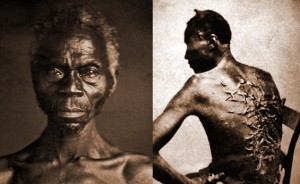
On June 13, 1774, Rhode Island became the first British colony in the Americas to prohibit the importation of slaves.

Paul Jacob’s back from his long stint “on the road,” and he begins talking about a Turkish proverb and its significance for politics in these bizarre, dangerous times.

If social conditions did not fulfill the wishes of the reformers, if their utopias proved unrealizable, the fault was seen in the moral failure of man. Social problems were considered ethical problems. What was needed in order to construct the ideal society, they thought, were good princes and virtuous citizens. With righteous men any utopia might be realized.
The discovery of the inescapable interdependence of market phenomena overthrew this opinion. Bewildered, people had to face a new view of society. They learned with stupefaction that there is another aspect from which human action might be viewed than that of good and bad, of fair and unfair, of just and unjust. In the course of social events there prevails a regularity of phenomena to which man must adjust his actions if he wishes to succeed. It is futile to approach social facts with the attitude of a censor who approves or disapproves from the point of view of quite arbitrary standards and subjective judgments of value. One must study the laws of human action and social cooperation as the physicist studies the laws of nature. Human action and social cooperation seen as the object of a science of given relations, no longer as a normative discipline of things that ought to be — this was a revolution of tremendous consequences for knowledge and philosophy as well as for social action.
Ludwig von Mises, Human Action: A Treatise on Economics (1949).
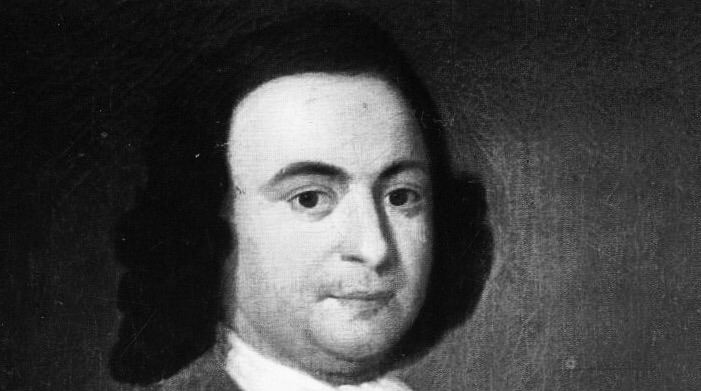
In 1776, on June 12, the Fifth Virginia Convention at Williamsburg, Virginia, unanimously adopted a Declaration of Rights, several weeks prior to the adoption of the state’s constitution. George Mason (pictured above), who drafted the document, stated clearly in the preamble that rights must be “the basis and foundation of Government.”
The first four planks run as follows:
I. That all men are by nature equally free and independent, and have certain inherent rights, of which, when they enter into a state of society, they cannot, by any compact, deprive or divest their posterity; namely, the enjoyment of life and liberty, with the means of acquiring and possessing property, and pursuing and obtaining happiness and safety.
II. That all power is vested in, and consequently derived from, the people; that magistrates are their trustees and servants, and at all times amenable to them.
III. That government is, or ought to be, instituted for the common benefit, protection, and security of the people, nation or community; of all the various modes and forms of government that is best, which is capable of producing the greatest degree of happiness and safety and is most effectually secured against the danger of maladministration; and that, whenever any government shall be found inadequate or contrary to these purposes, a majority of the community hath an indubitable, unalienable, and indefeasible right to reform, alter or abolish it, in such manner as shall be judged most conducive to the public weal.
IV. That no man, or set of men, are entitled to exclusive or separate emoluments or privileges from the community, but in consideration of public services; which, not being descendible, neither ought the offices of magistrate, legislator, or judge be hereditary.

The big stories of the week revolve around big government, which mean big theft, which is not unrelated to socialism:
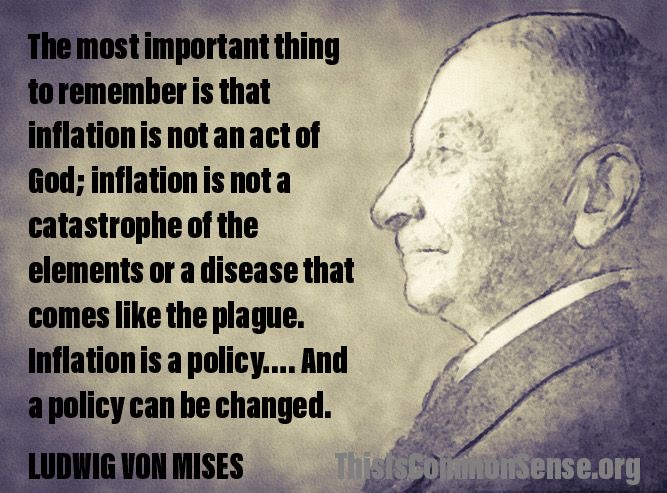
The most important thing to remember is that inflation is not an act of God; inflation is not a catastrophe of the elements or a disease that comes like the plague. Inflation is a policy — a deliberate policy of people who resort to inflation because they consider it to be a lesser evil than unemployment. But the fact is that, in the not very long run, inflation does not cure unemployment.
Inflation is a policy. And a policy can be changed. Therefore, there is no reason to give in to inflation. If one regards inflation as an evil, then one has to stop inflating.
Ludwig Edler von Mises, fourth lecture from Economic Policy: Thoughts for Today and Tomorrow (1979; 1995; 2006).
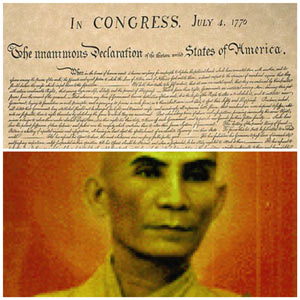
On June 11, 1776, the Continental Congress appointed John Adams, Benjamin Franklin, Thomas Jefferson, Robert R. Livingston, and Roger Sherman to draft a declaration of independence from Great Britain.
In 1963, Thich Quang Duc, a Buddhist monk, doused himself with gasoline and set himself aflame in a busy Saigon intersection as a protest against South Vietnam’s lack of religious freedom.

These policies include onerous burdens on building construction; lax attitudes toward homeless folks’ tent cities and public excretory practices; and a green light for sundry criminal activities, including broad-daylight theft.
The green light flashed statewide in 2014, when Californians passed Proposition 47, giving looters much less to worry about if caught stealing less than $950.
Remove a disincentive and you wind up with a huge incentive: thugs were emboldened; folks on the margin between criminality and civilized peace went the wrong direction.
In San Francisco, they were further emboldened when voters installed Democrat Chesa Boudin as district attorney in 2019. At least the election was close.
A recent recall election wasn’t so close, with some 61% voting to oust him.
In the cause of abetting criminals, DA Boudin did everything but serve as getaway-car driver.
Right away, he fired several prosecutors, and The Epoch Times reports that soon “more than 50 prosecutors, support, and victim services staff had either been fired or had quit their jobs over Boudin’s progressive agenda.”
The agenda included ending cash bail, slashing incarceration rates, routinely releasing repeat offenders.
Although it has lost a lot, San Francisco still has piers and fog and that famously twisty road, Lombard Street. Residents have a ways to go to emerge from their ideological fog and perhaps must travel an even twistier road to reclaim their city.
By getting rid of Boudin — and three pretty rotten school board members in another recent recall election — San Franciscans have taken the first steps back to something like sanity. Which always makes next steps easier.
This is Common Sense. I’m Paul Jacob.
See all recent commentary
(simplified and organized)
See recent popular posts

No matter how far down the wrong road you’ve gone, turn back.
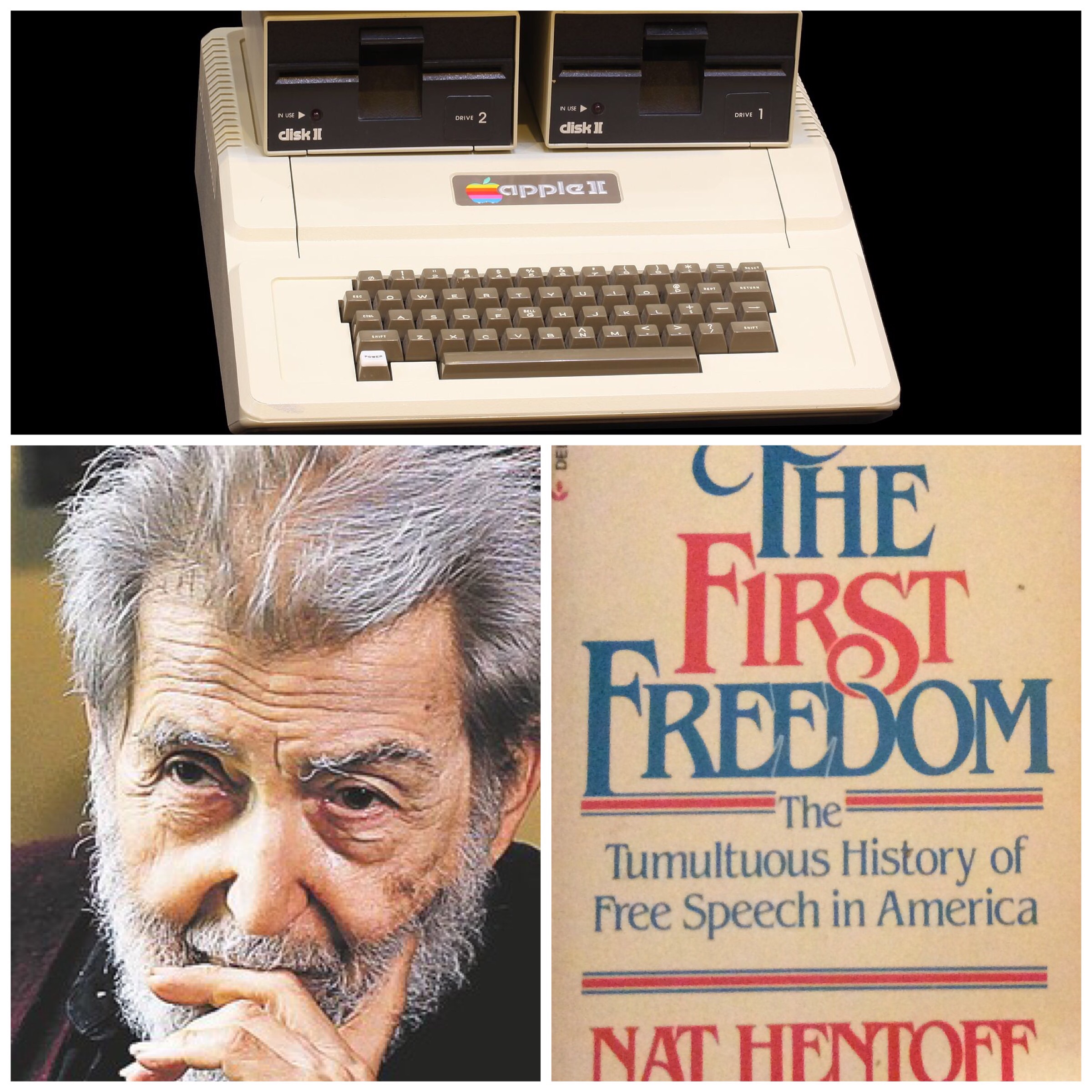
Born on this day: historian, jazz critic and civil libertarian Nathan Irving Hentoff (1925); children’s writer Maurice Sendak (1929); scientist and pioneer of “sociobiology,” E. O. Wilson (1929).
Hentoff wrote a good book on the history of free speech in America, The First Freedom (1980). Sendak is most famous for Where the Wild Things Are (1963). Wilson’s many books include Consilience: The Unity of Knowledge (1998).
Apple shipped the first Apple II computer on June 10, 1977. It was typographically styled as the “Apple ][” and the series continued long after the specific II model was superseded by the Apple II Plus and was discontinued in 1981. The last II-series Apple in production, the IIe card for Macintoshes, was discontinued on October 15, 1993.
Sendak died in 2012, Hentoff in 2017, while Wilson remains alive.