Paul focuses on the realpolitik and deeper lack of meaning in a popular statement of America First sentiment.
Paul focuses on the realpolitik and deeper lack of meaning in a popular statement of America First sentiment.
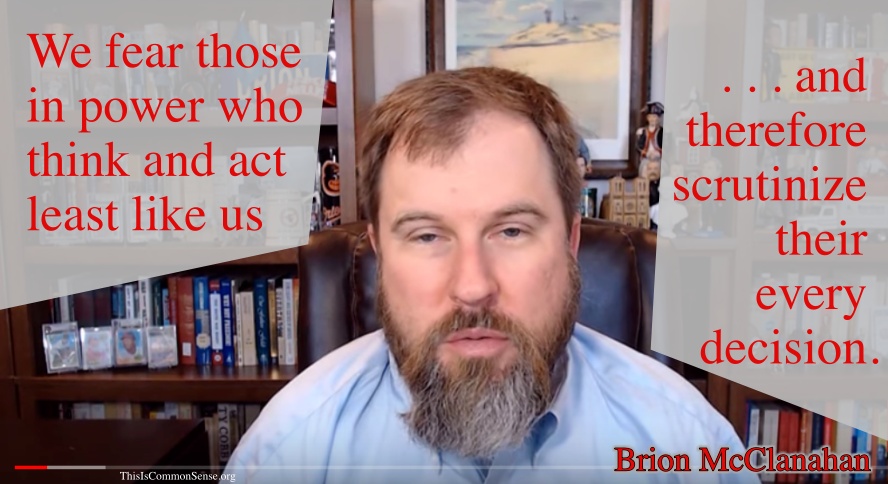
We fear those in power who think and act least like us and therefore scrutinize their every decision.
Brion McClanahan, Nine Presidents Who Screwed Up America and Four Who Tried to Save Her (2016), introduction. Image from a recent podcast video.

On August 20, 1991, Estonia issued a decision to re-establish independence on the basis of historical continuity of the Baltic country’s pre-World War II statehood, sloughing off Soviet rule since 1940.
On August 20, 1935, Ron Paul was born. Paul is now famous for his heroic congressional record, his several presidential campaigns, and for books such as End the Fed and Liberty Defined.
Paul focuses on the implications of a policy statement:

The tyranny of a prince in an oligarchy is not so dangerous to the public welfare as the apathy of a citizen in a democracy.
Charles-Louis de Secondat, Baron de La Brède et de Montesquieu, The Spirit of the Laws (1748).

On August 19, 1919, Afghanistan gained full independence from Great Britain. The British attempts to maintain an imperial presence in this region elicited an earlier, infamous essay in protest by English sociologist and anti-imperialist Herbert Spencer (pictured), “Patriotism” (Facts and Comments, 1902).
On this day in 1991, Soviet President Mikhail Gorbachev was placed under house arrest, a crucial event leading to the dissolution of the Soviet Union.
In 1999, a mass rally of Serbians demanded the resignation of Slobodon Milosevic.
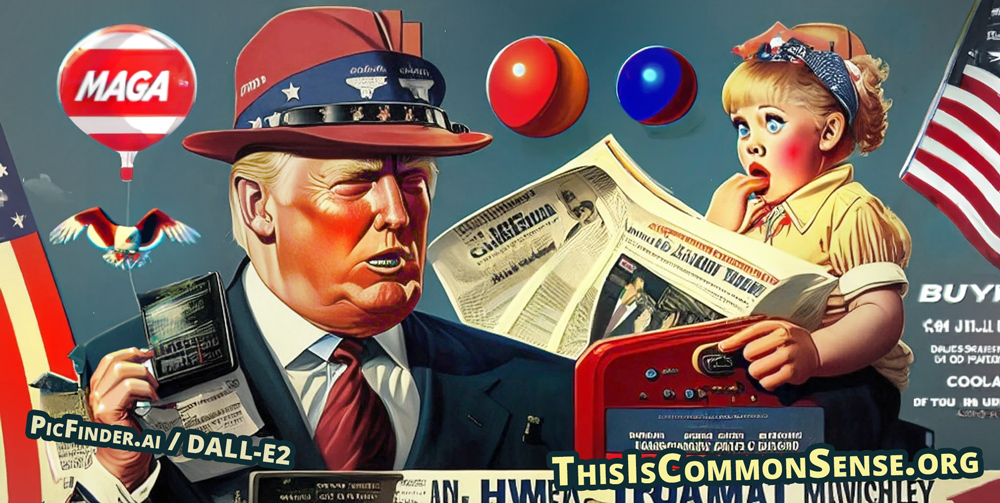
Jonathan Turley observes that in this fourth indictment, “every call, speech, and tweet appears a criminal step in the conspiracy. District Attorney Fani Willis appears to have elected to charge everything and everyone and let God sort them out.”
This is the kitchen-sink, banana-republic approach to “justice.” Facts? Plausibility? Irrelevant when the would-be one-party regime has a target in view.
In masterful understatement or point-missing, Turley writes that the “greatest challenge for Georgia is to offer a discernible limiting principle on when challenges in close elections are permissible and when they are criminal.”
But how can it ever be criminal simply to challenge election results or call for a recount or plead for further investigation of the flimsiest of allegations, even via imperfect phone call?
The “limiting principle” operative here is obvious. Is the challenger on our side or the other side? Our side, the challenge is legal. Other side, it’s illegal, prosecutable. This is Willis’s “principle.”
Per Turley, it’s important for campaigns to seek judicial review of an election “without fear of prosecution.” Yes, important. But from the perspective of those who want to prevent other-side campaigns from seeking recourse when an election is close or seems pockmarked by fraud, what’s important is making sure other-side campaigns do fully feel this fear.
The bad guys already understand what’s at stake, what Mr. Turley is so carefully explaining as if they are perhaps only a little confused.
This is Common Sense. I’m Paul Jacob.
Illustration created with PicFinder.ai and DALL-E2
See all recent commentary
(simplified and organized)
See recent popular posts
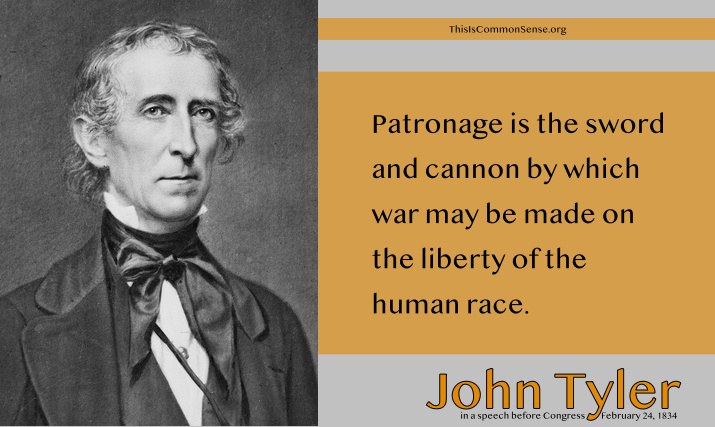
Patronage is the sword and cannon by which war may be made on the liberty of the human race.
John Tyler, speech in Congress (February 24, 1834) against the policies of President Andrew Jackson. Seven and a half years later, as president of the United States, Tyler would veto a revival of the national bank, opposition to which was one of Jackson’s most memorable policies.
On August 18, 1920, the Nineteenth Amendment to the United States Constitution was ratified, guaranteeing women’s suffrage.
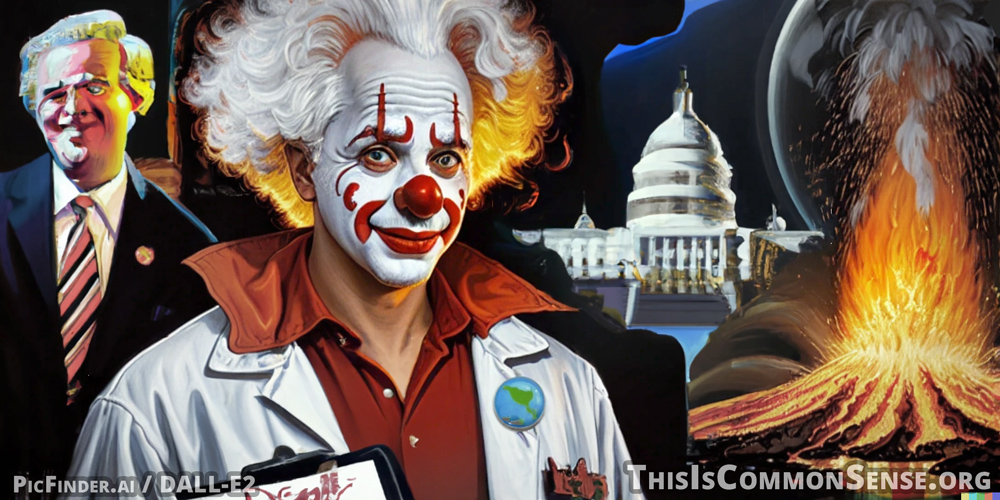
It must be global warming!
Well, it is hotter than usual.
But this is summer.
And a volcano did blow in the ocean near Tonga, a year and a half ago, and scientists at the time did say that the water vapor it placed into the stratosphere could linger for years, affecting the climate.
Still, you won’t see recognition of this factor for warming on the major news sources. They keep pushing the AGW line: anthropogenic (human-caused) global warming: “climate change.”
Matt Walsh, on his podcast, ran through the vulcanism story last week. Water vapor is a more effective, broad-spectrum greenhouse gas than CO2, which all the journos cannot help but push (because it fits a statist agenda, and that’s their real business: propaganda).
Walsh calls mainstream AGW crusaders “volcano denialists.”
Our planet’s ecosystem is ultra-complicated. Cloud cover (which has something to do with water vapor, you might say) can also cool the planet by increasing high-altitude albedo, a point touched upon in The Epoch Times, “Nobel Winner on Climate Agenda: ‘We Are Totally Awash in Pseudoscience,” which focuses on physicist John Clausner and his contrarian views on climate.
“Contra the IPCC and other major institutions,” Clausner contends “that climate is primarily set by . . . the ‘cloud cover thermostat,’ a self-regulating process whereby more clouds start to enshroud the Earth when the temperature is too high and vice-versa.”
He was slated to give a talk to the International Monetary Fund on July 25, but that was cancelled. These elites have directed trillions of global dollars to “research” global climate, and Clausner’s caution that they’ve made “a trillion-dollar mistake” is not exactly welcome.
It’s not just vulcanism they deny. They deny water.
This is Common Sense. I’m Paul Jacob.
Illustration created with PicFinder.ai and DALL-E2
See all recent commentary
(simplified and organized)
See recent popular posts