While Reason drew the plan, the Heart inform’d
James Thomson (1700–1748), Liberty ( (1734) Pt. IV, L. 262.
The moral page and Fancy lent it grace.
James Thomson
While Reason drew the plan, the Heart inform’d
James Thomson (1700–1748), Liberty ( (1734) Pt. IV, L. 262.
The moral page and Fancy lent it grace.
Responding to British Parliament’s enactment of the Coercive Acts in the American colonies, the first session of the Continental Congress convened at Carpenter’s Hall in Philadelphia, on September 5, 1774. Virginian Peyton Randolph (pictured) was appointed as the first president of Congress. John Adams, Patrick Henry, John Jay and George Washington were among the delegates.
China claims Taiwan and its inhabitants, desiring their patriotic company so devoutly as to contemplate leveling much of the country in missile strikes, killing hundreds of thousands if not millions of Taiwanese to achieve that glorious “national rejuvenation.”
Of course, when the U.S. provides defensive weapons to protect against just such a murderous military invasion, the Butchers of Beijing holler it is “provocative!”
Speaking of . . . the Chinazis were kind enough last week to remind us that Taiwan is hardly the only land they’ve got their eyes on.
The Communist Party just drew a new map.
India noticed first that the CCP’s penmanship pinched Indian territory. Japan objected to China’s claim of its Senkaku Islands (under U.S. military protection).
Countries bordering the South China Sea — Brunei, Indonesia, Malaysia, the Philippines, Vietnam — have long complained of China’s ridiculous nine-dash-line, claiming roughly 90 percent of the Sea and building militarized islands in the exclusive economic zones of other countries.
In recent weeks, Chinese ships have used water cannons to block Filipino vessels attempting to resupply their countrymen on an island that international courts have ruled belongs to the Philippines. Two Vietnamese fishermen were injured last week in yet another water cannon attack by the Chinese Coast Guard around the disputed Paracel Islands.
Last week, Vietnam and the United States reached agreement on a “comprehensive strategic partnership” — something Vietnam has with only four other countries, one being China. Why? The Vietnamese see it, analysts tell The Washington Post, as “necessary given how aggressively China is flexing its military muscle in the region.”
This isn’t U.S. saber-rattling, it’s China rattling its neighbors.
The threat of war between China and the United States is real . . . and clearly, not just over Taiwan. The Chinazis marked red lines all over the map.
This is Common Sense. I’m Paul Jacob.
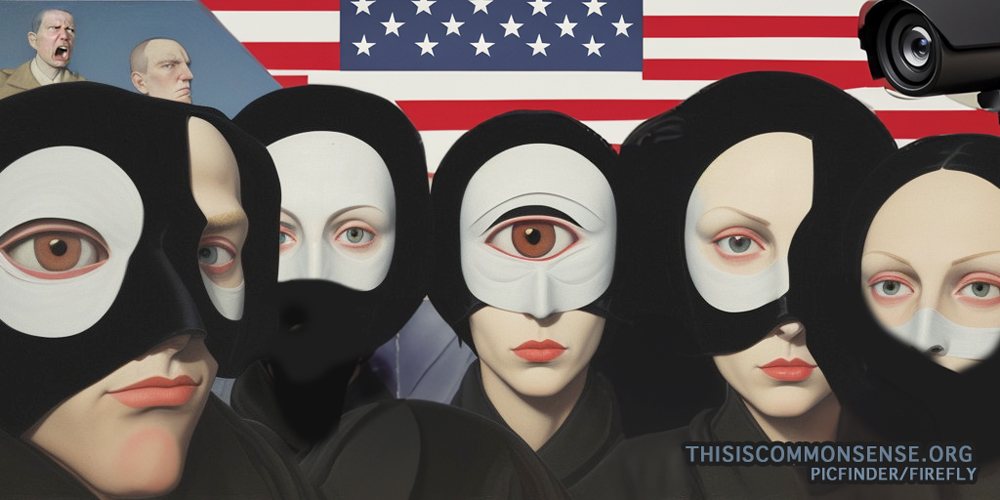
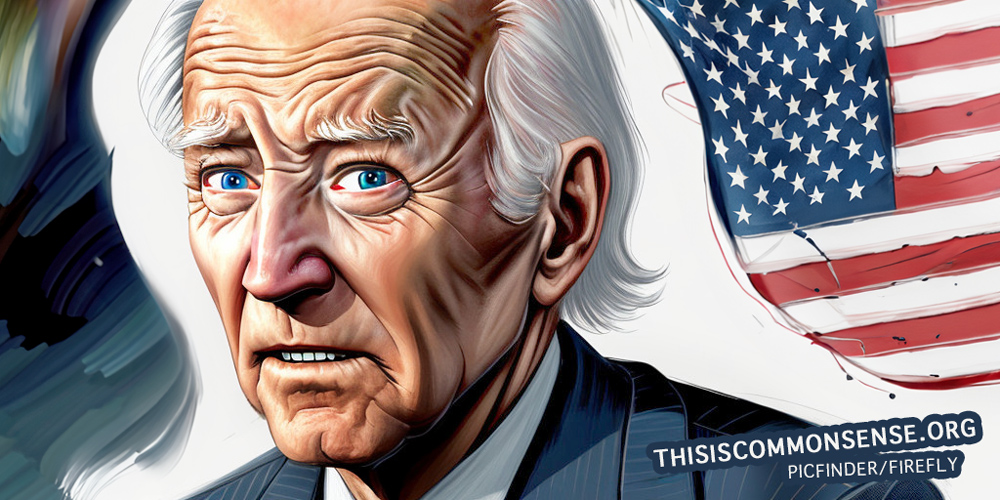
Illustration created with PicFinder.ai
See all recent commentary
(simplified and organized)
See recent popular posts
The philosophy of my heart is libertarian. I don’t like the idea of the exploitation of man by man. I believe that one day human civilization will overcome this somehow. But that is not to say that I favour the state as the owner of everything, no, no, no. I can’t conceive of that. I lean a lot towards self-management, with all of the risks it entails for any important institution.
José Mujica (Uruguay’s president, 2010–2015), from “A conversation with President José Mujica, M.R. and H.C. Montevideo,” The Economist (August 2014).
Odoacer, a German “barbarian,” ousted Romulus Augustus, the last emperor of the Western Roman Empire, thus ending that empire on September 4, 476 A.D.
Many common people did not notice a change.
Paul starts with Vivek, and moves beyond to the real snakes.
What does God want? Does God want goodness or the choice of goodness? Is a man who chooses the bad perhaps in some way better than a man who has the good imposed upon him?
The chaplain in Anthony Burgess’s A Clockwork Orange (1962), Part Two, Chapter 3.
On September 3, 1914, Dixy Lee Ray was born.
Her stint as governor of the State of Washington was a controversial one, as she economized in startling ways, and proved largely unsympathetic to environmentalist politics. Indeed, she later wrote Trashing the Planet, which took on trendy “solutions” to environmental problems, based in no small part on her own experience and perspective as a scientist. She was an early critic of the developing “global warming” pseudo-“consensus.”
O, the difference a bit of . . . money . . . honesty . . . clarity . . . makes!
Life is a tragedy for those who feel, and a comedy for those who think.
Jean de La Bruyère, as quoted in Selected Thoughts from the French: XV Century-XX Century, with English Translations (1913), pp. 132-133, by James Raymond Solly. Not sourced beyond that, however.