Categories
Thought

Warren G. Harding

Our most dangerous tendency is to expect too much of government, and at the same time do for it too little.

President Warren Gamaliel Harding, inaugural address (March 4, 1921).
Categories
Today

Eleven/Eleven/Eleven

On November 11, 1889, the State of Washington was admitted as the 42nd State of the United States.

In 1918, German officials signed an armistice agreement with the Allies in a railroad car in the forest of Compiègne, France. The fighting officially ended at 11:00 a.m. — the eleventh hour of the eleventh day of the eleventh month. The war officially ended with the signing of the Treaty of Versailles on June 28, 1919.

In 1921 on this date, U.S. President Warren G. Harding dedicated the Tomb of the Unknowns at Arlington National Cemetery.

Categories
First Amendment rights ideological culture Internet controversy social media

Domination by Pseudo-experts

It’s official.

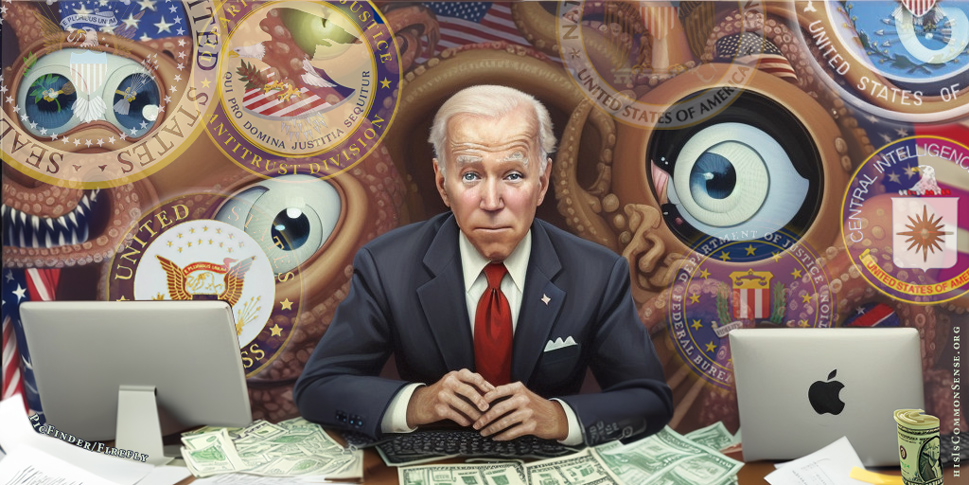
The overt and covert censorship of social-media posts over the last several years has been extensively documented in a new congressional report, “The Weaponization of ‘Disinformation’ Pseudo-experts and Bureaucrats: How the Federal Government Partnered With Universities to Censor Americans’ Political Speech.”

Anyone paying attention knew that this was happening. We knew that Google, Facebook, pre-Musk Twitter and others of the biggest social-media companies were systematically stopping account holders from uttering opinions that contradicted official government doctrines about COVID-19, elections, and other matters.

We also knew that government officials were publicly and vehemently “suggesting” that social media companies try harder to stomp speech that some government officials disagree with.

We didn’t know — until government emails and other documents came to light thanks to various lawsuits — how routinely, behind the scenes, many federal officials were directing the censorship of specific disapproved posts.

The report’s authors say that as the 2020 election approached and the pandemic raged, people sought to discuss “the merits of unprecedented, mid-election-cycle changes to election procedures” and other controversial matters. But “their constitutionally protected speech was intentionally suppressed as a consequence of the federal government’s direct coordination with third-party organizations, particularly universities and social media platforms.”

We have other sources of many of the facts here outlined. But the fact that the abuses are being formally acknowledged and detailed by the anti-censorship wing of the federal government — instead of being swept under the rug, as is traditional — may help prevent this form of election interference from happening again.

This is Common Sense. I’m Paul Jacob.


PDF for printing

Illustration created with PicFinder / Firefly / DALL-E2

See all recent commentary
(simplified and organized)
See recent popular posts

Categories
Thought

Ayn Rand

Without property rights, no other rights are possible.

Ayn Rand, The Virtue of Selfishness (1964).
Categories
Today

Cry of Independence

On November 10, 1821, the First Cry of Independence in the small, interior town of Villa de los Santos, occurred in Panama. The November 10 date has since become Panama’s “Cry of Independence Day” in the country.

Categories
national politics & policies political challengers

Twelve-Point Play

How popular is President Joe Biden? 

Better to ask how unpopular; a substitute Democrat to be named later is more popular. 

Twelve points more popular.

“An unnamed ‘Democratic candidate’ shifts the race by 12 points on the margins,” Aaron Blake reports in The Washington Post, “turning a four-point Democratic deficit against Trump into an eight-point lead, 48 percent to 40 percent.”

Democrats are mulling all this over because their unpopular president, according to a recent New York Times-Siena College poll, trails former President Donald Trump “in five of the six most competitive battleground states”: Arizona, Georgia, Michigan, Nevada, and Pennsylvania. 

“I am concerned,” offered U.S. Sen. Richard Blumenthal (D-Conn.), “by the inexplicable credibility that Donald Trump seems to have despite all of the indictments, the lies, the incredible wrongdoing.”

Or is it, instead, the lack of credibility enjoyed by establishment politicians and media?

“What many missed about the poll is that a generic Democrat isn’t the only one significantly overperforming the actual candidate likely to lead the ticket,” Blake further explains.

“The poll also tested a race without Trump,” discovering that the “GOP’s lead goes from an average of four points with Trump to an average of 16 points without him, 52–36.”

Former South Carolina Gov. Nikki Haley polls best against Biden. 

Democrats, however, lack an “available alternative.” Vice-President Kamala Harris polls only a single point better than Biden, which is damning news for Biden. Would another Californian, Gov. Gavin Newsom, fare better? 

Or is the only good Democrat a mythical Democrat?

This is Common Sense. I’m Paul Jacob.


PDF for printing

Illustration created with PicFinder and Firefly

See all recent commentary
(simplified and organized)
See recent popular posts
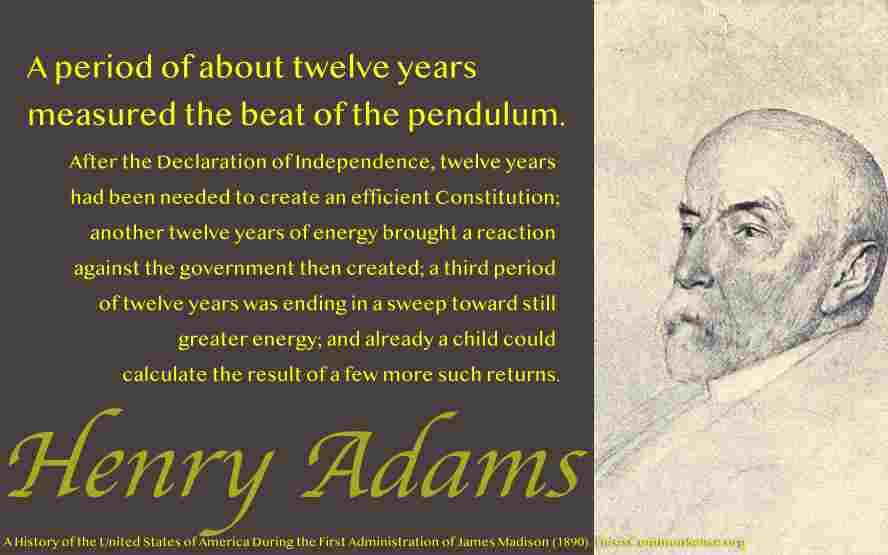
Categories
Thought

Thomas Jefferson

Man was created for social intercourse; but social intercourse cannot be maintained without a sense of justice; then man must have been created with a sense of justice.

Thomas Jefferson, letter to Francis W. Gilmer, June 7, 1816.
Categories
Today

Close Call

On November 9, 1979, NORAD computers and the Alternate National Military Command Center in Fort Ritchie, Maryland, detected an apparent massive Soviet nuclear strike. After reviewing the raw data from satellites and checking the early-warning radars, the alert was cancelled.


Image from the last few minutes of Stanley Kubrick’s dark comedy, Dr. Strangelove, or; How I Stopped Worrying and Learned to Love the Bomb, Slim Pickens in his most memorable onscreen moment.

Categories
free trade & free markets too much government

Why the Banks Are Failing Us

We depend on big businesses, especially upon banks. We pay for our food, clothing, medicines, and much else with little plastic cards from our banks. So when those cards stop working, all of a sudden — without warning — our hearts are going to do a bit more than beat just a little faster.

Why would there be big hiccups at all? 

As Brian Doherty remarks at Reason, it’s not just “frustrating when those businesses make seemingly arbitrary decisions that cripple your ability to function in a modern economy,” it’s hard to understand. After all, “the incentives of businesses are to, well, do business with customers.”

Why would banks, then, increasingly treat customers badly?

I’m not talking about the allegedly transient snag in the direct deposit system last week — apparently due to human error — but something more persistent, if scattershot.

Doherty found an answer in The New York Times, in an article “giving infuriating details of innocent Americans being cut off by their banks.” 

It should not shock the reader, Mr. Doherty explains, revealing: “the real cause of the banks’ seemingly arbitrary behavior is government rules designed to make sure it knows everything it can about citizens’ banking business, to discourage big cash transactions, and to ensure businesses the government disapproves of have as difficult a time as possible without being explicitly banned.”

Nearly ten years ago I wrote about it in a discussion of Operation Choke Point. Since then, in the words of the New York Times, “a vast security apparatus has kicked into gear, starting with regulators in Washington and trickling down to bank security managers and branch staff eyeballing customers.”

Who’ll be next?

This is Common Sense. I’m Paul Jacob.


PDF for printing

Illustration created with PicFinder and Firefly

See all recent commentary
(simplified and organized)
See recent popular posts

Categories
Thought

Thomas Jefferson

No man has a natural right to commit aggression on the equal rights of another; and this is all from which the laws ought to restrain him: every man is under the natural duty of contributing to the necessities of the society; and this is all the laws should enforce on him: and, no man having a natural right to be the judge between himself and another, it is his natural duty to submit to the umpirage of an impartial third. [W]hen the laws have declared and enforced all this, they have fulfilled their functions, and the idea is quite unfounded that on entering into society we give up any natural right.

Thomas Jefferson to Francis W. Gilmore, June 7, 1816.