Categories
Thought

Richard Hanania

I particularly reject what I call “ideaism,” which is the belief that you can explain the world by looking at what thinkers have said or ideological doctrine without knowing all that much about historical or policy specifics.

Richard Hanania, “Against Ideaism” [Hanania Newsletter, Substack], October 24, 2023.
Categories
Today

Martha and Rose

Martha Wayles Skelton Jefferson, Thomas Jefferson’s wife, was born on October 30, 1748.

On the same date two hundred twenty years later, American journalist, novelist and author Rose Wilder Lane died. Lane is perhaps best known, today, for her editorial work — some say “ghost writing” — of her mother’s Little House on the Prairie books for children. Her non-fiction The Discovery of Freedom was published in 1943, the same year as a similarly themed book, The God of the Machine, was published by her friend Isabel Paterson.

Categories
Thought

Curtis Yarvin

I have noticed that in the real world, the nominal “impact” of bending Paul Ryan’s ear, or whatever, which is the sad currency of the Respected Public Intellectual, is fool’s gold. Everyone takes it seriously and pretends it is real. Sometimes, rarely, it is slightly real. Generally everyone just pretends, and the pyrite vanishes in a bookseller’s season. Who reads the Respected Public Intellectuals of the ’70s, the ’80s, the ’90s?

Curtis Yarvin, the blogger previously known as “Mencius Moldbug,” in “Three Questions for Richard Hanania,” Gray Mirror [Substack].
Categories
Today

Cyrus

On October 29, 539 BC, Cyrus the Great entered the city of Babylon as conqueror. His general policy of religious toleration would be extended to the exiled Hebrews, who were, not long after, allowed to return to their homeland.

On the same date in 1923 AD, the Ottomon Empire’s dissolution marked the start of the Turkish Republic.

Categories
international affairs

Read/Watch: Taiwan History

On Wednesday, Paul Jacob introduced his new project, StopTheChinazis.org. Yesterday, Paul provided, on that site, a special feature, an extensive guide to Taiwanese history. Here is an outline of it:

“It might be time for the rest of us — like Nixon did in 1971 — to recognize reality: there is China and there is Taiwan.”

— William C. Fox, Exploring History


  1. Pre-history
  2. Japanese Colonial Period (1895-1945)
  3. World War II
  4. Post-War: 228 Incident, White Terror, Martial Law
  5. The Historical Divide between China & Taiwan
  6. Nixon Goes to China
  7. Taiwan Relations Act
  8. Democracy Arrives
  9. The Sunflower Movement
  10. China Threatens War
  11. Taiwan Means Business

“Our experience is one of resilience. It is an experience of upholding democratic and progressive values, the existence of which is being constantly challenged. The vibrant democracy Taiwan is today, bears testament to what a determined practitioner of democracy, characterized by good governance, can achieve.”

— Taiwanese President Tsai Ing-wen
Categories
Thought

Naomi Wolf

Freedom is not free, as many veterans have said. I never understood what that meant except superficially. But you don’t get freedom back so easily if you yourself committed massive crimes. Freedom is not free. You don’t get to take away the freedom of others and enjoy it, without penalty for yourselves. The people you harmed, the parents of the children you burned — they are coming. Not violently, not vengefully, but with the righteous sword of justice in hand. Don’t rest too easy, leaders who did wrong, in this bright American sunlight. You don’t get America back as if nothing had happened.

Naomi Rebekah Wolf, described by Wikipedia as “an American feminist author, journalist, and conspiracy theorist,” in Facing the Beast: Courage, Faith, and Resistance in a New Dark Age (2023).
Categories
Today

Statue of Liberty

On October 28, 1886, in New York Harbor, the Statue of Liberty was dedicated by President Grover Cleveland, despite the fact that the monument was not a federally funded project.

Categories
national politics & policies subsidy

Community Chest

When it’s time to go home, the circus manager has a trick up his sleeve, just to get people off the property: turn off the rides.

The U.S. is something of a circus today, so policymakers may want to take the cue.

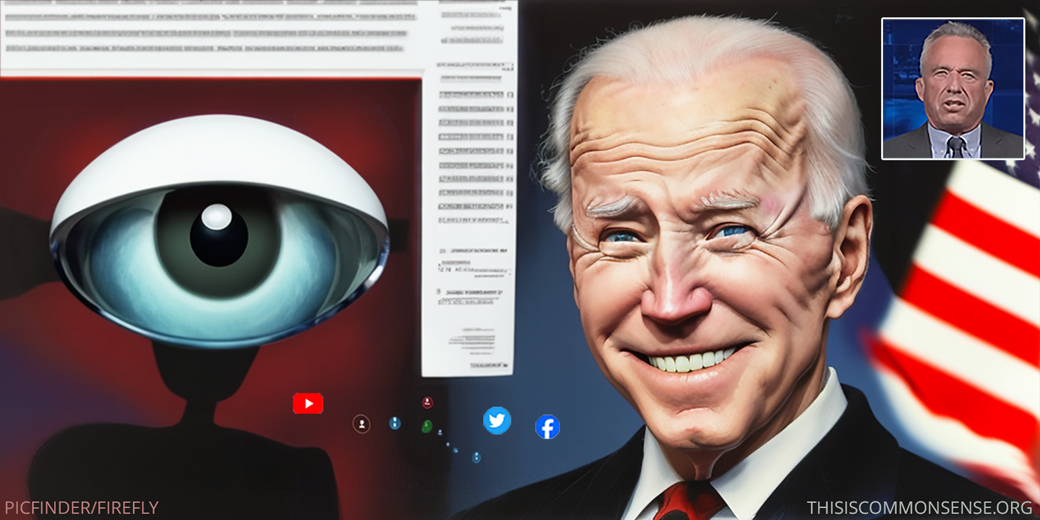
This applies especially to illegal immigration on the southern border, which is increasingly being acknowledged as a major problem. While it may be interesting to learn, say, that this past month more Venezuelans than Mexicans were nabbed coming north (and, presumably, more not caught), the big picture truth is that since taking office President Joe Biden has presided over a huge increase in the overall illegal flow of economic migrants.

Switch off the subsidies and surely the rate would go down.

But what are the subsidies? 

A recent article in The Epoch Times explains: “Identification cards for illegal immigrants are increasingly being issued by non-government organizations (NGOs) to help [border-crossers] establish a foothold in U.S. cities and access services they can’t get through federal programs.”

The programs are mainly in blue cities and states, and thrive under the imprimatur of DEI: diversity, equity and inclusion programs. Often called “community IDs,” these instruments seemingly out of Monopoly, the board game, “are accepted by police departments, school districts, and food programs” across the country. 

What’s worrisome is that “the federal government grants billions of taxpayer funds to NGOs that help illegal immigrants who cannot usually access federal programs such as the Supplemental Nutrition Assistance Program (SNAP) and Children’s Health Insurance Program (CHIP).”

This makes the problem not one of “free immigration” but of subsidized immigration.

And that can, at least theoretically, be much more easily slowed. Stop giving money to NGOs to support this traffic. Existing taxpayers deserve at least that.

This is Common Sense. I’m Paul Jacob.


PDF for printing

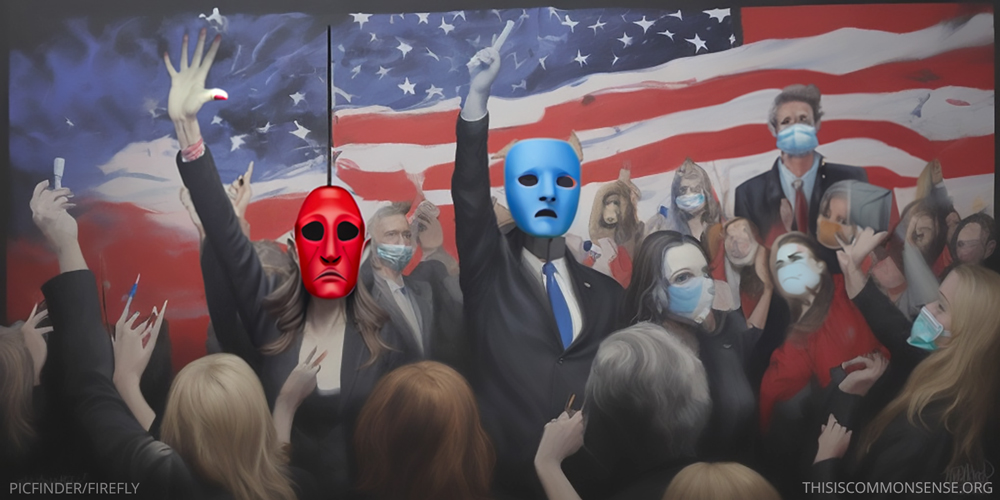
Illustration created with Midjourney and Firefly

See all recent commentary
(simplified and organized)
See recent popular posts

Categories
Thought

Lysander Spooner

Those who are capable of tyranny are capable of perjury to sustain it.

Lysander Spooner, An Essay on the Trial by Jury (1852), p. 14.

Categories
Today

Times for Choosing

On October 27, 1964, Ronald Reagan delivered a speech on behalf of Republican candidate for the United States Presidency, Barry Goldwater, thereby launching Reagan’s political career. The speech came to be known as “A Time for Choosing.”

Two years earlier, Vasili Arkhipov, a flotilla commander present on the Soviet Foxtrot-class submarine B-59 in the Caribbean sea, defied the order of the sub’s captain, Valentin Savitsky, to launch a nuclear device. The captain had concluded that war had started while the submarine had been submerged. He had inferred this from the depth charges that American ships had deployed in order to force the submarine to the surface during the Cuban Missile Crisis. Captain Savitsky, seeking the necessary approval of two others on board, ordered political officer Ivan Masslenikov and the flotilla commander Vasili Arkhipov to launch a nuclear torpedo.

Masslenikov agreed. Arkhipov refused.

The date was October 27, 1962, and World War III was prevented by this one man, Arkhipov, who held his ground while facing the increasing anger of the submarine commander, refusing to approve a nuclear torpedo launch that would most almost certainly have triggered a conflict that would have doomed civilization, perhaps most or all of humanity.

That, we can now agree, was a “time for choosing” — and the correct choice was made.