Categories
Thought

Ludwig von Mises

Socialism is not in the least what it pretends to be. It is not the pioneer of a better and finer world, but the spoiler of what thousands of years of civilization have created. It does not build; it destroys. For destruction is the essence of it. It produces nothing, it only consumes what the social order based on private ownership in the means of production has created.

Ludwig von Mises, Socialism: An Economic and Sociological Analysis (1922), Part V.
Categories
Today

Cinco de Mayo

In 1862, troops led by Ignacio Zaragoza stopped a French invasion in the Battle of Puebla in Mexico — an event leading to the popular “Cinco de Mayo” celebration.

No cause for celebration, however, is the anniversary of Karl Marx’s birth on May 5, 1818.

Categories
FYI

Something Fishy

“The Chinese government has repeatedly denied any mismanagement in response to the accusations of illegal and unregulated fishing,” explains an article on DW News. Indeed, a “2023 government white paper on the development of distant-water fisheries said China holds a ‘zero tolerance’ attitude towards illegal fishing. . . .”

But can we believe China? The China run by the Chinese Communist Party?

The article is titled “Chinese fishing fleets in Indian Ocean accused of abuses” and is written by Yuchen Li and Chia-Chun Yeh, both from Taipei. The accusations are familiar — and not just for readers of this website, or of StoptheChinazis.org. Accusations against Chinese poaching are decades old.

“As a leading fishing nation, China’s distant water fishing (DWF) industry is the world’s largest in both catch volume and fleet size. And according to the Illegal, Unreported and Unregulated (IUU) Fishing Index, China ranks as the worst offender among 152 countries worldwide,” explain Li and Yeh. They quote a senior researcher from the Environmental Justice Foundation (EJF), who says “This isn’t a handful of bad actors or captains. What we’re seeing is a fleet-wide issue on the Chinese distant-water fleet.”

One of the more gruesome practices is the harvesting of shark fins: the fins are cut off and the rest of the shark carcasses are disposed of immediately, back into the ocean. And this is not just the South China Sea or the Pacific Ocean. This includes the Indian Ocean, says a new report from the EJF.

The report charges that China’s poaching is “systematic.”


Categories
Thought

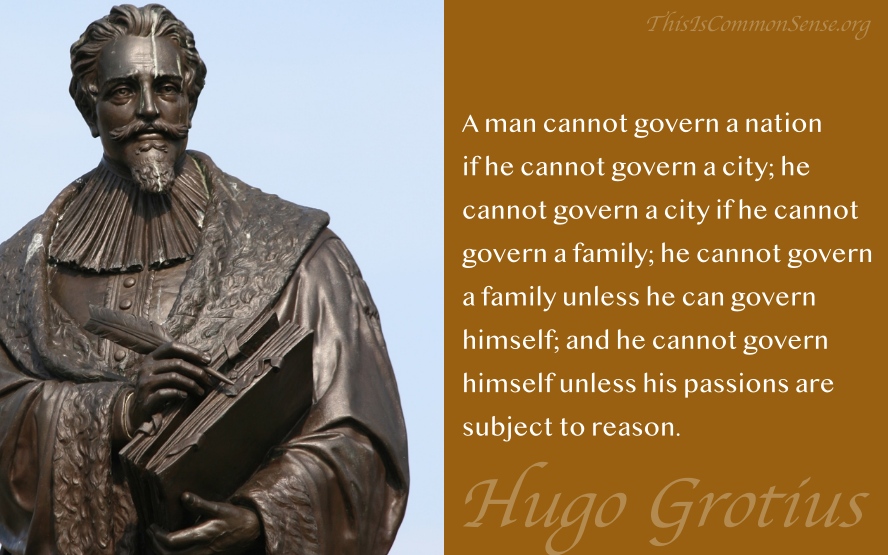
Hugo Grotius

A man cannot govern a nation if he cannot govern a city; he cannot govern a city if he cannot govern a family; he cannot govern a family unless he can govern himself; and he cannot govern himself unless his passions are subject to reason.

Categories
Today

Prescott, Tiananmen & the Freedom Riders

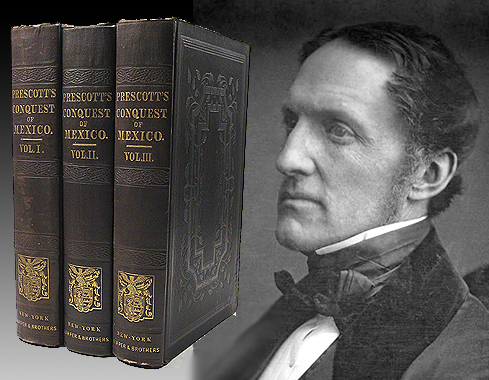
On May 4, 1796, American historian William H. Prescott was born. Prescott’s History of the Conquest of Mexico and his Conquest of Peru remain classic works of well-researched, “scientific history.” Prescott, Arizona, was named in his honor.

The May Fourth Movement began on May 4, in 1919: Student demonstrations took place in Tiananmen Square in Beijing, China, protesting the Treaty of Versailles, which transferred Chinese territory to Japan.

In 1961 on May 4, the “Freedom Riders” began a bus trip through the South.

Categories
ideological culture partisanship political challengers

Among the Ungovernable

What is the Libertarian Party up to in inviting former President Donald John Trump to address the party’s upcoming national convention?

The goal of this “third party” may be crystalline in its clarity — a free society as understood by Libertarians — but how this can be achieved by running candidates for office in Partisan Duopoly America is murky at best. The number of self-identified libertarians in the country is small, though polling in the 1990s suggested that about a quarter of the population is of a general libertarian mindset: minimal government; private property; personal freedom as the tolerant community’s ideal; individual responsibility as the chief form of social regulation.

The difference between a self-identified Libertarian and a libertarian-ish citizen at large can be huge, in some ways: no taxes versus lower taxes, for example. These positions play dramatically differently, of course, in elections where most voters are not libertarian at all.

The 2024 convention will be held May 23–26 in Washington, D.C. (of all places). And Donald Trump (of all people) has accepted the invitation to speak (offered to both he and President Biden). The party is shilling registrations for the event by telling prospects that only registered attendees will be able to cast their votes to establish “the topics President Trump will address during his time at the podium.”* 

As a newsworthy event, this is one of the party’s best stunts. The very idea of inviting the presumptive Republican nominee to speak is . . . weird. And, therefore, newsworthy. It might make for an apocalyptic event — encompassing every meaning of “apocalyptic.”

The convention itself is titled, in traditionally flagrant Libertarian fashion, “Become Ungovernable.” While Libertarians mean this slogan in a good (and peaceful) way, its ambiguity and alarming nature is one of many reasons Libertarians get low vote totals. 

Trump addressing Libertarians could suggest a more negative interpretation of “ungovernable.”

This is Common Sense. I’m Paul Jacob.


* Good luck with that.

PDF for printing

Illustration created with PicFinder and Firefly

See all recent commentary
(simplified and organized)
See recent popular posts

Categories
Thought

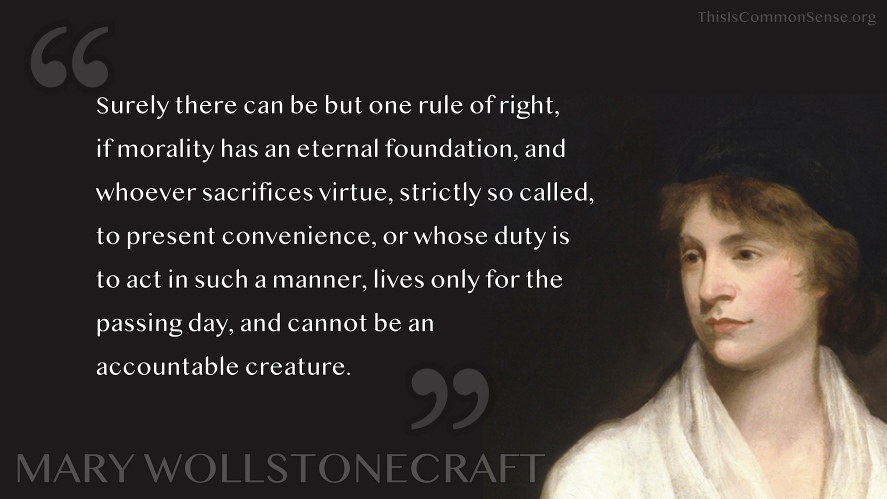
Mary Wollstonecraft

Surely there can be but one rule of right, if morality has an eternal foundation, and whoever sacrifices virtue, strictly so called, to present convenience, or whose duty is to act in such a manner, lives only for the passing day, and cannot be an accountable creature.

Mary Wollstonecraft, A Vindication of the Rights of Woman (1792).
Categories
Today

Between the crosses

In 1791, the Constitution of May 3, the first modern constitution in Europe, was proclaimed by the Sejm of the Polish–Lithuanian Commonwealth.

On May 3 in 1915, Lieutenant Colonel John McCrae composed the poem “In Flanders Fields,” the most famous poem of World War I. The Canadian physician wrote it after presiding over the funeral of friend and fellow soldier Lieutenant Alexis Helmer, who died in the Second Battle of Ypres. It is in the form of a rondeau.

Categories
general freedom privacy Second Amendment rights

Second Amendment Privacy Act

If you live in Georgia and have recently bought a gun or are about to, good news!

Governor Kemp has signed the Second Amendment Privacy Act to protect the financial privacy of persons buying guns and ammo. Georgia is the fourteenth state to enact such legislation.

According to Lawrence Keane, a lawyer with the National Shooting Sports Foundation, this means no more collusion between financial companies and the government to spy on the private finances of gun owners.

At least not in Georgia.

States must institute these protections because enemies of our right to bear arms have started using financial transactions as way to penalize gun owners. It would be nice if the federal government enacted equivalent protection. But given our present federal regime, the chances of that happening anytime soon are slim.

The main thing the Act does is prohibit financial institutions from requiring that a firearm code be associated with purchases of guns and ammo that you make using a credit card. When banks flag your purchase in this way, it’s easy to target you for sanctions like cancelling your account or maybe adding you, without any good reason, to a government watch list.

The Second Amendment Privacy Act also prohibits using existing firearms codes to discriminate against gun owners. So it protects people whose purchases have already been code-flagged, not just people who buy a gun now.

It’s progress. Thirty-six states to go.

This is Common Sense. I’m Paul Jacob.


PDF for printing

Illustration created with Midjourney and Firefly

See all recent commentary
(simplified and organized)
See recent popular posts

Categories
Thought

Herbert Spencer

Sympathy which, a generation ago, was taking the shape of justice, is relapsing into the shape of generosity; and the generosity is exercised by inflicting injustice. Daily legislation betrays little anxiety that each shall have that which belongs to him, but great anxiety that he shall have that which belongs to somebody else. For while no energy is expended in so reforming our judicial administration that everyone may obtain and enjoy all he has earned, great energy is shown in providing for him and others benefits which they have not earned. Along with that miserable laissez-faire which calmly looks on while men ruin themselves in trying to enforce by law their equitable claims, there goes activity in supplying them, at other men’s cost, with gratis novel-reading!

Herbert Spencer, Principles of Ethics, Vol. 2, Part IV: “Justice” (1891), Chapter 5, “The Idea of Justice.”