Walmart is still taking kicks, especially in New York City. But as local politicians, union activists, and business bigots (people who develop hatreds for other people’s wage and consumer choices) continue to harass the company, it’s worth taking a step back and appreciating what it does right.
Indeed, it is so successful that it’s worth exporting. Or so suggests economist Tyler Cowen in an interesting interview on the Arabic Knowledge@Wharton website, where he says that companies like Walmart are exactly what the “poor people of Africa” need. Why? These big corporations make food
more accessible and more reliable. It’s not just the pricing at any one point and time. It’s what happens in the very worst periods. Companies like Walmart are very, very good at keeping up supply and being regular.

Anti-Walmarters in first-world countries tend to forget how bad everyday life is in poor countries, except when they are trying to find ways to increase foreign aid or pitch a Live Aid concert. They take for granted not only our vast markets, but the Industrial Revolution and our several agricultural revolutions.
And there’s the rub, for the Third World. The “Green Revolution” that staved off mass starvation in the 1970s, ’80s, and ’90s, has “somewhat slowed down,” says Cowen.
This is an unreported story. Crop yields are stagnant. It isn’t a problem we can solve overnight but it’s really one of the biggest problems in the world. It hardly gets any publicity. But for poor people in India, the Middle East and parts of Africa, it really matters.
So Walmart could really help.
But then, so would an end to Third World kleptocracy and its replacement by a rule of law.
This is Common Sense. I’m Paul Jacob.
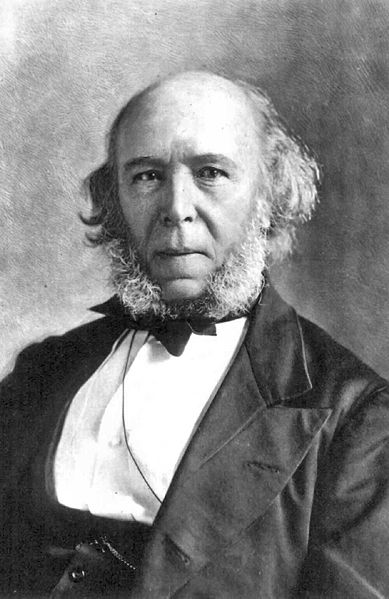 The fact disclosed by a survey of the past that majorities have usually been wrong, must not blind us to the complementary fact that majorities have usually not been entirely wrong.
 We must say openly that the present economic system of the EU is a system of a suppressed market, a system of a permanently strengthening centrally controlled economy. Although history has more than clearly proven that this is a dead end, we find ourselves walking the same path once again. This results in a constant rise in both the extent of government masterminding and constraining of spontaneity of the market processes. In recent months, this trend has been further reinforced by incorrect interpretation of the causes of the present economic and financial crisis, as if it was caused by free market, while in reality it is just the contrary – caused by political manipulation of the market. It is again necessary to point out to the historical experience of our part of Europe and to the lessons we learned from it.
 A little knowledge is a dangerous thing, but a little want of knowledge is also a dangerous thing.
 It is simplicity that makes the uneducated more effective than the educated when addressing popular audiences.