In 2012, President Obama caused an uproar among those of us who praise individuals for their individual achievements. Sneering at persons proud of their success, Obama stressed the truism that in a society, achievers get help from other people. On his short list of invaluable assistance: government’s helpful building of roads and other infrastructure.
Like many of us, Donald Boudreaux criticizes the president’s philosophical assumptions. But he adds that Obama is also wrong to imply that it’s government which makes most or all of the infrastructure on which we rely.
“[A] great deal of infrastructure is built privately. FedEx, for example, is infrastructure: It’s a combination of vehicles, warehouses, organizational knowledge and other specific capital that businesses and households rely upon to transport freight and packages. . . .
“Of course, FedEx isn’t a road or a bridge. But so what? FedEx, no less than a road or bridge, enhances our abilities to pursue our private goals. [I]nfrastructure isn’t only those things supplied by government.”
Moreover, we don’t benefit from government’s monopolization of the segments of infrastructure provision that governments do monopolize. If government hadn’t permitted competition in packages from UPS, Fed-Ex and others, Obama could have added “you didn’t ship that package” to “you didn’t build that road.” But how could this justify disparaging individual achievement, or be anything to boast about? Government’s commandeering of enterprises reduces quality and alternatives.
The answer to “You didn’t build that,” if and when it’s true, is: “Well, let us.”
This is Common Sense. I’m Paul Jacob.
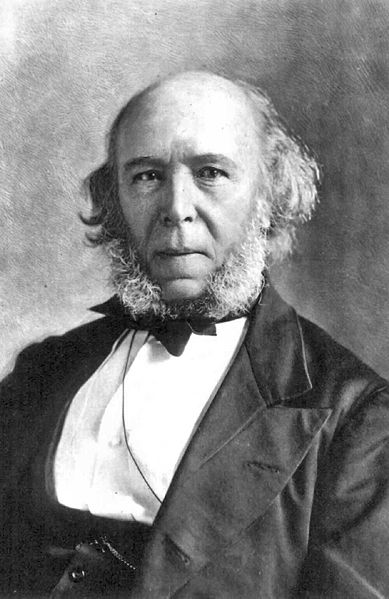 The present social state is transitional, as past social states have been transitional. There will, I hope and believe, come a future social state differing as much from the present as the present differs from the past with its mailed barons and defenceless serfs.
 Every man feels that perception gives him an invincible belief of the existence of that which he perceives; and that this belief i s not the effect of reasoning, but the immediate consequence of perception. When philosophers have wearied themselves and their readers with their speculations upon this subject, they can neither strengthen this belief, nor weaken it; nor can they shew how it is produced. It puts the philosopher and the peasant upon a level; and neither of them can give any other reason for believing his senses, than that he finds it impossible for him to do otherwise.