If evil people hate you, well, you might be doing something right.
Elon Musk, in conversation with Dr. Jordan Peterson, as shared on X.
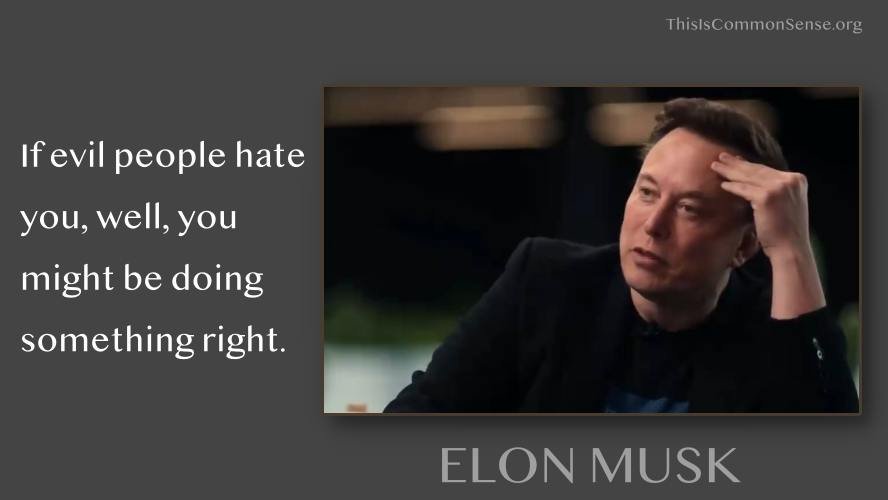
If evil people hate you, well, you might be doing something right.
Elon Musk, in conversation with Dr. Jordan Peterson, as shared on X.

On July 14, 1789, Paris citizens stormed the Bastille.
The word “storm” in its various forms is almost invariably paired with “Bastille” in discussions of the event. It is one of the great clichés of historical chitchat.
On the same date nine years later, in America, the Sedition Act was signed into law, prohibiting the writing, publishing, or speaking false or malicious statements about the United States government.
The passage of this repressive law spurred the formation of the first opposition party in the United States, with Thomas Jefferson as its leader and figurehead.

On July 11, 2025, Paul Jacob covered the suspensions of key Secret Service personnel in “Secret Stupidity?”
The next day, the General Accounting Office (GAO) came out with a new report, revealing “that the Secret Service received classified intelligence regarding a threat to Trump’s life ten days before the rally, but failed to share the information with other key agencies,” explains a FoxNews story.
“It also identified a series of procedural and planning mistakes, including ‘misallocation of resources, lack of training and pervasive communication failures’ that led to the near assassination,” the FoxNews coverage declares.
Senator Chuck Grassley (R-Iowa), who ordered the report, blames the failures on “years of mismanagement.” But what else could he say?
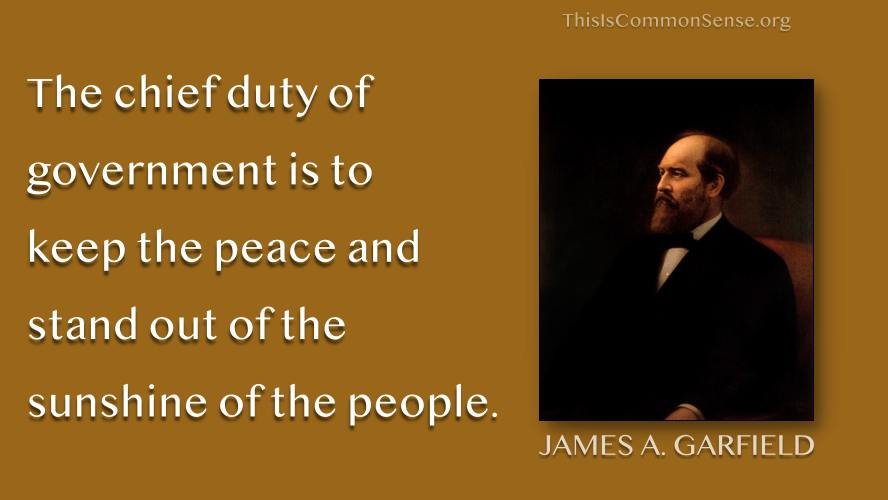
The chief duty of government is to keep the peace and stand out of the sunshine of the people.
James A. Garfield, in a letter to H. N. Eldridge (December 12, 1869) as quoted in Garfield (1978) by Allen Peskin, Ch. 13.
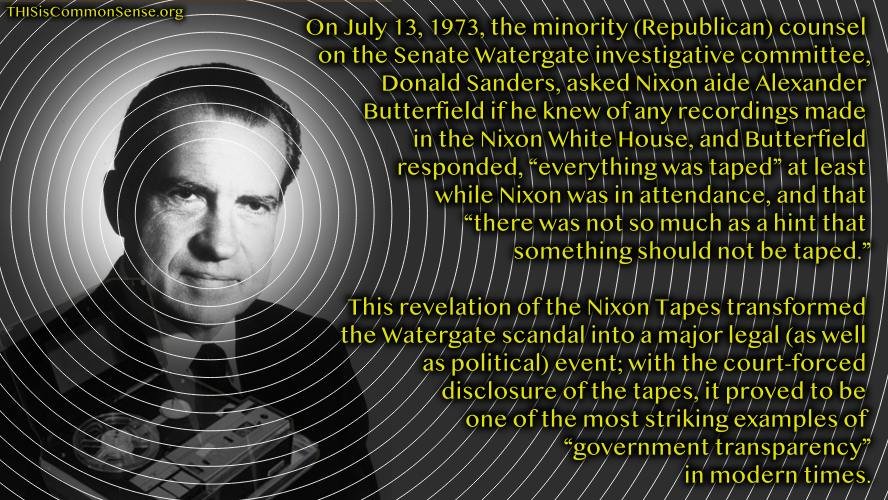
On July 13, 1973, the minority (Republican) counsel on the Senate Watergate investigative committee, Donald Sanders, asked Nixon aide Alexander Butterfield if he knew of any recordings made in the Nixon White House, and Butterfield responded, “everything was taped” at least while Nixon was in attendance, and that “there was not so much as a hint that something should not be taped.”
This revelation of the Nixon Tapes transformed the Watergate scandal into a major legal (as well as political) event; with the court-forced disclosure of the tapes, it proved to be one of the most striking examples of “government transparency” in modern times.
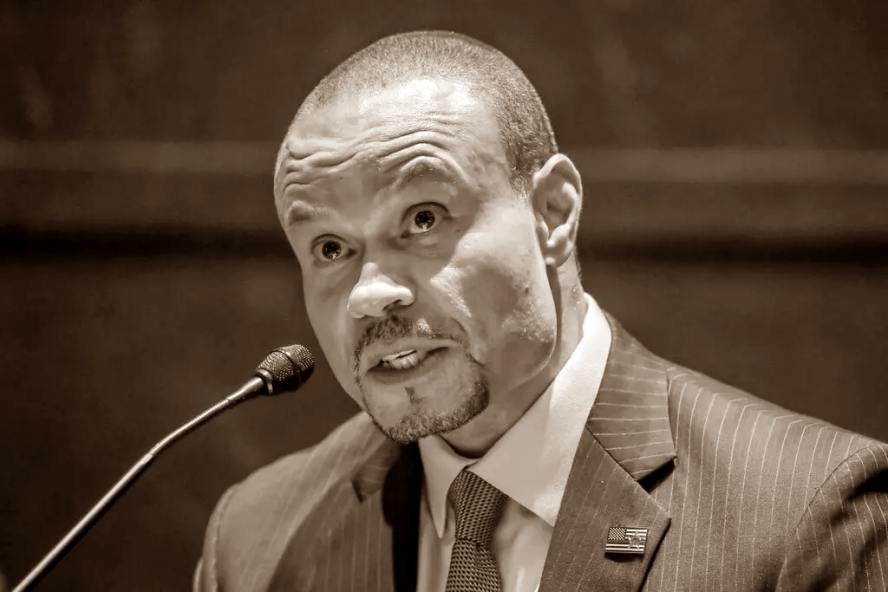
On Wednesday, in “The Devil and the Deep Blue Dress,” Paul Jacob dealt with the closing of the Jeffrey Epstein case. Since then, reactions have run the gamut, but there is a persistent theme: disbelief. What President Trump and his Attorney General, Pam Bondi, have told us about Epstein is not widely believed. But what does this mean for those most closely associated with reforming the FBI, Dan Bongino and his boss, Kash Patel?
Well, Laura Loomer made waves on X:

The New Republic tries to place this tweet in context: “It’s important to keep in mind that Loomer has her own agenda when she ‘reports’ on the Trump administration, and is desperate for any job that will keep her in close to the Oval Office.” But the progressive magazine goes on to say that Loomer has exerted no small amount of influence on the Trump Administration in the past.
“Conservatives have taken to social media to back FBI Deputy Director Dan Bongino in an apparent falling out between the FBI and Department of Justice (DOJ) following Attorney General Pam Bondi’s defense of a memo regarding the Epstein files,” explains Newsweek.
“According to a far-left Axios scoop,” the Independent Sentinel tells us, “Dan Bongino took the day off today after a clash with Pam Blondi [sic] over the handling of the Epstein tapes. The dispute erupted Wednesday amid the fallout on the administration walking back its claims about Epstein. They said there was no client list and he committed suicide.”
Kash Patel, Director of the FBI, is also rumored to be thinking of throwing in the towel — but also seeks to put the AG to the curb.
What does this all mean? “Could you imagine you’re Dan Bongino?” asks the host of The Quartering podcast. “And you’re worth like . . . 200 million dollars. You know. F**k it. Just quit…. All he has to do is quit and say ‘I did the best I could; the Deep State is still real.’ You know. That kind of stuff. And then . . . 99% of people will forgive him. I guarantee you that fact.” The podcaster’s belief? The one that quits first will have the least mess on them.
Seems about right.
But nothing has happened yet, and Trump Again/Off-Again Bill Mitchell thinks a whole lot of folks are speculating, not reporting:

Uh, we know who.
Oh, wasn’t it odd to see Ms. Loomer’s put-down of AG Bondi as “Blondi” carry over into the news reports without correction?
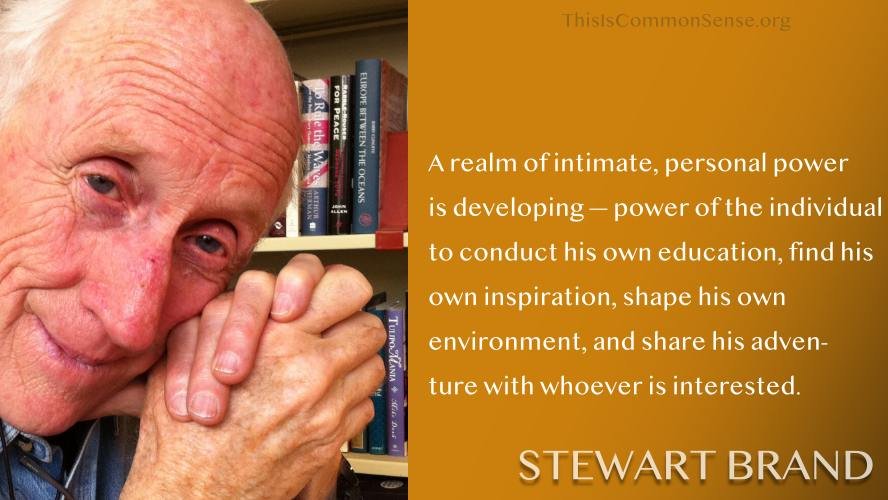
A realm of intimate, personal power is developing — power of the individual to conduct his own education, find his own inspiration, shape his own environment, and share his adventure with whoever is interested.
Stewart Brand, Whole Earth Catalog (1968).
On July 12, 1917, vigilantes kidnapped and deported nearly 1,300 striking miners and others from Bisbee, Arizona. This came to be known as the Bisbee Deportation.
On the same day in 1948, Israeli Prime Minister David Ben-Gurion ordered the expulsion of Palestinians from the towns of Lod and Ramla.

“It was the first assassination attempt since 1981 to wound a current or former president — a bullet grazed Mr. Trump’s ear.” Such a close miss! No wonder Trump now suggests he’s on a mission from God.
The Times’s Washington reporter says the agency has, since the shooting, endured “intense” scrutiny, but that’s not what it looks like from here in the bleachers. The Butler, Pennsylvania, assassination attempt was dropped by the media like a hot rock, after the first week or so, receiving very little public scrutiny . . . considering its grave implications. (Pun intended.)
“Multiple inquiries, including from Congress,” the Times goes on, “into the security lapses at Butler had some overlapping conclusions, in particular that there was a significant breakdown in communications between agents themselves, and between Secret Service agents and the local law enforcement helping to secure the rally site.”
By Hanlon’s razor, we are supposed to avoid using malice and conspiracy as explanations for when things go wrong . . . if at all possible. And incompetence — if not exactly Hanlon’s chosen word, stupidity — is indeed the official determination.
And now it has been dealt with. Officially. A few agents were suspended without pay from ten to 42 days.
Is that enough?
Such gross incompetence deserves an outright termination of employment. Everybody knows this.
Is it really that impossible to fire a government employee?
Some will speculate that they were treated lightly to keep their mouths shut.
You know, about a conspiracy.
But the undoubted proliferation of stupidity in government always makes Hanlon’s razor easy to apply.
This is Common Sense. I’m Paul Jacob.
Illustration created with Krea and Firefly
See all recent commentary
(simplified and organized)
See recent popular posts
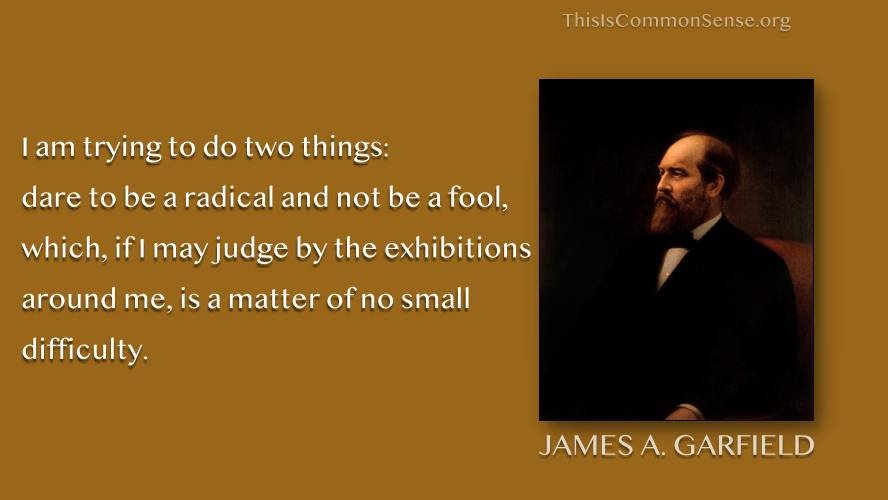
I am trying to do two things: dare to be a radical and not be a fool, which, if I may judge by the exhibitions around me, is a matter of no small difficulty.
James A. Garfield, in a letter to Burke Aaron Hinsdale (January 1, 1867); quoted in The Life of Gen. James A. Garfield (1880) by Jonas Mills Bundy, p. 77.