Can one “rise above principle”?
Aren’t most (all?) who think they “rise above principle” actually sinking below it?
Economist David Henderson called our attention to this notion in reference to legal theorist Richard Epstein’s call for a war against ISIS. On AntiWar.com, he challenged Epstein’s support for the president’s war on ISIS on constitutional grounds, and wondered why constitutional scholar Epstein hadn’t addressed this concern.
Then Epstein addressed it — using that curious phrase “rise above principle.”
Henderson’s response? Characteristically astute:
In which times of crisis do you need to “rise above principle?” What are the criteria for doing so? If you don’t specify criteria, then I think you’re saying that anything goes. If you do specify criteria, don’t those criteria amount to a principle? In that latter case, are you really rising above principle?
It’s not just a matter of constitutionality, though. Just war requires coherent goals. And a debate and vote in Congress over going to war against ISIS could help establish those goals.
Clearly, the continuing interventions in the Islamic East have suffered from massive confusion. A year ago, President Obama called for regime change in Syria and wanted to bomb government forces; today, we are bombing ISIS, the main opposition to that same government.
Sinking below principle on matters of warfare is the least excusable abandonment of law. It’s the suppression of hasty warfare — individual, group, or national — upon which the rule of law rests. Upon which civilization rests.
There’s no “rising above.” There’s no acceptable abandonment. There is only sticking to principle upon the issues that matter most.
This is Common Sense. I’m Paul Jacob.
 In the very heat of war the greatest security and expectation of divine support must be in the unabated desire, and invariable prospect of peace, as the only end for which hostilities can be lawfully begun. So that in the prosecution of war we must never carry the rage of it so far as to unlearn the nature and dispositions of men.
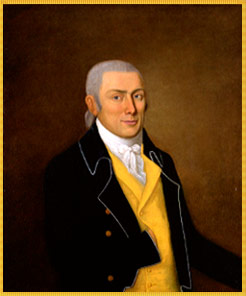 On October 7, 1792, George Mason — “The Father of the Bill of Rights” — died. He had drafted the Virginia Declaration of Rights in 1776, and, at the time of the drafting and ratification of the Constitution, had insisted on the addition of articles to solidify state’s and individual rights within the new order.
 Freedom is to be found only in the sphere in which government does not interfere. Liberty is always freedom from the government.
 October 6 is the traditional date commemorating the martyrdom of William Tyndale, in 1536. Tyndale translated the New Testament and much of the Old into the English of his day, and in the process added more new words into the English language than any other single writer, with the possible exception of Shakespeare. He also laid the ground for the later, and more famous, King James Edition of the Bible.