A video about three legislature-referred ballot measures in Arkansas, one of which, Issue 3, is NOT like the others. Video courtesy of Paul Jacob.
Categories
A video about three legislature-referred ballot measures in Arkansas, one of which, Issue 3, is NOT like the others. Video courtesy of Paul Jacob.
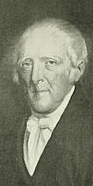 On October 11, 1811, the Juliana began its maiden voyage on its regular route, between New York City, New York, and Hoboken, New Jersey. It was the world’s first steam-powered ferry, invented by John Stevens (pictured). His earlier steam-powered boat, the Phoenix, marked the pages of history as the first steam-powered boat to navigate the open ocean, two years earlier.
October 11, 1890 marks the founding of the Daughters of the American Revolution.
On the same date in 1976, President Gerald R. Ford approved a congressional joint resolution Public Law 94-479 to appoint, posthumously, George Washington to the grade of General of the Armies of the United States, as part of the bicentennial celebrations. John J. Pershing is the only other American to attain this high title, and the only one to achieve it while alive.
 On October 10, 1714, the French economist Pierre le Pesant, sieur de Boisguilbert or Boisguillebert (pictured) died. On the same date in 1973, Austrian-born American economist, Ludwig von Mises died. Both economists were known for their defenses of freer markets: le Pesant for pioneering the critique of mercantilism; Mises for systematizing economic theory and advancing the critique of both socialism and latter-day mercantalism (what he called “interventionism”).
Two incredible activists in Grand Rapids, Michigan, have achieved the impossible. Through their hard work in gathering over 10,000 voter signatures on a petition, Rina Baker and Bonnie Burke have united big business and big labor in perfect harmony.
Union bosses and the bigs of biz are now funding a united campaign.
Their ubiquitous mailers speak against the “hijacking of our local democratic process” and sinister forces trying to “change our city charter, erode local control and silence your voice,” warning Grand Rapids residents: “Don’t let your vote be shredded.”
Shredded votes? What specific issue are they talking about?
Well, this well-funded business/labor campaign has purposely left out two words that, if uttered, would obliterate their entire effort.
Those two little words? Term limits.
The law that Rina Baker and Bonnie Burke have petitioned onto the ballot, for a public vote? An eight-year limit for mayor and council members.
Nothing brings powerful special interests together like fear of term limits.
The president of the United States is limited to eight years, but Andy Johnston, the Chamber of Commerce’s vice president of government affairs, argues that, “Particularly at the local level, it takes time to learn the ins and outs of city government.”
“In politics you develop relationships with different people,” explains Kent-Ionia Labor Council President Sean Egan. “When you continually replace good politicians for the sake of having new people, you lose the wisdom and experience and you end up with policy created by other groups.”
You mean policy supported by folks “other” than big business and big labor?
Oh, my!
This is Common Sense. I’m Paul Jacob.
 Men’s consciences ought in no sort to be violated, urged, or constrained. And whenever men have attempted any thing by this violent course, whether openly or by secret means, the issue has been pernicious, and the cause of great and wonderful innovations in the principallest and mightiest kingdoms and countries…
Did Viking raiders hire attorneys to stipulate, before each raid, that plundering English monasteries and churches would be hunky-dory?
No. The Vikings just raided and looted. They didn’t also assure their victims, “Hey, we talked to the lawyer and he said it was fine.”
Thanks at least for that, Scandinavian marauders. Because why add insult to injury?
Yet U.S. Senator Kay Hagan hired some high-priced barrister to bleat that looking the other way while her husband scooped up hundreds of thousands of our tax dollars is “appropriate.” Yep. According to senatorial spokesman Sadie Weiner: “Kay . . . had no part in helping [her husband’s company JDC] receive these grants. Her only involvement was when she made sure that a respected ethics attorney was consulted to ensure that it was appropriate. . . .”
No part! Nobody involved in distributing the boodle knew he was married to a U.S. Senator! Had no way to know!
Ugh.
Per investigative work done by Politico and others:
In August 2010, Senator Kay Hagan’s husband Chip and their son founded a solar energy company, Solardyne.
Weeks later, in September, JDC Manufacturing — a company part-owned by Chip Hagan, the senator’s husband — paid $250,000 in federal “stimulus” dollars to Solardyne to install solar panels at a JDC building. Short version of preceding sentence: Mr. Hagan paid himself $250,000 with money taken from us (you, me, your neighbor, my neighbor).
Did I say “ugh”?
Two suggestions:
This is Common Sense. I’m Paul Jacob.
On October 9, 1635, Protestant theologian Roger Williams was banished from the Massachusetts Bay Colony as a religious dissident after he spoke out against punishments for religious offenses and giving away Native American land. He moved south, founding Providence Plantations, where he fought for separation of church and state, the rights of aboriginal Americans, and against slavery.
Enforced uniformity confounds civil and religious liberty and denies the principles of Christianity and civility. No man shall be required to worship or maintain a worship against his will.
Sen. Mark Pryor (D-Ark.) faces a tough re-election contest. Following his campaign, MSNBC’s Kasie Hunt inquired: “Do you think the Obama Administration has done an appropriate job handling the Ebola crisis?”
The senator responded with the universal politician distress call: “Uuuhhhhmmmmmm.”

Then Pryor stumbled ahead: “I would say that . . . it’s hard to know, ah, because, um . . . I haven’t heard the latest briefing on that to know all . . . [inaudible] can somehow read the paper and all. My impression is that we have people over there both from CDC and other medical-type people and even some engineers to try to build . . . um, you know, medical facilities. That’s what they need over there; they need the medical infrastructure.”
When Hunt asked whether the Administration had been “aggressive enough,” the senator returned to: “Uuhhhmmmmm. Again, I’d have to see the latest numbers.”
“Oh my god,” uber-liberal host Mika Brzezinski reacted to Pryor’s stumbling. “She asked a gentle question . . . and the guy just collapsed.”
“What was that, Kasie?” laughed Joe Scarborough. “Why were those questions so hard for the senator to answer?”
“I was a little surprised . . .” Kasie chuckled, noting that Sen. Pryor had earlier run a ludicrous TV spot accusing his Republican opponent, U.S. Rep. Tom Cotton, of voting “against preparing America for pandemics like Ebola.”
One might think the incumbent senator actually followed and cared about the effort to combat a horrible disease that could kill untold people. Instead, it appears he knows Ebola only as a brickbat with which to slug a political opponent in hopes of staying in power.
This is Common Sense. I’m Paul Jacob.
The date October 8, 1582, does not exist in the records of Italy, Poland, Portugal and Spain, the result of that year’s implementation of the Gregorian calendar.
Fearing a Catholic plot, Protestant countries adopted the calendar much later. By the time Britain and its colonies got on board in 1752, eleven days had to be “disappeared.” This caused riots in some places, as people suspected some horrible chicanery — and in actual fact the inspiration for the “Give us our eleven days” protest had something to do with taxes, so it might not have been as idiotic as it now seems.