Categories
tax policy too much government

Value the Vote

What happens when politicians create a special new election date in order to place a tax increase before voters . . . when least expected?

Did I mention that, as the Seattle Times reported, Proposition 1 “enjoyed massive support among politicians, labor unions, environmentalists, social-equity groups and business coalitions”?

Or that the YES campaign outspent the NO side by $654,922 to a mere $7,700, a nearly 100 to 1 margin?

The answer: On Tuesday, voters in one of the most liberal counties in America said NO. A solid 55 percent rejected the ballot measure.

Proposition 1 would have hiked King County’s 9.5-cent sales tax by 0.1 percent and imposed a $60 annual car-tab fee. The idea was to provide more funding for mass transit and local roads, with 60 percent of that revenue going toward the area’s mass transit system.

Transit officials argued that without the additional dough they’d have to make deep service cuts.

“The voters are not rejecting Metro; they are rejecting this particular means of funding Metro,” explained County Executive Dow Constantine. “We know the people of King County love and value their transit service.”

Love? Perhaps. Ridership is reportedly at a near-record high, about 400,000 a day.

Value? Not so much.

This very “progressive” electorate expressed, with utmost clarity, their unwillingness to pay higher taxes for transit. Further, there’s an unmistakable signal in the refusal of King County Metro officials to consider raising the price of their beloved service to become sustainable.

Isn’t it only fair to ask those riding the bus to pay the fare?

This is Common Sense. I’m Paul Jacob.

Categories
Today

Columbia U 1968 protests

On April 23, 1968, students at New York City’s Columbia University held a demonstration to protest military research and the condemnation of part of the neighboring Morningside Heights section of Harlem to make way for a new student gymnasium. The protest escalated into a week-long occupation of five campus buildings before police moved in. Some 712 students were arrested, and over 100 injured during the forcible eviction. After the university-ordered police response, a student strike shut down the campus for the rest of the semester.

Categories
initiative, referendum, and recall judiciary U.S. Constitution

Spring’s Decisions

Spring is in the air, and old men’s hearts turn to thoughts of . . . law.

Yes, Supreme Court Decision Season has begun. Yesterday, two decisions were handed down.

In Schuette v. BAMN, Justice Kennedy “announced” the decision to reverse a previous court’s determination overruling a citizen-initiated constitutional amendment in Michigan. Kennedy (joined by Alito and Chief Justice Roberts) found that the people could prohibit race-based affirmative action policies in their state. After all, the Supreme Court had merely allowed such practices in previous cases. It did not require them.

This shouldn’t be controversial — indeed, it was decided 6-2 with liberal Justice Stephen Breyer joining conservatives. Still, Justice Sotomayor read her dissent from the bench, saying “without checks, democratically approved legislation can oppress minority groups.”

The democratically approved legislation in this case prohibited discrimination on the grounds of race — hardly a source of oppression for anyone. Ilya Somin’s prediction of this decision last October is worth contrasting to Sotomayor’s worry: “In no conceivable world can the Equal Protection Clause — the constitutional provision that bans racial discrimination — prohibit a state law that bans racial discrimination.”

Justice Scalia (joined by Clarence Thomas) used his concurring opinion to make some sense of the constitutional status of race in American higher education with “It has come to this.” It’s quite a read.

But there was no joining of Thomas and Scalia in Navarette v. California. Thomas wrote the opinion, deciding that a traffic stop drug bust was okee-dokee, even if initiated by a 911 caller complaining of a truck-driver’s alleged bad driving. Scalia called the decision “a freedom-destroying cocktail.”

So much for the lock-step left-right divide on the High Court.

This is Common Sense. I’m Paul Jacob.
Categories
Thought

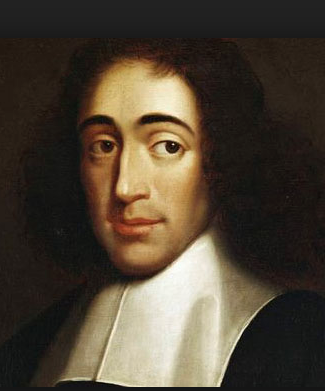
Immanuel Kant

Even philosophers will praise war as ennobling mankind, forgetting the Greek who said: War is bad in that it begets more evil than it kills.

Categories
First Amendment rights

Lawyered Up

“The first thing we do,” declaims Dick the butcher, “let’s kill all the lawyers.”

Last night, as I dined with attorneys David Langdon and Joshua Bolinger, in town representing the Susan B. Anthony List and the Coalition Opposed to Additional Spending and Taxes before the U.S. Supreme Court today, echoes of Henry VI could be heard amongst the clinking of glasses, the “dead lawyer” jokes, and other minor eruptions of mirth. Shoring up for the big case, you see.

Susan B. Anthony List v. Steven Driehaus involves an Ohio law designating it a crime to knowingly or recklessly make a false statement about a political candidate or ballot measure.

But who is to determine what is false or true in the heat of a campaign?

A government board? 

Well, yes. Funny you should ask.

Back in 2010, the Susan B. Anthony List began publicizing that various members of Congress, including Ohio Congressman Steve Driehaus, had voted for federal funding of abortion when they voted for Obamacare. The group planned billboards, to read: “Shame on Steve Driehaus! Driehaus voted FOR taxpayer-funded abortion.”

Driehaus quickly filed a complaint with the Ohio Elections Commission (OEC). While people of good will can honestly disagree as to the “truthiness” of the charge (as an amusing amicus brief filed by the Cato institute dubbed it), the OEC decided there was probable cause to prosecute the Susan B. Anthony List.

So the billboard company refused the group’s ads. The Coalition Opposed to Additional Spending and Taxes also dropped their plans to similarly publicize Driehaus’s record.

Ohio Attorney General Michael DeWine has admitted harboring “serious concerns” about the constitutionality of the Ohio law. However, today’s issue before the High Court isn’t the policing of campaign speech itself, but whether these groups have standing to challenge the law.

Both issues should be 9-0 decisions.

This is Common Sense. I’m Paul Jacob.

Categories
Today

Kant Birthday

On April 22, 1724, German philosopher Immanuel Kant was born.

Categories
Thought

Immanuel Kant

Freedom is the alone unoriginated birthright of man, and belongs to him by force of his humanity. . . .

Categories
Accountability crime and punishment insider corruption

The Colluders

Inadvertent? Un-partisan? No direction from above?

Such were many of the early claims in response to the scandal over IRS’s targeting of Tea Party and conservative groups applying for tax-exempt status.

The characterization was not vindicated when Lois Lerner — who ran the agency’s division dealing with exempt organizations until she resigned in semi-disgrace —a sserted her Fifth Amendment rights rather than tell us what she knows. Sundry revelations since the scandal broke have further exploded the claim that lowly functionaries acted independently of high officials.

Now Cleta Mitchell, a lawyer for True the Vote, which combats voter fraud, is being vindicated in charges of collusion between Lerner and congressional Democrats.From THE KELLY FILE

“[T]he only difference between what happened in Watergate when Richard Nixon asked the IRS to go after his political enemies was when Richard Nixon asked, they refused,” according to Mitchell. “When these Democratic politicians said, ‘Go do something about these conservative groups because they’re challenging us. . . .’ the IRS [did] their bidding to try and silence these groups.”

Mitchell appeared on The Kelly File to discuss recently released IRS email implying coordination between Democrat Elijah Cummings of the House Oversight Committee (of “nothing to see here” fame) and the IRS. After applying for tax-exempt status, True the Vote received sets of nearly identical questions — on widely separate occasions — from both the IRS and Cummings. That’s not only collusion, it’s guileful sharing of taxpayer information that is supposed to remain confidential.

Disturbing, but not surprising.

This is Common Sense. This is Paul Jacob.

Categories
Today

Fugio April 21

On April 21, 1787, the Continental Congress of the United States authorized a design for an official penny, later referred to as the Fugio cent because of its image of the sun shining down on a sundial with the caption, “Fugio” (Latin: I flee/fly). This coin was reportedly designed by Benjamin Franklin; as a reminder to its holders, he put at its bottom the message, “Mind Your Business.”

Categories
Thought

Benjamin Franklin

Remember that time is money.