“All the business of war, and indeed all the business of life, is to endeavour to find out what you don’t know by what you do; that’s what I called ‘guessing what was at the other side of the hill.’”
Arthur Wellesley, 1st Duke of Wellington
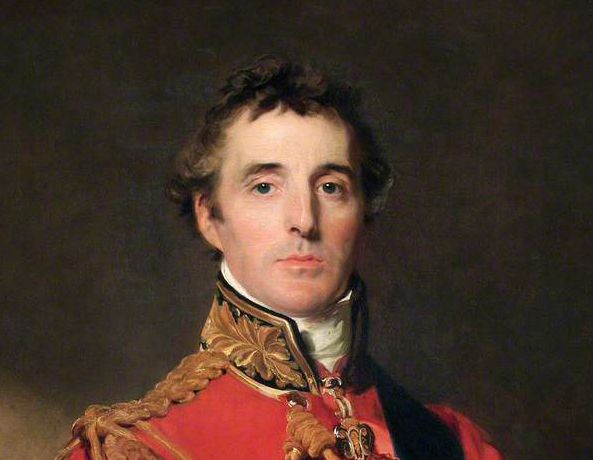
“All the business of war, and indeed all the business of life, is to endeavour to find out what you don’t know by what you do; that’s what I called ‘guessing what was at the other side of the hill.’”
Arthur Wellesley, 1st Duke of Wellington
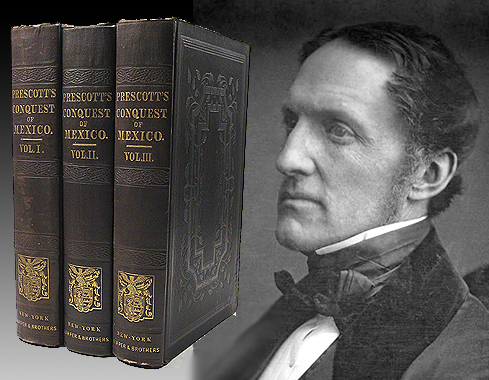
On May 4, 1796, American historian William H. Prescott was born. Prescott’s History of the Conquest of Mexico and his Conquest of Peru remain classic works of well-researched, “scientific history.” Prescott, Arizona, was named in his honor.
This ain’t about the new royal baby. It’s about America’s rather old baby, royal-in-quotes, alas. Click on over to Townhall, then back here for R and D if not R and R.
Bernie Sanders:
Hillary Clinton:
Wisconsin:
In 1791, the Constitution of May 3, the first modern constitution in Europe, was proclaimed by the Sejm of the Polish–Lithuanian Commonwealth.
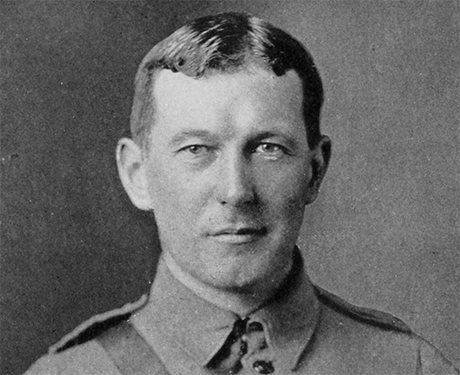
On May 3 in 1915, Lieutenant Colonel John McCrae composed the poem “In Flanders Fields.”
In Flanders fields the poppies blow
Between the crosses, row on row,
That mark our place; and in the sky
The larks, still bravely singing, fly
Scarce heard amid the guns below.We are the Dead. Short days ago
We lived, felt dawn, saw sunset glow,
Loved and were loved, and now we lie
In Flanders fields.Take up our quarrel with the foe:
To you from failing hands we throw
The torch; be yours to hold it high.
If ye break faith with us who die
We shall not sleep, though poppies grow
In Flanders fields.
Here is the segment of The Kelly File mentioned on Monday.
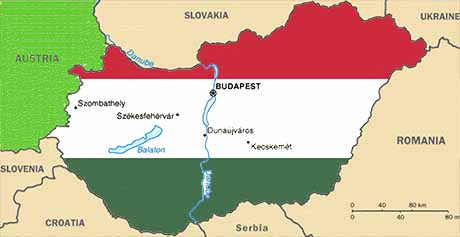
On May 2, 1989, Hungary began dismantling its border fence with Austria, allowing a number of East Germans to defect.
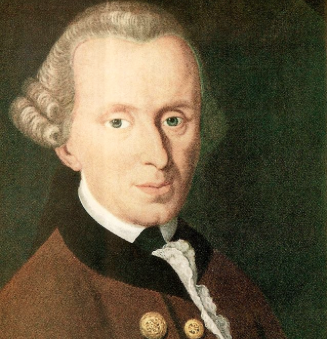
“The civil state regarded purely as a lawful state, is based on the following a priori principles:
“These principles are not so much laws given by an already established state, as laws by which a state can alone be established in accordance with pure rational principles of external human right. ”
Immanuel Kant, Theory and Practice (1791)

State-powered Puritanism is alive and well in the west. And freedom of speech is in its death throes.
Or so it seems in Great Britain. And the U.S. isn’t far behind, suggests Brendan O’Neill.
O’Neill, editor of the London-based Spike, recounts recent absurd assaults on freedom of speech, so frequent now in Britain as to be routine.
Consider the case of the malevolent hashtag. A hashtag is a label with a pound sign that Twitter-folk use to flag and meta-comment on their tweets. A soccer fan named Stephen Dodds thumbed the hashtag “#DISGRACE” to bemoan how Muslims attending a game were conspicuously praying during halftime. His tweet provoked an Internet uproar. Good. But Dodds was also reported to the police, who investigated his open hashtaggery for two weeks (!!).
And how about the case of the svelte-model-adorned subway ad that dares ask British ladies if they’re “beach-body-ready”? Uh oh. A direct psychic assault on those who will never be “beach-body-ready” in the super-model sense of the word. After feminists vandalized the ads, something called Advertising Standards Authority lurched to investigate — not the vandals, no: the blatantly anti-blobby sentiment.
Few opinions or postures fail to offend somebody.
What offends me is that we should ever be subject to arbitrary, government-backed assaults on our rights launched to satisfy persons especially thin-skinned and/or especially eager to stomp on the rights of others.
As with all fake rights, foisting a fake right to not-be-offended can only violate genuine rights. #DISGRACE.
This is Common Sense. I’m Paul Jacob.

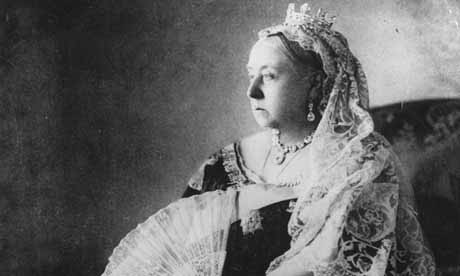
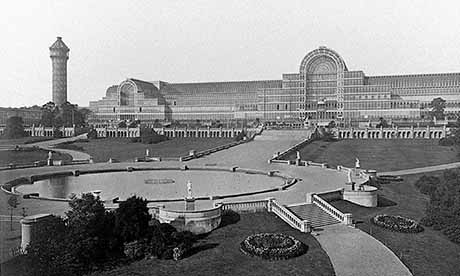
On May 1, 1851, Queen Victoria performed the ritual function of opening the Great Exhibition in London.
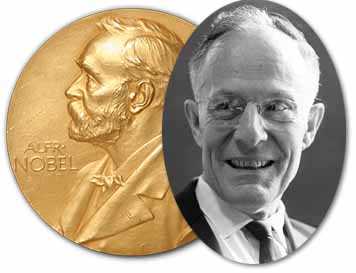
Whereas the governments of some low-income countries are improving their economics policies, in the United States the proliferation of political movements that view economics with disdain, along with apparent general public support for government market interventions, are in considerable measure contributing to the decline in the performance of the U.S. economy.
Theodore W. Schultz, Investing in People: The Economics of Population Quality (1981), p. 143-4.