Categories
government transparency initiative, referendum, and recall term limits

In-Nate Problem

My brother, Tim Jacob, blames me for sucking him into politics. And I have reason to feel guilt, for politics is filled with — ugh — politicians.

Back in 1992, I urged Tim to join Steve Munn and Lance Curtis, who were launching a petition drive to put term limits before voters. Along with other do-it-yourself citizens, they gathered (all volunteer) 100,000 signatures. Then, against a special-interest-funded TV barrage, term limits prevailed with the largest YES vote of any initiative in state history.

In 2004, Tim was called back into service when legislators proposed a constitutional amendment to weaken term limits, using ballot language claiming it would “establish” limits. Voters saw through it, crushing the scam 70 to 30 percent.

But last year, legislators got even trickier. Their Issue 3 ballot language told voters the measure would ban gifts from lobbyists to legislators, create an “Independent Citizen Commission” to set salaries and “establish” term limits. Enough voters were fooled: Issue 3 passed 52 to 48 percent. Now, lobbyists are buying legislators even more meals, the “independent” commissioners awarded the very legislators who appointed them a 150 percent pay raise, and term limits were doubled to a ridiculous 16 years.

My brother co-chaired the unsuccessful effort to alert voters, noting that legislators “pursued a campaign of silence . . . letting the deceptive ballot title do their work.”

Today, he and a band of resilient volunteers have filed — and are gathering petition signatures for — a new initiative to give Arkansans an honest choice on restoring the stricter limits.

Yet, Monday morning, Rep. Nate Bell, who voted for Issue 3 and then hid throughout the campaign, tweeted, “I am publicly challenging Tim Jacobs [sic] of Arkansas Term Limits to a public debate on subject. Are there any #arpx news orgs that would host?”

Rep. Bell’s follow-up tweet announced, “Jacobs [sic] has declined to debate me on proposed term limits amndmnt. ‘Well I’m busy overcoming your fraud now, so you’ll have to wait’ #arleg.”

My brother, being wiser than I (due undoubtedly to his being older), didn’t take the bait. There’ll be plenty of time for debate once the initiative has enough signatures to be placed on the ballot.

In the meantime, Mr. Bell can huddle with career politicians, perhaps New York’s former Speaker Sheldon Silver. But hurry, before Silver goes to prison for corruption.

This is Common Sense. I’m Paul Jacob.


Ptintable PDF

Tim Jacob, Arkansas, term limits, Common Sense, illustration


Categories
Thought

C. S. Lewis

You must show that a man is wrong before you start explaining why he is wrong. The modern method is to assume without discussion that he is wrong and then distract his attention from this (the only real issue) by busily explaining how he became so silly.

C. S. Lewis, “Bulverism,” reprinted in God in the Dock (1970).
Categories
Today

Monroe Doctrine

On December 2, 1823, U.S. President James Monroe delivered a speech establishing American neutrality in future European conflicts. The policy became known as the Monroe Doctrine.

Though a much-discussed principle of American foreign policy, it was undermined by the Spanish-American War, and proved a dead letter as the U. S. entered World War I.

Categories
crime and punishment general freedom government transparency judiciary moral hazard national politics & policies property rights too much government

Government Burglars

If you try to compare those police who take people’s money and property through civil asset forfeiture laws to burglars, who rob folks in more traditional ways, you are just not being fair.

To the burglars.

The Institute for Justice recently released an updated Policing for Profit report showing that federal asset forfeiture topped $5 billion in 2014. The FBI disclosed that in that same year $3.5 billion of value was lost in burglaries.

Then, folks did the math.

Steven Greenhut’s piece at reason.com was headlined, “Cops Now Take More Than Robbers.”

At The Washington Post Wonkblog, Christopher Ingraham explained there was an especially big haul in seized assets in 2014, including $1.7 billion from Bernie Madoff. Moreover, the dollar figure for burglary doesn’t include larceny, motor vehicle theft, etc. All such theft combined totaled more than $12 billion that year.

So, law enforcement isn’t stealing quite as much from citizens as the criminals they are supposed to be protecting us from are. Sort of a backhanded compliment, though.

Recent polling finds more than 70 percent of Americans opposed to seizing assets without a criminal conviction, i.e. innocent until proven guilty, but taking cash and cars and stuff from folks never charged with or convicted of a crime has become a big business for “our” government.

When legislation to mildly reform civil forfeiture failed recently in California, Mr. Greenhut called legislators’ votes “about money, not justice.” Ferocious lobbying by the California District Attorneys Association and the California Police Chiefs warned money-grubbing legislators that budgets would take an $80 to $100 million hit.

Theft is apparently quite lucrative. Who knew?

This is Common Sense. I’m Paul Jacob.

Printable PDF

civil asset forfeiture, police, abuse, robbery, Common Sense


Categories
Thought

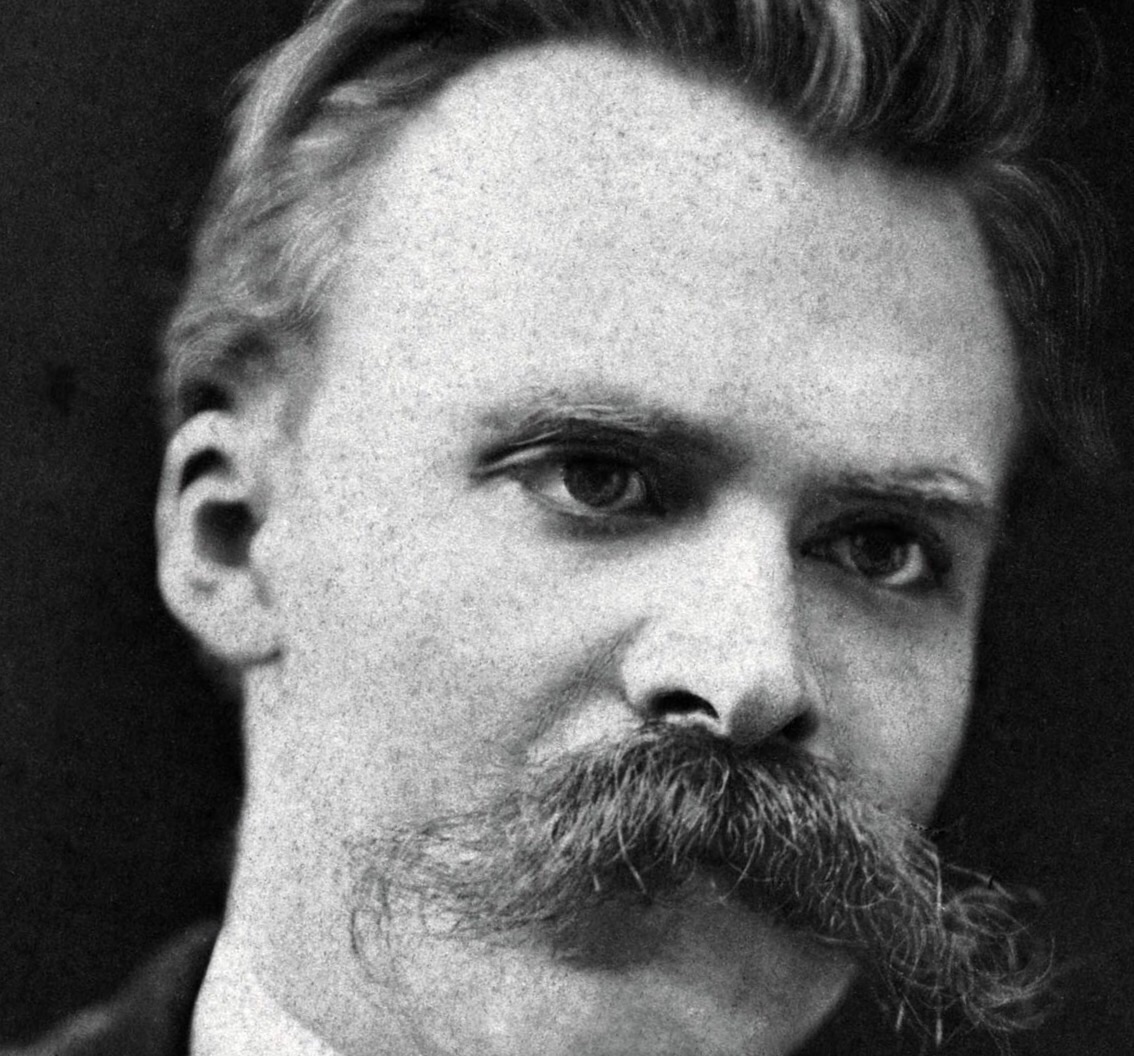
Friedrich Nietzsche

No state would ever dare to patronize such men as Plato and Schopenhauer. And why? Simply because the state is always afraid of them. They tell the truth. . . . Consequently, the man who submits to be a philosopher in the pay of the state must also submit to being looked upon by the state as one who has waived his claim to pursue the truth into all its fastnesses. So long as he holds his place, he must acknowledge something still higher than the truth — and that is the state. . . .

Friedrich Nietzsche, “Schopenhauer als Erzieher,” as translated by H. L. Mencken, The Philosophy of Friedrich Nietzsche (Third Edition, 1913), Chapter XII, Education.
Categories
Today

The “Stolen Election”

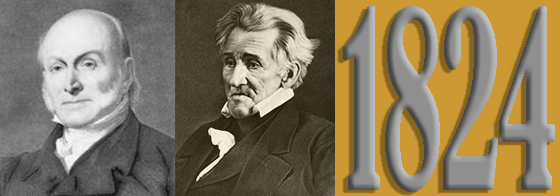
On December 1, 1824, with neither John Quincy Adams nor Andrew Jackson receiving a majority of the total electoral college votes in the election, the United States House of Representatives was given the task of deciding the winner in accordance with the Twelfth Amendment to the United States Constitution.

The House selected Adams. Jackson and his supporters felt deeply aggrieved, and immediately set about preparing for the next election, which Jackson won handily. Jacksonian supporters referred to the election of 1824 as “the Stolen Election,” in no small part because Jackson had received more popular votes.

Categories
education and schooling folly ideological culture

Doing Anti-Racism Wrong

The number of crazies out there may be fewer than they seem.

This weekend, at Townhall, I wrote about the University of Ottawa’s suspension of a free yoga class. What was deemed “problematic” was the class’s “cultural appropriation” of an ancient discipline.

But why was yoga a problem, -atic or otherwise?

Well, in the words of the “fainting heart” who made the decision to nix the program, because yoga hails from cultures that “have experienced oppression, cultural genocide and diasporas due to colonialism and western supremacy. . . .”

Robby Soave, at the Daily Beast, pushed a bit deeper than I did: “Cultural appropriation first became a talking point in sociology circles in the 1970s and ’80s. Explicitly racist and exploitative incidents from the past — like 19th and early 20th century blackface — were deemed wrong, not merely because they were horribly insulting to black people, but because they stole from black culture.”

On this ground, George Gershwin’s Rhapsody in Blue is intolerably racist.

Idiotic. Let me repeat what I wrote this weekend:

  1. Cultural appropriation is a good thing; that’s how we progress. We emulate the good in other cultures. We discard practices that do not suit us. That is what good people do.
  2. Those people who, afflicted by the mind-virus of today’s neo-progressivism, think that “cultural appropriation” is racist are themselves racist.

How are they racist? By judging a cultural matter as racial.

Racists make too much of race. So does this new breed of self-defined anti-racists.

But remember, it was just one complaint that led to the yoga class being nixed. Had the person who addressed the complaint dared snort in derision, the whole absurdity might have stopped before it started.

This is Common Sense. I’m Paul Jacob


Printable PDF

yoga, racism, political correctness, racism, colonialism, Common Sense

Photo credit (endorsement of this message is not implied): Steven Depolo on Flickr


Categories
Thought

C. S. Lewis

“Of all tyrannies, a tyranny sincerely exercised for the good of its victims may be the most oppressive. It would be better to live under robber barons than under omnipotent moral busybodies. The robber baron’s cruelty may sometimes sleep, his cupidity may at some point be satiated; but those who torment us for our own good will torment us without end for they do so with the approval of their own conscience. They may be more likely to go to Heaven yet at the same time likelier to make a Hell of earth. This very kindness stings with intolerable insult. To be ‘cured’ against one’s will and cured of states which we may not regard as disease is to be put on a level of those who have not yet reached the age of reason or those who never will; to be classed with infants, imbeciles, and domestic animals.”


C. S. Lewis, “The Humanitarian Theory of Punishment,” reprinted in God in the Dock (1970).

Categories
Today

Chase and Clemens

On November 30, 1804, the United States House of Representatives began impeachment hearings against Supreme Court Justice Samuel Chase. The House thought he was too partisan, too “Federalist.”

The Senate later acquitted Chase.

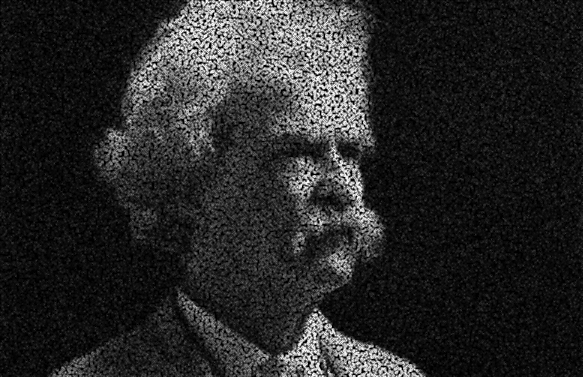
On 1835 on this date, Samuel Clemens was born, later to achieve world fame as author and humorist Mark Twain (pictured above). His most beloved books include The Adventures of Tom Sawyer (1876) and his masterpiece, Adventures of Huckleberry Finn (1885). He died in 1910.

Categories
links

Townhall: The Oddest Yoga Position of All

This week, Common Sense looks at the insanity of “cultural appropriation.” Which has reached a new low point of crazed nincompoopery in Ontario. See Sunday’s column on Townhall.com, by Yours Truly, Paul Jacob. Then come back here for further forays into the realm of modern progressive ideology gone completely off its rocker: