Categories
Today

Comes Good Sailing

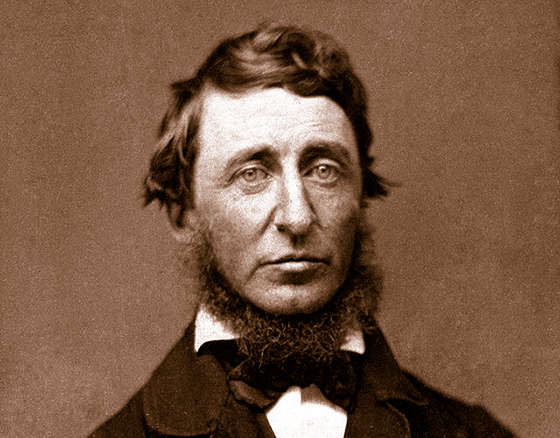
On May 6, 1862, American author, philosopher and abolitionist Henry David Thoreau died, after many years of tuberculosis.

Aware he was dying, Thoreau’s last words were “Now comes good sailing,” followed by two lone words, “moose” and “Indian.” Bronson Alcott planned the service and read selections from Thoreau’s works, and Ralph Waldo Emerson wrote the eulogy spoken at his funeral.

His remains, as well as those of members of his immediate family, were eventually moved to Sleepy Hollow Cemetery in Concord, Massachusetts.

Categories
Thought

Ralph Waldo Emerson

“The thing done avails, and not what is said about it. An original sentence, a step forward, is worth more than all the censures.”


Ralph Waldo Emerson, “First Visit to England” in English Traits (1856)

Categories
Common Sense national politics & policies too much government

The Ultimate Result of Campaign Finance Regs

Last Thursday I tried to be magnanimous. Of campaign finance regulation proponents, I wrote, “I suppose a reasonable person could blanch at rich people giving money to political causes . . . if they objected to all super-rich donors.”

My expectation of reciprocity was dashed at the non-reciprocal gambits of the Koch-hating campaign finance regulation advocates. It all really does come down to how they hate having others spend lots of money . . . against their causes.

Hardly democratic, that. Sorta ‘live and don’t let live.’

But they could (and will) defend themselves. They could say something like this: “We don’t like our billionaires having to give so much either. We’d like to cap our billionaires’ giving, too!”

It’s tough to have to keep up with your opponents’ spending, a pain having to give and give to get what you want and want.

We’d all like to get our way without having to spend time and money. But that doesn’t seem to be the way the world works — everything has a cost.

I sympathize. Economists call the problem of political campaign spending a “Tullock auction,” which sports no rational upper limit on spending, because winners take all.

Still, to bitch about your opponents’ spending but never your own gives away your game.

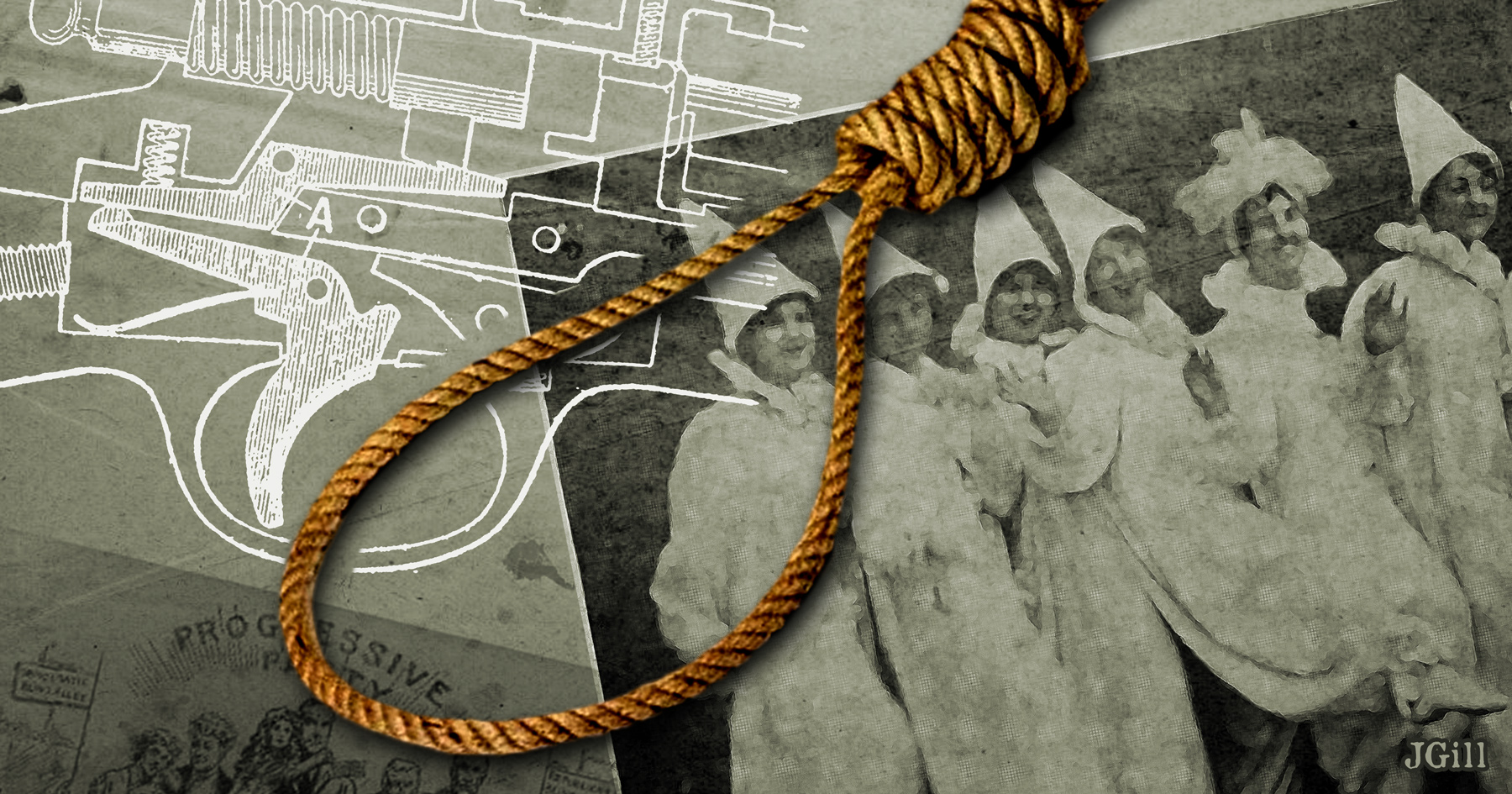
And we all know what the ultimate progressive game is: tax-funded elections. Tightly controlled, with more and more intrusions into how citizens assemble and cooperate to promote their candidates and causes.

So if the promotion, debate, and decision process is to be government-funded, government-controlled, we might as well call it Socialism and be done with it.

Could such a system be biased, just possibly for the pro-government growth side?

All mysteries solved.

This is Common Sense. I’m Paul Jacob.

Printable PDF

govFundedElections


Categories
Today

Cinco de Mayo

In 1862, troops led by Ignacio Zaragoza stopped a French invasion in the Battle of Puebla in Mexico — an event leading to the popular “Cinco de Mayo” celebration.

Categories
Thought

William H. Prescott

“In contemplating the religious system of the Aztecs, one is struck with its apparent incongruity, as if some portion of it had emanated from a comparatively refined people, open to gentle influences, while the rest breathes a spirit of unmitigated ferocity.”


William H. Prescott, History of the Conquest of Mexico, chapter three

Categories
general freedom nannyism too much government

Wealth Versus Disaster

Poverty kills.

In “The Tragedy of Nepal,” aerospace engineer Rand Simberg explains why industry-deniers striving to block economic progress in the name of blocking “climate change” do no favor to the poorest countries of the world.

Human beings cannot prevent disasters like the earthquake that recently struck Nepal. We can, though, mitigate their destructiveness . . . by being as economically free as possible and, therefore, as rich as possible.

And thus able to afford more durable — even antifragile — structures and infrastructure.

The same capital-intensive achievements that protect us when Mother Nature is quiescent also protect us when she’s at her worst. Buildings are more likely to withstand a quake when constructed of the best possible materials and designs. But the most robust safeguards can be the norm only when we are free and wealthy enough to engage in the industrial processes required to produce them.

This is a familiar point. But it bears repeating because it is not familiar enough to discourage foes of a vague threat called “climate change” — nothing new in earth’s history — from also ranging themselves against industrial production.

Industry-deniers assert that we can manipulate climate trends for the better if only we radically curb our carbon-emitting impact on the atmosphere. But attempts to enact this fantasy will only make it ever harder to grapple with vagaries of nature commonplace long before the rise of civilizations.

Human survival requires the opposite policy. It requires full freedom to build nature-transforming industries — and buildings, and all the other man-made bulwarks of our lives and future.

This is Common Sense. I’m Paul Jacob.


Printable PDF

Nepal Earthquake


Categories
Thought

Wellington

“All the business of war, and indeed all the business of life, is to endeavour to find out what you don’t know by what you do; that’s what I called ‘guessing what was at the other side of the hill.’”


Arthur Wellesley, 1st Duke of Wellington

Categories
Today

Great Historian

On May 4, 1796, American historian William H. Prescott was born. Prescott’s History of the Conquest of Mexico and his Conquest of Peru remain classic works of well-researched, “scientific history.” Prescott, Arizona, was named in his honor.

Categories
links

Townhall: Her Majesty Hillary’s Speech Police

This ain’t about the new royal baby. It’s about America’s rather old baby, royal-in-quotes, alas. Click on over to Townhall, then back here for R and D if not R and R.

Bernie Sanders:

Hillary Clinton:

Wisconsin:

Categories
Today

Between the crosses

In 1791, the Constitution of May 3, the first modern constitution in Europe, was proclaimed by the Sejm of the Polish–Lithuanian Commonwealth.

On May 3 in 1915, Lieutenant Colonel John McCrae composed the poem “In Flanders Fields.”


In Flanders fields the poppies blow
Between the crosses, row on row,
That mark our place; and in the sky
The larks, still bravely singing, fly
Scarce heard amid the guns below.

We are the Dead. Short days ago
We lived, felt dawn, saw sunset glow,
Loved and were loved, and now we lie
In Flanders fields.

Take up our quarrel with the foe:
To you from failing hands we throw
The torch; be yours to hold it high.
If ye break faith with us who die
We shall not sleep, though poppies grow
In Flanders fields.