Categories
meme

BernieBot Logic: Bernie Likes Free Markets!

Bernie is not against free markets.

He only wants to loot them and control them.

But they will still be free!


Click for large resolution version of this image:

Bernie Sanders, Berniebot logic, Bernie is not against free markets, meme, Common Sense, mixed economy, democratic socialism


A healthy democracy depends on the spreading of good ideas. If you liked this post,  please share it with friends by clicking on any of the social media icons below.

Common Sense Needs Your Help!

Also, please consider showing your appreciation by dropping something in our tip jar  (this link will take you to the Citizens in Charge donation page… and your contribution will go to the support of the Common Sense website). Maintaining this site takes time and money. Your help in spreading the message of common sense and liberty is very much appreciated!


Categories
Today

Amendment 22

The Twenty-second Amendment (Amendment XXII) of the United States Constitution, which sets a term limit for election and overall time of service to the office of President of the United States, passed Congress on March 21, 1947.

Categories
Thought

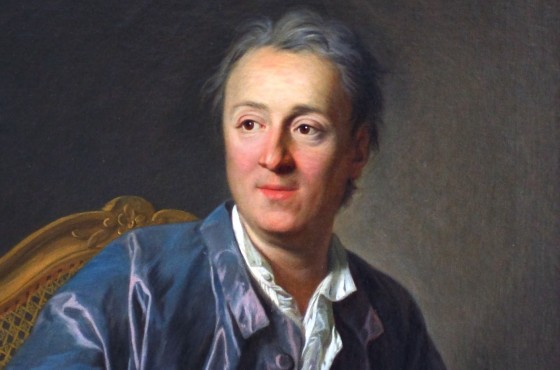
Denis Diderot

As centuries pass by, the mass of works grows endlessly, and one can foresee a time when it will be almost as difficult to educate oneself in a library, as in the universe, and almost as fast to seek a truth subsisting in nature, as lost among an immense number of books; then one would have to undertake, out of necessity, a labor that had been neglected, because the need for it had not been felt.
If we think of the image of literature in times before the invention of printing, we see a small number of men of genius busy creating, and a countless throng of workers busy transcribing. If we anticipate centuries to come, and think of the image of literature once printing, which never rests, has filled huge buildings with books, we will find it once more split into two classes of men. There will be those who read little and immerse themselves in new research or what they take to be new (for if we already are ignorant of part of what is contained in so many books published in all sorts of languages, we will know still far less about what is in those books increased a hundred-, a thousand-fold); the others, workmen incapable of producing anything, will be busy leafing through those books night and day, and separating out what they deem worthy of being anthologized and preserved. Is this prediction not already being fulfilled?

Denis Diderot, “Encyclopédie,” in Encyclopédie, ou dictionnaire raisonné des sciences, des arts et des métiers, Vol. 5 (1755), pp. 635–648A.
Categories
links

Townhall: A Peace Pipe Made in America

Americans have made astounding political headway on an important — indeed, vital — subject.

Wouldn’t you know it, mainly without help of their elected representatives and officials.

Click on over to Townhall. Then come back here for more information.

Categories
Thought

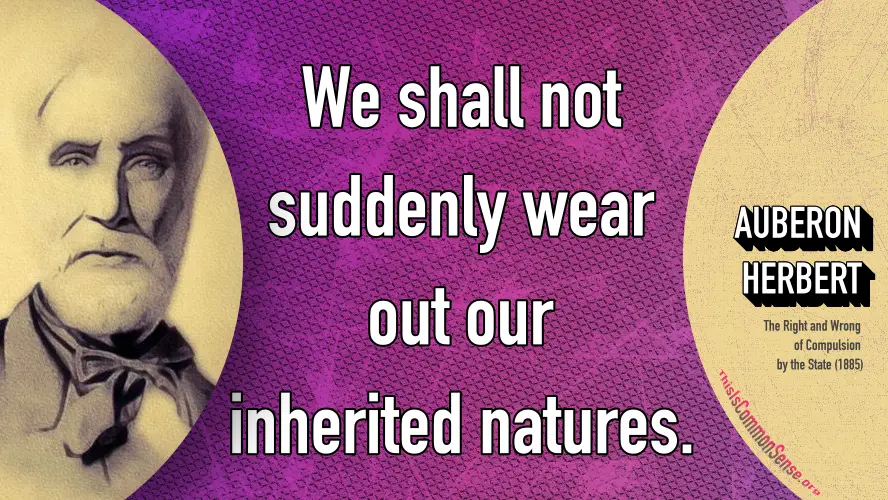
Auberon Herbert

We shall not suddenly wear out our inherited natures.

Auberon Herbert, letter to the editor, Newcastle Weekly Chronicle, as reprinted in The Right and Wrong of Compulsion by the State, 1885.
Categories
Today

Uncle Tom’s Cabin

On March 20, 1852, Harriet Beecher Stowe’s novel Uncle Tom’s Cabin was published.

Categories
video

Video: Today’s Authoritarian Moment

Nick Gillepsie, Matt Welch and George F. Will define the politics of our age, and what the shuffling of Republican and Democratic candidates for the presidency really means:

Categories
Today

House of Lords

On March 19, 1649, England’s House of Commons passed an act abolishing the House of Lords, declaring it “useless and dangerous to the people of England.”

This was during Oliver Cromwell’s rule as Lord Protector, after the execution of Charles I. The House of Lords did not again meet until the Convention Parliament of 1660, under the Restoration of the monarchy.

Categories
Thought

Denis Diderot

People stop thinking when they cease to read.

Categories
Accountability crime and punishment free trade & free markets general freedom moral hazard nannyism national politics & policies

The Peace Dividend

Has the War on Drugs actually, finally, made some progress?

Well, yes . . . but, really, no.

“Legal marijuana may be doing at least one thing that a decades-long drug war couldn’t,” explains Christopher Ingraham in The Washington Post’s Wonkblog, “taking a bite out of Mexican drug cartels’ profits.”

Certainly “legal marijuana” is not the drug war. It’s that war’s antithesis.

Let’s recall, too, that legalization didn’t come about after five decades of drug war failure because politicians came to their senses, admitted their mistakes and advocated a different approach.

Instead, frustrated citizen leaders teamed up with successful entrepreneurs to launch ballot initiatives, allowing voters to directly decide the issue.

Domestic production isn’t driven merely by Colorado, Oregon, Washington State and the other Washington, the nation’s capital, where voters fully legalized possession. Marijuana for medical use is legal in 23 states, including California, where most domestic marijuana is grown. In these states, pot is widely prescribed.

Thus, a quasi-legal domestic marijuana industry was created. Lo and behold, now pot produced in the good old USA is outperforming pot grown south of the border.

The Drug Enforcement Agency (DEA) acknowledges that U.S. marijuana is being illegally smuggled into Mexico. (Maybe the smugglers will pay for the wall.)

On the other hand, what does it matter that the Mexican drug cartels are losing market share to non-violent American businesses?

Well, those cartels have waged a war with the Mexican government killing more than 164,000 citizens between 2007 and 2014. Less profit to fuel the Mexican drug lords in that bloody war is more for our peace and security.

This is Common Sense. I’m Paul Jacob.


Printable PDF

legalization, pot, marijuana, crime, drug war, illustration