Categories
Accountability general freedom moral hazard nannyism national politics & policies Second Amendment rights too much government U.S. Constitution

The Freak-out Factor

Most folks are so unused to seeing normal people carrying guns around, out in the open, that when they it, they freak out.

Among those who are at least, well, unsettled by the spectacle? The police.

Funny, the gun freaker-outers don’t usually freak when they see police with guns. But that may be changing as more and more video footage comes out regarding police shootings of suspects under suspicious circumstances.

It is not exactly by accident that there are protests in numerous cities.

So, police being human, we cannot be surprised when, after the Dallas and Baton Rouge killings of police, “[t]he head of the Cleveland police union called on the governor of Ohio to declare a state of emergency and to suspend open-carry gun rights during the Republican national convention. . . .”

The governor’s office responded that Gov. John Kasich had no authority to do such a thing. Open carry was a law in the state. Only inside buildings could carry rights be suspended (as they have been, selectively).

Steve Loomis, the Cleveland Police Patrolmen’s Association head, said that he did not “care what the legal precedent” may be, and “couldn’t care less if it’s legal or not.”

If Loomis, a leader in “law enforcement,” boasts this attitude, no wonder police have had so many trigger finger incidents, sparking so much anguish, protest, and debate.

It’s time for police to rethink their approach to people who have rights to carry weapons.

Perhaps more importantly, we should all try not to freak out so easily.

This is Common Sense. I’m Paul Jacob.


Printable PDF

gun, control, 2nd Amendment, Republican, police


Categories
Accountability Common Sense folly general freedom ideological culture media and media people meme national politics & policies too much government

More Common Sense from Tom Paine

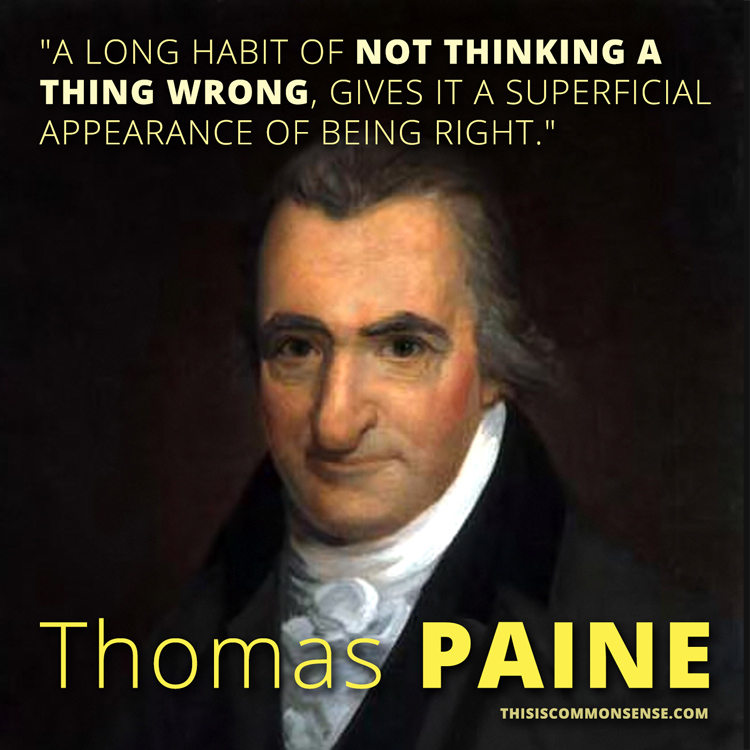
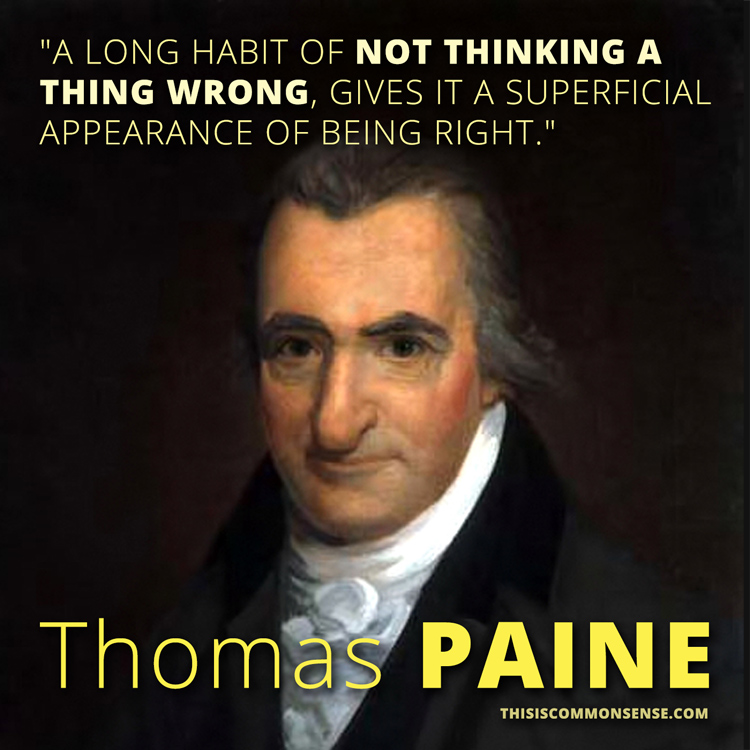
“A long habit of not thinking a thing wrong, gives it a superficial appearance of being right.”

Quote (from Paine’s “Common Sense”) verified here.


Tom Paine, Thomas Paine, quote, quotation, wrong, right, meme, illustration


Categories
Thought

Lord Acton

At all times sincere friends of freedom have been rare, and its triumphs have been due to minorities that have prevailed by associating themselves with auxiliaries whose objects often differed from their own; and this association, which is always dangerous, has been sometimes disastrous, by giving to opponents just grounds of opposition, and by kindling dispute over the spoils in the hour of success.


Lord Acton, The History of Freedom in Antiquity (1877).

Categories
Today

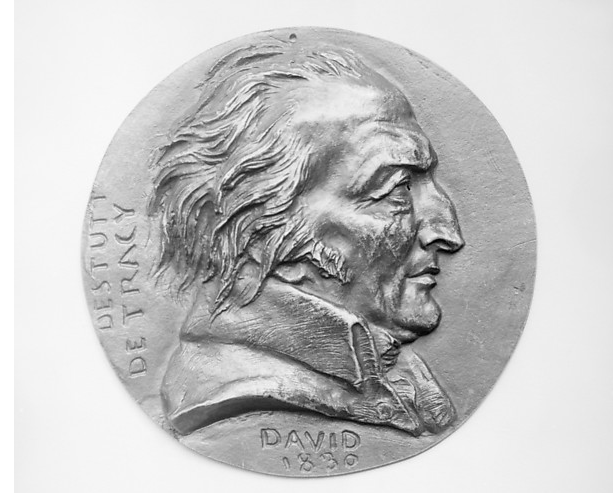
The Count Tracy

Born on July 20, 1754, Antoine Louis Claude Destutt, comte de Tracy, French philosopher and economist. Perhaps best remembered for coining the term “ideology,” he didn’t mean by that term what scornful Napoleon and communist Karl Marx later turned it into — for Destutt de Tracy ideology meant “the science of ideas,” a unified approach to all knowledge, from epistemology to social theory.

Though his family had been enobled twice, he renounced the title and entered the 1789 Estates General conference as a member of the Third Estate. During the Reign of Terror, he was imprisoned, and would have been executed had not Robespierre got to the scaffold ahead of him.

Two of his books became popular in early 19th century America, his commentaries on Montesquieu’s Spirit of the Laws, and his Traité de la volonté, which Thomas Jefferson, the editor of the American edition, retitled A Treatise on Political Economy. Tracy’s economics was of a deductivist stripe, familiar to readers of later economists such as Nassau Senior and Ludwig von Mises.

Destutt de Tracy’s politics was republican, and his preferred economic policy was laissez-faire.

Categories
media and media people national politics & policies political challengers responsibility

Whose Coup?

Melania Trump’s beautifully adequate speech last night at the prime-time opening of the Republican National Convention in Cleveland clashed with the ugly chaos earlier.

Everyone knew the convention’s rules package would be a point of conflict. A wee bit of open democracy might have unified delegates. Instead, the rules were rushed through on a voice vote, immediately after which the chair ignored delegates loudly calling for points of order as well as demanding a roll-call vote on the package.

In the uproar that ensued, that convention chair, Arkansas Congressman Steve Womack, inexplicably left the stage unmanned.

“I’ve never seen the chair vacated like that,” said Utah Sen. Mike Lee, who had tried and failed to get recognized.

Morton Blackwell, a 32-year RNC member, complained the process was “crooked”; former Virginia Attorney General Ken Cuccinelli used the word “disgusting.”

After what seemed an eternity, Womack appeared back on stage, again calling a voice vote, quickly ruling that the “Ayes” had it over the “Nays,” and then ignoring yet more delegates trying to be recognized.

He finally explained that not enough states had called for the roll call — three states had withdrawn their petition. No mention that the long delay had allowed Trump and RNC operatives to pressure enough delegates into withdrawing their petition.

This served as “a glimpse into the future of a Trump presidency,” suggested former New Hampshire Sen. Gordon Humphrey, adding that Trump supporters “act very much like fascists, shouting down the opposition, treating them roughly.”

Hyperbole? Sure. But yesterday’s events do indicate a lack respect for democratic process.

This is Common Sense. I’m Paul Jacob.

Printable PDF

Republican, convention, 2016, Donald Trump, illustration


Categories
Thought

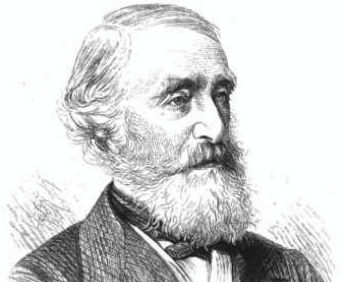
G. Poulett Scrope

Interference of any kind . . . in the spontaneous direction of industry, and the free employment by their owners of the great agents in production, labour, land, and capital, has the certain effect of benumbing their power and lessening the sum of production, and consequently the shares, of the producing parties; as well as of needlessly, and therefore unjustly, curtailing their freedom of action.


G. Poulett Scrope, M.P., Principles of Political Economy, Deduced from the Natural Laws of Social Welfare, and Applied to the Present State of Britain (1833), p. 231.

Categories
Today

Bloomers!

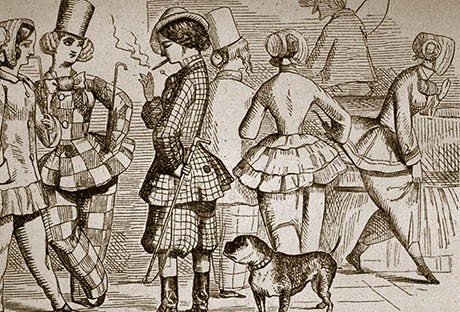
“Bloomers” were introduced at a Women’s Rights Convention that opened on July 19, 1848, in Seneca Falls, New York. Named after one of this article of clothing’s chief promoters, Amelia Bloomer, a women’s rights activist, the basic idea was to tastefully allow women a stylish and modest freedom of movement (the dresses of the day were notoriously constricting). The style did not exactly catch on, and it would be a long time before women would be allowed, by cultural convention, to wear pants.

Cartoon image is from 1851, entitled “Woman’s Emancipation.”

Categories
Accountability government transparency moral hazard responsibility

Opaque Pension System

Requiring government transparency is as necessary in those areas where governments can grant special favors as in those where governments can inflict direct harm.

That is, it’s as important regarding government worker pensions as it is of the abuse of police power.

In Nevada, the legal requirement for the state’s Public Employee Retirement System (PERS), to disclose who gets what in pension payments was recently thwarted by PERS itself.

“By replacing names with ‘non-disclosable’ social security numbers in its actuarial record-keeping documents, PERS has attempted to circumvent the 2013 ruling of the Nevada Supreme Court requiring disclosure,” explained Joseph Becker of the Nevada Policy Research Institute.

I’m quoting from NPRI’s July 6 press release. Most such publicity isn’t all that interesting, but this one catching government agencies deliberately working against their duties sparks a certain . . . interest. Wouldn’t you say?

Simply by altering how it keeps records, PERS officials hoped to stifle public . . . “spying.” It’s reasonable to prevent government from giving out public servants’ Social Security numbers, so PERS switched to listing information under those numbers, in so doing “violating both the letter and spirit of the Nevada Public Records Act,” explains Becker.

And thus undermining democracy — republican governance —  itself.

This public disclosure wouldn’t be an issue if the pension system were run privately, based on defined contribution funding. But that’s not how governments do things.

We must hold government’s proverbial feet to the fire — of public information — to make sure government employees and taxpayers are both treated fairly.

This is Common Sense. I’m Paul Jacob.

Printable PDF

government, pension, transparency, Nevada, illustration


Categories
Thought

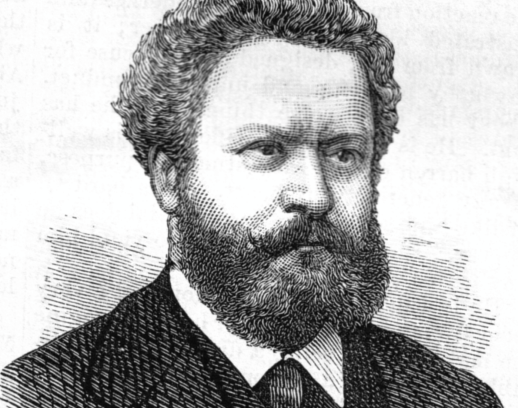
Edmond About

The entire logic of human existence can be formulated in five words — ‘produce in order to consume.’ Our reason and sense of justice revolt at the notion of a man who should perpetually consume without producing anything. Everybody understands that children should consume on credit: it is right that old persons should end by consuming what they have produced in their prime; it is perfectly proper that the worker should rest when tired, and consume a part of his surplus products. But he among us who should voluntarily live On another’s labour, and share useful things without adding to them, would be a true parasite.


Edmond About, Handbook of Social Economy; or, The Worker’s A B C, (New York: D. Appleton & Co., translated from the final French edition, 1873), p. 61.

Categories
Today

Secret Ballot

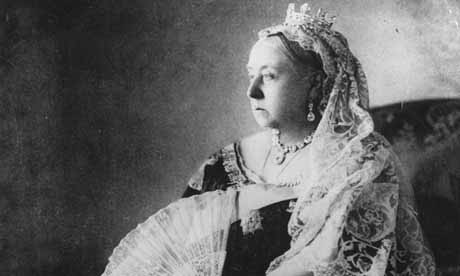
On July 18, 1872, Queen Victoria gave her “Royal Assent” to the Ballot Act, which established secret voting in Great Britain. The bill had been introduced by Prime Minister William Ewart Gladstone — one of the queen’s least favorite prime ministers.