It is harder to preserve than to obtain liberty.
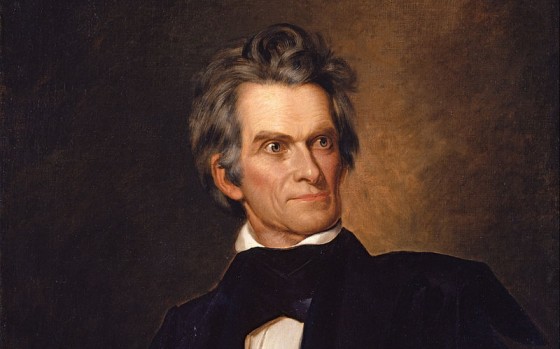
John Caldwell Calhoun, speech in the U. S. Senate (1848). Calhoun’s image (above), a detail from a portrait by George Peter Alexander Healy.
It is harder to preserve than to obtain liberty.
John Caldwell Calhoun, speech in the U. S. Senate (1848). Calhoun’s image (above), a detail from a portrait by George Peter Alexander Healy.
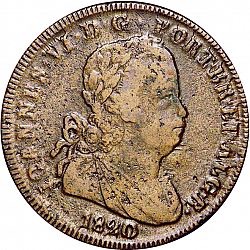
On September 15, 1820, an uprising occured in Lisbon, Portugal, following similar insurrection in Porto the previous month. This was no bloodthirsty mob, but, instead, a popular demand for constitutional government. Unfortunately, the country was beset with imperial and monarchical problems for some time to come.
The United Nations established September 15 as International Day of Democracy, in 2007. An Independence Day is celebrated on this date in Guatemala (a Patriotic Day), El Salvador, Honduras, Nicaragua, and Costa Rica, commemorating independence from Spain in 1821.
Barack Obama promised transparency in government. He didn’t deliver.
But others stepped up to the plate.
It’s now possible to see through a lot of political, elitist, and bureaucratic bunk courtesy of fugitives like Snowden, convicts like Manning, and citizens using FOIA (Freedom of Information Act) procedures.
And we are learning more about Hillary Clinton with each info dump from Julian Assange’s Wikileaks and every court-ordered disclosure thanks to lawsuits to enforce FOIA by organizations like Judicial Watch.
Some folks demand that Donald Trump release his tax returns. On the one hand, hooray for public demands for more information about candidates. But on the other hand, the richer you are, the longer and stranger your tax returns become. One shifts income around to avoid taxes — indeed, you take every “loophole” the law allows. As Justice Brandeis advised. Some folks may be shocked by Trump’s creative-but-legal accounting.
To avoid future confusion, we should demand simple tax returns from the rich. That would require jettisoning most of the tax code, simplifying the system. But ask your congressional representative why he or she will not support such a reform.
The reason we have an opaque and complicated tax code is . . . well, transparent. Under a simple tax system, there would be fewer favors to “trade” . . . and thus less power to accumulate, less oomph to parlay into pomp and splendor.
Which is why politicians rarely provide much transparency, and why it must often be wrested from them.
Merely by being merchants of opacity, our pols reveal, if inadvertently, the nature of our Too Big Government.
This is Common Sense. I’m Paul Jacob.
It takes imagination to identify an economic principle. It takes still more imagination to follow the implications of the principle outside the context of commercial activity and explore its psychological, social, and political meanings.
Stephen Cox, in Cox and Paul Cantor, Literature and the Economics of Liberty: Spontaneous Order in Culture (2010).
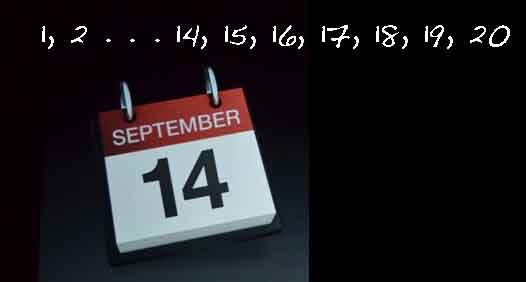
In 1752, throughout the British Empire, September 2 was followed, the next day, by September 14, as the government adopted the Gregorian calendar, skipping eleven days.
On September 14, 1944, Maastricht becomes the first Dutch city to be liberated by allied forces.

10 out of 10 terrorist Jihadists agree…
American gun rights must be restricted!
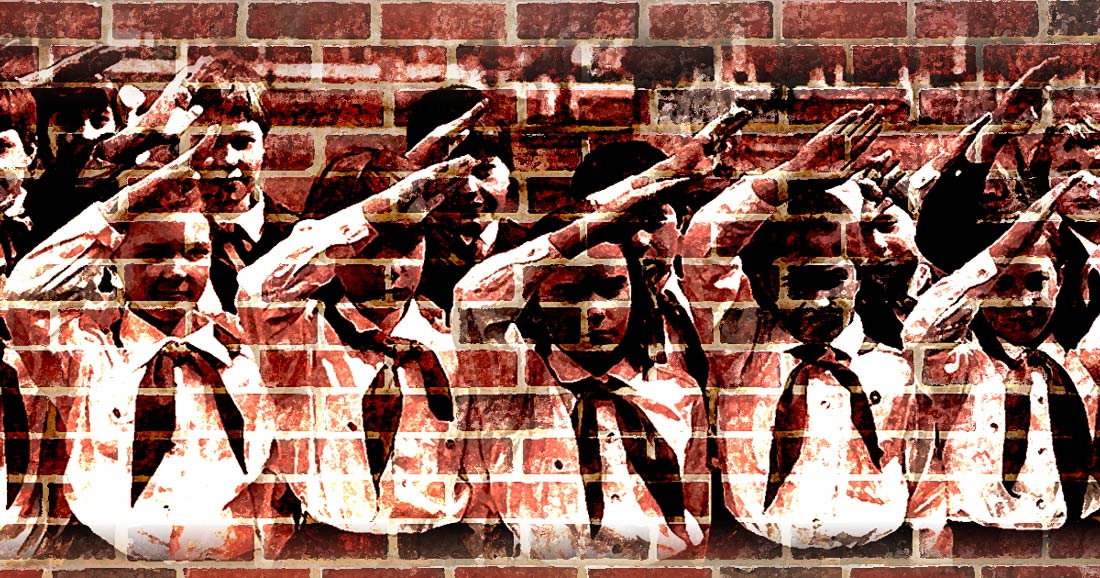
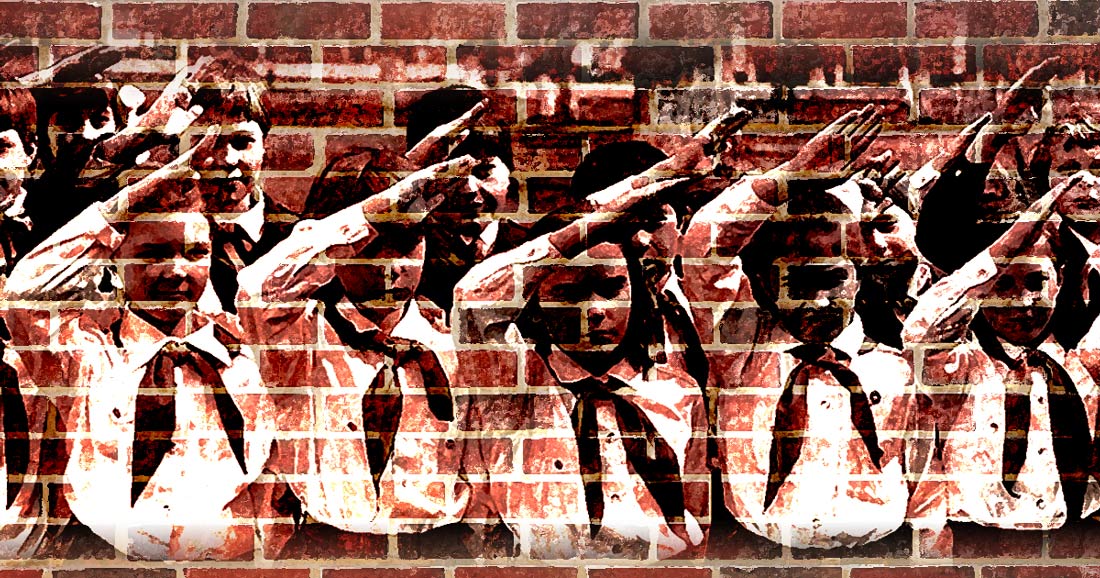
Why is it when some politicians or pundits get a brilliant idea about how to make the country better, involving (of course) making people do as the government dictates, it only applies to other people?
Sunday, on NBC’s “Meet the Press,” New York Times columnist and Times-styled conservative David Brooks bemoaned the electorate’s disunity due to the unprecedented unpopularity of Mr. Trump and Mrs. Clinton: “We could have a winner at 42 percent. Look at those poll numbers. . . . And so, that’s almost like a minority government. I think we’ve just got to do something about it.”
Do something? What?
Brooks explained, “Mayor Rahm Emanuel of Chicago has an idea that every kid who graduates from high school spends the next three months in some sort of national service. So a kid from Martha’s Vineyard or Marin County is with a kid from Mobile, Alabama, and just three months, it would make a difference.”
Chicagoans will warn against emulating Mayor Emanuel.*
“I thought national service was going to be a given,” host Chuck Todd then offered. “I mean, my God, we’ve been talking about national service my whole adult life and I can’t believe we’re not there.”
News Flash: The problem with our politics is not the fault of teenagers. Nor would forcing young people to put their dreams on hold the better to toil in some social engineering scheme solve anything.
Want national service? Begin with politicians and TV talking heads.
This is Common Sense. I’m Paul Jacob.
* A whopping 62 percent of Chicagoans disapprove of their mayor and fully 40 percent want ole Rahm Never-Let-a-Crisis-Go-to-Waste Emanuel to immediately resign. The mayor’s delay in releasing an incriminating police video, until after his re-election, has been the most incendiary issue. But also consider some ugly facts about systemic breakdown in city governance: the number of murders this year is already higher than last year, four out of ten freshman in Chicago high schools fail to graduate and 91 percent of graduates going on to college require remedial courses.
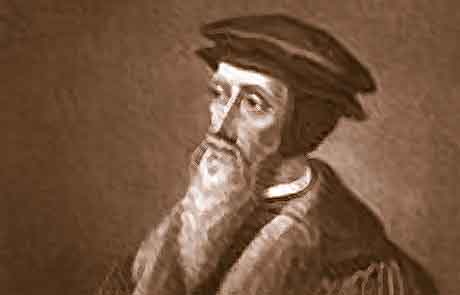
John Calvin [pictured above] returned to Geneva on September 13, 1541, after three years of exile. His subsequent work in church reform and theology became known as Calvinism, and profoundly influenced the course of European and (eventually) American civilization, including several concepts of servitude and liberty.
On the same date in 1989, Desmond Tutu led South Africa’s largest march aganst Apartheid.
Even during my father’s 1984 gubernatorial campaign, it was, ‘Do you want to grow up and be governor one day?’ ‘No. I am four.’